












Characterisation of the temperature-dependent M1 to R phase transition in W-doped VO2 nanorod aggregates by Rietveld refinement and theoretical modelling
Literature Information
Publication Date
2020-03-26
DOI
10.1039/D0CP01058H
Impact Factor
3.676
Authors
Dianhui Wang, Jihui Liang, Chaohao Hu, Lixian Sun, Craig A. J. Fisher
View Original
Abstract
Understanding the mechanism of the insulator–metal transition (IMT) in VO2 is a necessary step in optimising this material's properties for a range of functional applications. Here, Rietveld refinement of synchrotron X-ray powder diffraction patterns is performed on thermochromic V1−xWxO2 (0.0 ≤ x ≤ 0.02) nanorod aggregates over the temperature range 100 ≤ T ≤ 400 K to examine the effect of doping on the structure and properties of the insulating monoclinic (M1) phase and metallic rutile (R) phase. Precise measurement of the lattice constants of the M1 and R phases enabled the onset (Ton) and endset (Tend) temperatures of the IMT to be determined accurately for different dopant levels. First-principles calculations reveal that the observed decrease in both Ton and Tend with increasing W content is a result of Peierls type V–O–V dimers being replaced by linear W–O–V dimers with a narrowing of the band gap. The results are interpreted in terms of the bandwidth-controlled Mott–Hubbard IMT model, providing a more detailed understanding of the underlying physical mechanisms driving the IMT as well as a guide to optimising properties of VO2-based materials for specific applications.
Related Literature
Electron paramagnetic resonance of a copper doped [(CH3)2NH2][Zn(HCOO)3] hybrid perovskite framework
Mantas Šimėnas, Aneta Ciupa, Gediminas Usevičius, Kęstutis Aidas, Daniel Klose, Gunnar Jeschke, Mirosław Mączka, Georg Völkel, Andreas Pöppl, Jūras Banys
2018-04-12
Paper
DOI: 10.1039/C8CP01426D
Electron-stimulated reactions in nanoscale water films adsorbed on α-Al2O3(0001)
Nikolay G. Petrik, Greg A. Kimmel
2018-04-11
Paper
DOI: 10.1039/C8CP01284A
Defect evolution in ZnO and its effect on radiation tolerance
Jinpeng Lv, Xingji Li
2018-04-03
Paper
DOI: 10.1039/C8CP01855C
Anharmonicity in a double hydrogen transfer reaction studied in a single porphycene molecule on a Cu(110) surface
S. Liu, D. Baugh, K. Motobayashi, X. Zhao, S. Gawinkowski, L. Grill, M. Persson, T. Kumagai
2018-03-29
Paper
DOI: 10.1039/C8CP00178B
Unifying theoretical framework for deciphering the oxygen reduction reaction on platinum
Michael Eikerling
2018-04-05
Paper
DOI: 10.1039/C8CP01315B
Plasmonic sphere-on-plane systems with semiconducting polymer spacer layers
Binxing Yu, Jill I. Tracey, Zhongkai Cheng, Martin Vacha
2018-03-26
Paper
DOI: 10.1039/C8CP01314D
Dependence of hot electron transfer on surface coverage and adsorbate species at semiconductor–molecule interfaces
Lesheng Li, Yosuke Kanai
2018-04-12
Paper
DOI: 10.1039/C7CP07247C
Conformationally-restricted bicarbazoles with phenylene bridges displaying deep-blue emission and high triplet energies: systematic structure–property relationships
Andrei S. Batsanov, Andrew P. Monkman, Martin R. Bryce
2018-04-17
Paper
DOI: 10.1039/C8CP01636D
Two-photon spectroscopy of the NaLi triplet ground state
Sepehr Ebadi
2018-01-22
Paper
DOI: 10.1039/C7CP08481A
You might also like
Compound Q&A
What are the main uses of 1-(3-Aminophenyl)-3-[(3R)-1-(3,3-dimethyl-2-oxobutyl)-2-oxo-5-(2-pyridinyl)-2,3-dihydro-1H-1,4-benzodiazepin-3-yl]urea (CAS: 155412-88-7)?
This compound is mainly used as an intermediate in the synthesis of antipsychoti...
155412-88-71-(3-Aminophenyl)-3-...
Compound Q&A
How should waste containing 1-(D-Ribofuranosyl)-1,4-dihydro-3-pyridinecarboxamide (CAS: 19132-12-8) be handled?
Waste containing 1-(D-Ribofuranosyl)-1,4-dihydro-3-pyridinecarboxamide (CAS: 191...
19132-12-81-(D-Ribofuranosyl)-...
Compound Q&A
What regulatory guidelines apply to 2-Methyl-2-propanyl 3-bromo-3-(hydroxymethyl)-1-azetidinecarboxylate (CAS: 2007919-81-3)?
2-Methyl-2-propanyl 3-bromo-3-(hydroxymethyl)-1-azetidinecarboxylate (CAS: 20079...
2007919-81-32-Methyl-2-propanyl ...
Compound Q&A
What is N-(4-Chloro-2-pyridinyl)acetamide (CAS: 245056-66-0)?
N-(4-Chloro-2-pyridinyl)acetamide (CAS: 245056-66-0) is a chemical compound with...
245056-66-0N-(4-Chloro-2-pyridi...
Compound Q&A
What is 5-Chloro-2-hydroxybenzoic acid (CAS: 321-14-2)?
5-Chloro-2-hydroxybenzoic acid, also known as 5-chlorosalicylic acid, is an arom...
321-14-25-Chloro-2-hydroxybe...
Compound Q&A
What precautions should be taken when handling 1,1-Dichloro-1-fluoroethane (CAS: 1717-00-6)?
When handling 1,1-Dichloro-1-fluoroethane (CAS: 1717-00-6), it is important to u...
1717-00-61,1-Dichloro-1-fluor...
Compound Q&A
What are the physical and chemical properties of Fmoc-(2S,3R)-3-phenylpyrrolidine-2-carboxylic acid (CAS: 281655-32-1)?
Fmoc-(2S,3R)-3-phenylpyrrolidine-2-carboxylic acid is a white crystalline solid ...
281655-32-1Fmoc-(2S,3R)-3-pheny...
Compound Q&A
What are the main uses of 4-Amino-5-bromo-2-pyridinecarboxylic acid (CAS: 1363381-01-4)?
4-Amino-5-bromo-2-pyridinecarboxylic acid is primarily used as a precursor in th...
1363381-01-44-Amino-5-bromo-2-py...
Compound Q&A
What precautions should be taken when handling (S)-tert-butyl 2-((2-(4-bromophenyl)-2-oxoethyl)carbamoyl)pyrrolidine-1-carboxylate (CAS: 1007881-98-2)?
Handling this compound should be done with personal protective equipment (PPE) i...
1007881-98-2(S)-tert-butyl 2-((2...
Compound Q&A
What precautions should be taken when handling 8-bromo-2,2-dimethyl-3,4-dihydro-2H-1,4-benzoxazin-3-one (CAS: 688363-73-7)?
When handling 8-bromo-2,2-dimethyl-3,4-dihydro-2H-1,4-benzoxazin-3-one, use prop...
688363-73-78-bromo-2,2-dimethyl...
Source Journal
Physical Chemistry Chemical Physics

CiteScore:
5.5
Self-citation Rate:
10.3%
Articles per Year:
3036
Physical Chemistry Chemical Physics (PCCP) is an international journal co-owned by 19 physical chemistry and physics societies from around the world. This journal publishes original, cutting-edge research in physical chemistry, chemical physics and biophysical chemistry. To be suitable for publication in PCCP, articles must include significant innovation and/or insight into physical chemistry; this is the most important criterion that reviewers and Editors will judge against when evaluating submissions. The journal has a broad scope and welcomes contributions spanning experiment, theory, computation and data science. Topical coverage includes spectroscopy, dynamics, kinetics, statistical mechanics, thermodynamics, electrochemistry, catalysis, surface science, quantum mechanics, quantum computing and machine learning. Interdisciplinary research areas such as polymers and soft matter, materials, nanoscience, energy, surfaces/interfaces, and biophysical chemistry are welcomed if they demonstrate significant innovation and/or insight into physical chemistry. Joined experimental/theoretical studies are particularly appreciated when complementary and based on up-to-date approaches.
Recommended Compounds

![1-[3-(4-Morpholinylsulfonyl)phenyl]methanamine structure](https://static.chemtradehub.com/structs/933/933989-32-3-51af.webp "1-[3-(4-Morpholinylsulfonyl)phenyl]methanamine structure")
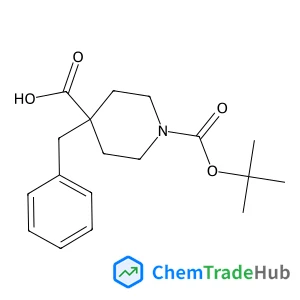
4-Benzyl-1-(tert-butoxycarbonyl)piperidine-4-carboxylic acid
CAS Number:
170838-87-6
Molecular Formula:
C18H25NO4
![Pyrazolo[1,5-a]pyridine-3-carbothioamide structure](https://static.chemtradehub.com/structs/885/885275-44-5-aae0.webp "Pyrazolo[1,5-a]pyridine-3-carbothioamide structure")
Recommended Suppliers



Disclaimer
This page provides academic journal information for reference and research purposes only. We are not affiliated with any journal publishers and do not handle publication submissions. For publication-related inquiries, please contact the respective journal publishers directly.
If you notice any inaccuracies in the information displayed, please contact us at support@chemtradehub.com. We will promptly review and address your concerns.