













Thermal boundary conductance between Al films and GaN nanowires investigated with molecular dynamics
Literature Information
Publication Date
2014-03-26
DOI
10.1039/C4CP00261J
Impact Factor
3.676
Authors
Xiao-wang Zhou, Reese E. Jones, Patrick E. Hopkins, Thomas E. Beechem
View Original
Abstract
GaN nanowires are being pursued for optoelectronic and high-power applications. In either use, increases in operating temperature reduce both performance and reliability making it imperative to minimize thermal resistances. Since interfaces significantly influence the thermal response of nanosystems, the thermal boundary resistance between GaN nanowires and metal contacts has major significance. In response, we have performed systematic molecular dynamics simulations to study the thermal boundary conductance between GaN nanowires and Al films as a function of nanowire dimensions, packing density, and the depth the nanowire is embedded into the metal contact. At low packing densities, the apparent Kapitza conductance between GaN nanowires and an aluminum film is shown to be larger than when contact is made between films of these same materials. This enhancement decreases toward the film–film limit, however, as the packing density increases. For densely packed nanowires, maximizing the Kapitza conductance can be achieved by embedding the nanowires into the films, as the conductance is found to be proportional to the total contact area.
Recommended Journals
Related Literature
Synthesis and spectroscopic observation of dendrimer-encapsulated gold nanoclusters
M. Linh Tran, Andrei V. Zvyagin, Taras Plakhotnik
2006-05-03
Communication
DOI: 10.1039/B602079H
Hosomi–Sakurai reactions of silacyclic allyl silanes
Jonathan D. Sellars, Patrick G. Steel, Michael J. Turner
2006-05-02
Communication
DOI: 10.1039/B602642G
The pentanuclear Feii cluster [(C5H4)6Fe5]2−: bringing together ferrocene sandwiches and homoleptic Feii-cyclopentadienyl σ-complexes
Ingeborg Sänger, Julia B. Heilmann, Michael Bolte, Hans-Wolfram Lerner, Matthias Wagner
2006-04-07
Communication
DOI: 10.1039/B602359B
The unexpected similar second-order NLO response for nearly planar and largely twisted push–pull stilbazole chromophores: EFISH and theoretical TD-DFT evidence
Filippo De Angelis
2005-10-04
Communication
DOI: 10.1039/B509258B
Synthesis of pyrroles: reaction of chromium N-alkylaminocarbene complexes with α,β-unsaturated aldehydes
Kohei Fuchibe, Daisuke Ono, Takahiko Akiyama
2006-04-26
Communication
DOI: 10.1039/B602924H
Assembled bright green fluorescent zinc coordination polymer
Ruibiao Fu, Shengchang Xiang, Shengmin Hu, Longsheng Wang, Yaming Li, Xihe Huang, Xintao Wu
2005-09-22
Communication
DOI: 10.1039/B509695B
Effect of residual monomer on the spectroscopic properties of polythiophenes
Yu Wang, Ashley A. Mills, William B. Euler, Brett L. Lucht
2006-04-11
Communication
DOI: 10.1039/B600793G
Evidence for C–C bond cleavage by H2O2 in a mesoporous CMK-5 type carbon at room temperature
An-Hui Lu, Wen-Cui Li, Nelli Muratova, Bernd Spliethoff, Ferdi Schüth
2005-09-20
Communication
DOI: 10.1039/B509300G
A new alternative to Stryker's reagent in hydrosilylation: synthesis, structure, and reactivity of a well-defined carbene–copper(ii) acetate complex
Jaesook Yun, Daesung Kim, Hoseop Yun
2005-09-22
Communication
DOI: 10.1039/B509964A
An azido–metal–isonicotinate complex showing long-range ordered ferromagnetic interaction: synthesis, structure and magnetic properties
Yong-Fei Zeng, Fu-Chen Liu, Jiong-Peng Zhao, Shuang Cai, Xian-He Bu, Joan Ribas
2006-04-24
Communication
DOI: 10.1039/B601311B
You might also like
Compound Q&A
What are the main uses of 1H-Indazole-6-carbonitrile (CAS: 141290-59-7)?
1H-Indazole-6-carbonitrile finds applications in pharmaceuticals, where it serve...
141290-59-71H-Indazole-6-carbon...
Compound Q&A
How should waste containing Dioctyl (2E)-2-butenedioate (CAS: 2997-85-5) be handled?
Waste containing Dioctyl (2E)-2-butenedioate (CAS: 2997-85-5) should be collecte...
2997-85-5Dioctyl (2E)-2-buten...
Compound Q&A
What industries use Sodium [(1,2-benzoxazol-3-ylmethyl)sulfonyl]azanide (CAS: 68291-98-5)?
Sodium [(1,2-benzoxazol-3-ylmethyl)sulfonyl]azanide is primarily used in pharmac...
68291-98-5Sodium [(1,2-benzoxa...
Compound Q&A
Are there alternatives to Dimethyl 4-(4,4,5,5-tetramethyl-1,3,2-dioxaborolan-2-yl)-2,6-pyridinedicarboxylate (CAS: 741709-66-0) in synthesis?
Dimethyl 4-(4,4,5,5-tetramethyl-1,3,2-dioxaborolan-2-yl)-2,6-pyridinedicarboxyla...
741709-66-0Dimethyl 4-(4,4,5,5-...
Compound Q&A
How should waste containing 2-Fluoro-6-hydrazinopyridine (CAS: 80714-39-2) be handled?
Waste containing 2-Fluoro-6-hydrazinopyridine (CAS: 80714-39-2) should be manage...
80714-39-22-Fluoro-6-hydrazino...
Compound Q&A
What is 6-Formyl-2-pyridinecarboxylic acid (CAS: 499214-11-8)?
6-Formyl-2-pyridinecarboxylic acid is an organic compound with the molecular for...
499214-11-86-Formyl-2-pyridinec...
Compound Q&A
What is the market or research trend for 3-(3,4-dimethoxyphenyl)-2,5-dimethyl-N-(2-morpholin-4-ylethyl)pyrazolo[1,5-a]pyrimidin-7-amine (CAS: 900874-91-1)?
Research trends for this compound indicate a focus on its potential applications...
900874-91-13-(3,4-dimethoxyphen...
Compound Q&A
How is 9H-Tribenzo[b,d,f]azepine (CAS: 29875-73-8) typically synthesized?
9H-Tribenzo[b,d,f]azepine is typically synthesized via a multi-step process invo...
29875-73-89H-Tribenzo[b,d,f]az...
Compound Q&A
How is 1-Cyclopropyl-7-ethoxy-6-fluoro-8-methoxy-4-oxo-1,4-dihydro-3-quinolinecarboxylic acid (CAS: 1797982-51-4) typically synthesized?
1-Cyclopropyl-7-ethoxy-6-fluoro-8-methoxy-4-oxo-1,4-dihydro-3-quinolinecarboxyli...
1797982-51-41-Cyclopropyl-7-etho...
Compound Q&A
How should waste containing Methyl 3-oxo-1,2,3,4-tetrahydro-6-quinoxalinecarboxylate (CAS: 671820-52-3) be handled?
Waste containing Methyl 3-oxo-1,2,3,4-tetrahydro-6-quinoxalinecarboxylate (CAS: ...
671820-52-3Methyl 3-oxo-1,2,3,4...
Source Journal
Physical Chemistry Chemical Physics

CiteScore:
5.5
Self-citation Rate:
10.3%
Articles per Year:
3036
Physical Chemistry Chemical Physics (PCCP) is an international journal co-owned by 19 physical chemistry and physics societies from around the world. This journal publishes original, cutting-edge research in physical chemistry, chemical physics and biophysical chemistry. To be suitable for publication in PCCP, articles must include significant innovation and/or insight into physical chemistry; this is the most important criterion that reviewers and Editors will judge against when evaluating submissions. The journal has a broad scope and welcomes contributions spanning experiment, theory, computation and data science. Topical coverage includes spectroscopy, dynamics, kinetics, statistical mechanics, thermodynamics, electrochemistry, catalysis, surface science, quantum mechanics, quantum computing and machine learning. Interdisciplinary research areas such as polymers and soft matter, materials, nanoscience, energy, surfaces/interfaces, and biophysical chemistry are welcomed if they demonstrate significant innovation and/or insight into physical chemistry. Joined experimental/theoretical studies are particularly appreciated when complementary and based on up-to-date approaches.
Recommended Compounds
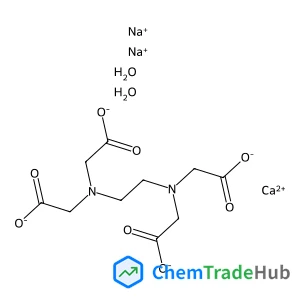
EthylenediaminetetraaceticacidcalciumDisodiumsalthydrate
CAS Number:
23411-34-9
Molecular Formula:
C10H16CaN2Na2O10
Recommended Suppliers







Disclaimer
This page provides academic journal information for reference and research purposes only. We are not affiliated with any journal publishers and do not handle publication submissions. For publication-related inquiries, please contact the respective journal publishers directly.
If you notice any inaccuracies in the information displayed, please contact us at support@chemtradehub.com. We will promptly review and address your concerns.