












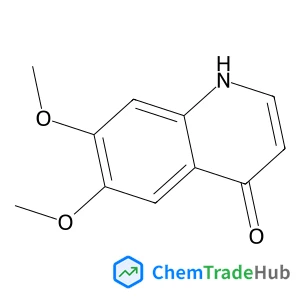
Synthesis of pyrroles: reaction of chromium N-alkylaminocarbene complexes with α,β-unsaturated aldehydes
Literature Information
Publication Date
2006-04-26
DOI
10.1039/B602924H
Impact Factor
6.222
Authors
Kohei Fuchibe, Daisuke Ono, Takahiko Akiyama
View Original
Abstract
N-Alkylaminocarbene complexes of chromium were found to react with α,β-unsaturated aldehydes to give pyrroles in good yields.
Related Literature
Application of electrospray ionization mass spectrometry for the evaluation of alkaloids binding to G-quadruplex of HIV-1 integrase inhibitors
Run Hao, Yameng Liu, Rugang Zhong
2013-11-18
Paper
DOI: 10.1039/C3AY41494A
Detection of Fe3+ using a novel hyperbranched polymeric spectral sensor
Wenbo Guo, Tengxuan Tang, Shenzhou Lu, Dongmei Xu
2019-08-21
Paper
DOI: 10.1039/C9AY01483G
Retraction: Molybdenum-silver co-catalyzed cycloaddition of alkynes with N-isocyanoiminotriphenylphosphorane (NIITP): an efficient strategy for the synthesis of monosubstituted pyrazoles
Jiajia Lang, Shaojian Lin
2019-10-28
Retraction
DOI: 10.1039/C9CC90478F
An anti-influenza virus activity-calibrated chemical standardization approach for quality evaluation of indigo naturalis
Ting Zhang, Hao-zhou Huang, Run-chun Xu, Jia-bo Wang, Ming Yang, Jun-han Cao, Yi Zhang, Ding-kun Zhang, Li Han
2019-08-19
Paper
DOI: 10.1039/C9AY01420A
A straightforward method for automated Fmoc-based synthesis of bio-inspired peptide crypto-thioesters
Victor P. Terrier, Hélène Adihou, Mathieu Arnould, Agnès F. Delmas, Vincent Aucagne
2015-09-23
Edge Article
DOI: 10.1039/C5SC02630J
The extraction of pyrethroid insecticides in juice and tea beverages by liquid-phase microextraction using deep eutectic solvents
Heng Qian, Chaoran Liu, Qian Yang, Xinya Liu, Haixiang Gao, Wenfeng Zhou
2019-09-02
Paper
DOI: 10.1039/C9AY01518C
Analysis of different Flos Chrysanthemum tea samples with the use of two-dimensional chromatographic fingerprints, which were interpreted by different multivariate methods
Serge Kokot
2014-12-02
Paper
DOI: 10.1039/C4AY02115K
Exploring the potential of high resolution inductively coupled plasma mass spectrometry towards non-destructive control and validation of electroless gold nanoparticles onto silicon nanowires hybrids
Marcus Koch, Petra Herbeck-Engel, Igor Iatsunskyi
2019-07-02
Paper
DOI: 10.1039/C9AY01182J
Application of supramolecular solvent-based dispersive liquid–liquid microextraction for trace monitoring of lead in food samples
Ayoob Rastegar, Ahmad Alahabadi, Ali Esrafili, Zahra Rezai, Shahram Nazari
2016-06-01
Paper
DOI: 10.1039/C6AY01463A
You might also like
Compound Q&A
What are the main uses of 1H-Indazole-6-carbonitrile (CAS: 141290-59-7)?
1H-Indazole-6-carbonitrile finds applications in pharmaceuticals, where it serve...
141290-59-71H-Indazole-6-carbon...
Compound Q&A
How should waste containing Dioctyl (2E)-2-butenedioate (CAS: 2997-85-5) be handled?
Waste containing Dioctyl (2E)-2-butenedioate (CAS: 2997-85-5) should be collecte...
2997-85-5Dioctyl (2E)-2-buten...
Compound Q&A
What industries use Sodium [(1,2-benzoxazol-3-ylmethyl)sulfonyl]azanide (CAS: 68291-98-5)?
Sodium [(1,2-benzoxazol-3-ylmethyl)sulfonyl]azanide is primarily used in pharmac...
68291-98-5Sodium [(1,2-benzoxa...
Compound Q&A
Are there alternatives to Dimethyl 4-(4,4,5,5-tetramethyl-1,3,2-dioxaborolan-2-yl)-2,6-pyridinedicarboxylate (CAS: 741709-66-0) in synthesis?
Dimethyl 4-(4,4,5,5-tetramethyl-1,3,2-dioxaborolan-2-yl)-2,6-pyridinedicarboxyla...
741709-66-0Dimethyl 4-(4,4,5,5-...
Compound Q&A
How should waste containing 2-Fluoro-6-hydrazinopyridine (CAS: 80714-39-2) be handled?
Waste containing 2-Fluoro-6-hydrazinopyridine (CAS: 80714-39-2) should be manage...
80714-39-22-Fluoro-6-hydrazino...
Compound Q&A
What is 6-Formyl-2-pyridinecarboxylic acid (CAS: 499214-11-8)?
6-Formyl-2-pyridinecarboxylic acid is an organic compound with the molecular for...
499214-11-86-Formyl-2-pyridinec...
Compound Q&A
What is the market or research trend for 3-(3,4-dimethoxyphenyl)-2,5-dimethyl-N-(2-morpholin-4-ylethyl)pyrazolo[1,5-a]pyrimidin-7-amine (CAS: 900874-91-1)?
Research trends for this compound indicate a focus on its potential applications...
900874-91-13-(3,4-dimethoxyphen...
Compound Q&A
How is 9H-Tribenzo[b,d,f]azepine (CAS: 29875-73-8) typically synthesized?
9H-Tribenzo[b,d,f]azepine is typically synthesized via a multi-step process invo...
29875-73-89H-Tribenzo[b,d,f]az...
Compound Q&A
How is 1-Cyclopropyl-7-ethoxy-6-fluoro-8-methoxy-4-oxo-1,4-dihydro-3-quinolinecarboxylic acid (CAS: 1797982-51-4) typically synthesized?
1-Cyclopropyl-7-ethoxy-6-fluoro-8-methoxy-4-oxo-1,4-dihydro-3-quinolinecarboxyli...
1797982-51-41-Cyclopropyl-7-etho...
Compound Q&A
How should waste containing Methyl 3-oxo-1,2,3,4-tetrahydro-6-quinoxalinecarboxylate (CAS: 671820-52-3) be handled?
Waste containing Methyl 3-oxo-1,2,3,4-tetrahydro-6-quinoxalinecarboxylate (CAS: ...
671820-52-3Methyl 3-oxo-1,2,3,4...
Source Journal
Chemical Communications

CiteScore:
8.6
Self-citation Rate:
4.7%
Articles per Year:
2458
ChemComm publishes urgent research which is of outstanding significance and interest to experts in the field, while also appealing to the journal’s broad chemistry readership. Our communication format is ideally suited to short, urgent studies that are of such importance that they require accelerated publication. Our scope covers all topics in chemistry, and research at the interface of chemistry and other disciplines (such as materials science, nanoscience, physics, engineering and biology) where there is a significant novelty in the chemistry aspects. Major topic areas covered include: Analytical Chemistry Catalysis Chemical Biology and medicinal chemistry Computational Chemistry and Machine Learning Energy and sustainable chemistry Environmental Chemistry Green Chemistry Inorganic Chemistry Materials Chemistry Nanoscience Organic Chemistry Physical Chemistry Polymer Chemistry Supramolecular Chemistry
Recommended Compounds
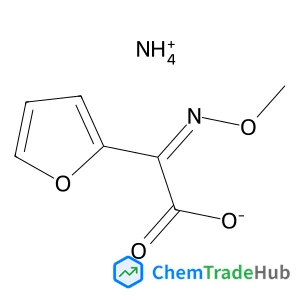
Ammonium (Z)-2-(furan-2-yl)-2-(methoxyimino)acetate
CAS Number:
97148-39-5
Molecular Formula:
C7H10N2O4
Recommended Suppliers





Disclaimer
This page provides academic journal information for reference and research purposes only. We are not affiliated with any journal publishers and do not handle publication submissions. For publication-related inquiries, please contact the respective journal publishers directly.
If you notice any inaccuracies in the information displayed, please contact us at support@chemtradehub.com. We will promptly review and address your concerns.