












Effects of a phosphonate anchoring group on the excited state electron transfer rates from a terthiophene chromophore to a ZnO nanocrystal
Literature Information
Publication Date
2017-08-29
DOI
10.1039/C7CP03784H
Impact Factor
3.676
Authors
Amanda N. Oehrlein, Antonio Sanchez-Diaz, Philip C. Goff, Gretchen M. Ziegler, Ted M. Pappenfus, Kent R. Mann, David A. Blank, Wayne L. Gladfelter
View Original
Abstract
Terthiophene dyes were synthesized having a carboxylate or a phosphonate moiety at the 2-position which serves as an anchoring group to zinc oxide nanocrystals (ZnO NCs). Electronic absorption and fluorescence measurements, combined with reduction potentials, provided estimates of −1.81 and −1.86 V vs. NHE for the excited state reduction potential of the carboxylate and phosphonate, respectively. Static quenching was observed when the dyes were bound to the surface of acetate-capped ZnO NCs having a diameter of 2.8 nm. Stern–Volmer studies conducted at several dye concentrations established that a minor fraction of the adsorbed dye remained unquenched even at 1 : 1 dye to NC ratios. Adsorption isotherm measurements established that the phosphonate binds more strongly than the carboxylate and that saturation coverage was ∼1.2 dyes per nm2 for both dyes. Ultrafast transient absorption spectroscopic experiments were used to probe excited state dynamics. In the presence of ZnO NCs, disappearance of the singlet excited state of the dye corresponded to appearance of the spectroscopic signature of the oxidized dye with a time constant of 1.5 ± 0.1 and 6.1 ± 0.2 ps, respectively, for the carboxylate and phosphonate dye. The difference in the electron transfer rates was attributed to a larger electronic coupling for the dye having the carboxylate anchoring group.
Related Literature
Synthesis and characterization of polythiophenes with alkenyl substituents
Nadia Hundt, Kumaranand Palaniappan, Prakash Sista, John W. Murphy, Jing Hao, Hien Nguyen, Eugene Stein, Michael C. Biewer, Bruce E. Gnade, Mihaela C. Stefan
2010-08-31
Paper
DOI: 10.1039/C0PY00176G
Synthesis and fluorescence properties of hyperbranched poly(amidoamine)s with high density tertiary nitrogen
Miaojun Ding
2010-09-21
Paper
DOI: 10.1039/C0PY00194E
Polymer–protein conjugates: an enzymatic activity perspective
Marc A. Gauthier, Harm-Anton Klok
2010-06-11
Review Article
DOI: 10.1039/C0PY90001J
Aliphatic polyester elastomers derived from erythritol and α,ω-diacids
Devin G. Barrett, Wei Luo, Muhammad N. Yousaf
2010-01-05
Paper
DOI: 10.1039/B9PY00226J
Functional polymers for optoelectronic applications by RAFT polymerization
Graeme Moad, Ming Chen, Matthias Häussler, Almar Postma, Ezio Rizzardo, San H. Thang
2010-09-23
Review Article
DOI: 10.1039/C0PY00179A
Non-viral siRNA delivery vectors: dendritic molecular transporter and molecular transporter nanovectors for target gene silencing‡
Sharon K. Hamilton, Artez L. Sims, Jenna Donavan, Eva Harth
2010-11-18
Paper
DOI: 10.1039/C0PY00342E
Thermo-responsive cellulose-based architectures: tailoring LCST using poly(ethylene glycol) methacrylates‡
Christian Porsch, Susanne Hansson, Niklas Nordgren, Eva Malmström
2011-02-16
Paper
DOI: 10.1039/C0PY00417K
Light driven asymmetric polymerization: an approach for tele-control reaction
Hiromasa Goto, Kohsuke Kawabata
2011-03-26
Paper
DOI: 10.1039/C0PY00396D
Recent advances in entropy-driven ring-opening polymerizations
Satu Strandman, Julien E. Gautrot, X. X. Zhu
2010-12-01
Review Article
DOI: 10.1039/C0PY00328J
You might also like
Compound Q&A
Is 6-(3-Fluorophenyl)picolinic acid (CAS: 887982-40-3) safe?
6-(3-Fluorophenyl)picolinic acid is generally considered safe for laboratory use...
887982-40-36-(3-Fluorophenyl)pi...
Compound Q&A
What industries use (3R)-3-Pyrrolidinol (CAS: 2799-21-5)?
(3R)-3-Pyrrolidinol is used in the pharmaceutical industry as a precursor for dr...
2799-21-5(3R)-3-Pyrrolidinol
Compound Q&A
What precautions should be taken when handling (4R,5R)-4,5-Diethoxycarbonyl-2,2-dimethyldioxolane (CAS: 59779-75-8)?
When handling (4R,5R)-4,5-Diethoxycarbonyl-2,2-dimethyldioxolane (CAS: 59779-75-...
59779-75-8(4R,5R)-4,5-Diethoxy...
Compound Q&A
How is 1-(6-Chloroimidazo[1,2-b]pyridazin-3-yl)ethanone (CAS: 90734-71-7) typically synthesized?
1-(6-Chloroimidazo[1,2-b]pyridazin-3-yl)ethanone is often synthesized via a mult...
90734-71-71-(6-Chloroimidazo[1...
Compound Q&A
What is the market or research trend for N-Ethyl-3,4-dimethylbenzylamine (CAS: 39180-83-1)?
The market for N-Ethyl-3,4-dimethylbenzylamine (CAS: 39180-83-1) remains steady,...
39180-83-1N-Ethyl-3,4-dimethyl...
Compound Q&A
What is Tert-butyl 3-(pyrrolidin-1-yl)azetidine-1-carboxylate (CAS: 1019008-21-9)?
Tert-butyl 3-(pyrrolidin-1-yl)azetidine-1-carboxylate is a chemical compound wit...
1019008-21-9Tert-butyl 3-(pyrrol...
Compound Q&A
What regulatory guidelines apply to 1-Bromo-3-chloro-2,4-dimethoxybenzene (CAS: 1228956-93-1)?
1-Bromo-3-chloro-2,4-dimethoxybenzene (CAS: 1228956-93-1) falls under the classi...
1228956-93-11-Bromo-3-chloro-2,4...
Compound Q&A
Is 8-Bromo-2-methyl-3,4-dihydroisoquinolin-1(2H)-one (CAS: 1368622-07-4) safe?
The safety of 8-Bromo-2-methyl-3,4-dihydroisoquinolin-1(2H)-one (CAS: 1368622-07...
1368622-07-48-Bromo-2-methyl-3,4...
Compound Q&A
Is Benzyl [(3S)-2,6-dioxo-3-piperidinyl]carbamate (CAS: 22785-43-9) safe?
Benzyl [(3S)-2,6-dioxo-3-piperidinyl]carbamate is generally safe when handled wi...
22785-43-9Benzyl [(3S)-2,6-dio...
Compound Q&A
How should 1-{[4-(4,4,5,5-Tetramethyl-1,3,2-dioxaborolan-2-yl)phenyl]sulfonyl}pyrrolidine (CAS: 928657-21-0) be stored?
1-{[4-(4,4,5,5-Tetramethyl-1,3,2-dioxaborolan-2-yl)phenyl]sulfonyl}pyrrolidine s...
928657-21-01-{[4-(4,4,5,5-Tetra...
Source Journal
Physical Chemistry Chemical Physics

CiteScore:
5.5
Self-citation Rate:
10.3%
Articles per Year:
3036
Physical Chemistry Chemical Physics (PCCP) is an international journal co-owned by 19 physical chemistry and physics societies from around the world. This journal publishes original, cutting-edge research in physical chemistry, chemical physics and biophysical chemistry. To be suitable for publication in PCCP, articles must include significant innovation and/or insight into physical chemistry; this is the most important criterion that reviewers and Editors will judge against when evaluating submissions. The journal has a broad scope and welcomes contributions spanning experiment, theory, computation and data science. Topical coverage includes spectroscopy, dynamics, kinetics, statistical mechanics, thermodynamics, electrochemistry, catalysis, surface science, quantum mechanics, quantum computing and machine learning. Interdisciplinary research areas such as polymers and soft matter, materials, nanoscience, energy, surfaces/interfaces, and biophysical chemistry are welcomed if they demonstrate significant innovation and/or insight into physical chemistry. Joined experimental/theoretical studies are particularly appreciated when complementary and based on up-to-date approaches.
Recommended Compounds
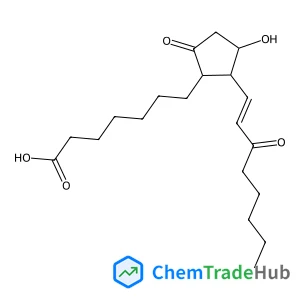
(11alpha,13E)-11-Hydroxy-9,15-dioxoprost-13-en-1-oic acid
CAS Number:
22973-19-9
Molecular Formula:
C20H32O5
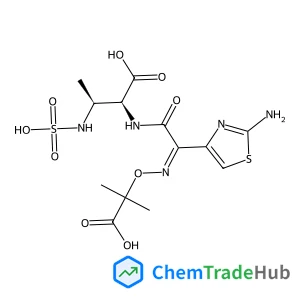
Aztreonam USP Related Compound A (Open-ring Aztreonam)
CAS Number:
87500-74-1
Molecular Formula:
C13H19N5O9S2
Recommended Suppliers





Disclaimer
This page provides academic journal information for reference and research purposes only. We are not affiliated with any journal publishers and do not handle publication submissions. For publication-related inquiries, please contact the respective journal publishers directly.
If you notice any inaccuracies in the information displayed, please contact us at support@chemtradehub.com. We will promptly review and address your concerns.