












Phase separation and physico-chemical processes at microscopic and macroscopic levels in MWCNT laden polymer blends using a unique droplet based architecture
Literature Information
Publication Date
2017-08-29
DOI
10.1039/C7CP03621C
Impact Factor
3.676
Authors
Binita Pathak, Goutam Prasanna Kar, Suryasarathi Bose, Saptarshi Basu
View Original
Abstract
We propose a unique contact-free droplet based architecture in which thermally induced instabilities can be used to precisely alter the phase separation behavior in a dynamically asymmetric polymer blend (solution of PS/PVME in toluene) by controlling the external heating rates and concentration of added nanoparticles (multi-walled carbon nanotube particles, MWCNTs). In addition, by tuning the heating rates, distinctly different macroscopic morphologies (hollow shell or globular mass) can be obtained as a final structure in such droplets. Furthermore, the process of separation is temporally aggravated by several orders (about 3–5 orders) as compared to the traditional bulk processing techniques (thin film of blends). Faster production rate and high throughput promise a new spray-based architecture for producing phase separated structures. Addition of MWCNTs in the polymer blend delays the separation phenomenon as it interacts with the polymers and alters the stability criteria. Furthermore, addition of nanoparticles also introduces a different mode of instability at higher external heating rates. Heat accumulation due to particles causes boiling of the solvent (toluene) trapped inside the droplet which leads to subsequent explosion of the entire droplet, in addition to the phase separation phenomena (at the microscopic level). Volumetric expansion due to bubble growth leads to the formation of a unique hollow structure which is distinctly different from the globular mass obtained at lower heating rates.
Related Literature
Novel electrochemical and pH stimulus-responsive supramolecular polymer with disparate pseudorotaxanes as relevant unimers
Xiang Ma, Ruyi Sun, Weifeng Li, He Tian
2011-03-08
Communication
DOI: 10.1039/C0PY00419G
Functional biorenewable polyesters from carvone-derived lactones
Jennifer R. Lowe, Mark T. Martello, William B. Tolman, Marc A. Hillmyer
2010-12-10
Paper
DOI: 10.1039/C0PY00283F
NMR of Na+, glycine and HDO in isotropic and anisotropic carrageenan gels
Christoph Naumann, Philip William Kuchel
2010-06-01
Paper
DOI: 10.1039/C0PY00038H
Synthesis, characterization and in vitrodegradation of 3D-microstructured poly(ε-caprolactone) resins
Stefan Theiler, Michael Teske, Helmut Keul, Katrin Sternberg, Martin Möller
2010-06-09
Paper
DOI: 10.1039/C0PY00097C
A fluorescent all-fluorene polyazomethine—towards soluble conjugated polymers exhibiting high fluorescence and electrochromic properties
Satyananda Barik, W. G. Skene
2011-02-07
Paper
DOI: 10.1039/C0PY00394H
Conjugated polyelectrolyte as signal amplifier for fluorogenic probe based enzyme activity study
Ruoyu Zhan, Angela Jun Hiong Tan, Bin Liu
2010-11-02
Paper
DOI: 10.1039/C0PY00265H
Poly(3-dodedyl-2,5-thienylenevinylene)s from the Stille coupling and the Horner–Emmons reaction
Taina Matos, Rui Li, Jason E. Lewis, Jian Zhang, Xiaomei Jiang
2010-02-11
Paper
DOI: 10.1039/B9PY00324J
You might also like
Compound Q&A
Is 6-(3-Fluorophenyl)picolinic acid (CAS: 887982-40-3) safe?
6-(3-Fluorophenyl)picolinic acid is generally considered safe for laboratory use...
887982-40-36-(3-Fluorophenyl)pi...
Compound Q&A
What industries use (3R)-3-Pyrrolidinol (CAS: 2799-21-5)?
(3R)-3-Pyrrolidinol is used in the pharmaceutical industry as a precursor for dr...
2799-21-5(3R)-3-Pyrrolidinol
Compound Q&A
What precautions should be taken when handling (4R,5R)-4,5-Diethoxycarbonyl-2,2-dimethyldioxolane (CAS: 59779-75-8)?
When handling (4R,5R)-4,5-Diethoxycarbonyl-2,2-dimethyldioxolane (CAS: 59779-75-...
59779-75-8(4R,5R)-4,5-Diethoxy...
Compound Q&A
How is 1-(6-Chloroimidazo[1,2-b]pyridazin-3-yl)ethanone (CAS: 90734-71-7) typically synthesized?
1-(6-Chloroimidazo[1,2-b]pyridazin-3-yl)ethanone is often synthesized via a mult...
90734-71-71-(6-Chloroimidazo[1...
Compound Q&A
What is the market or research trend for N-Ethyl-3,4-dimethylbenzylamine (CAS: 39180-83-1)?
The market for N-Ethyl-3,4-dimethylbenzylamine (CAS: 39180-83-1) remains steady,...
39180-83-1N-Ethyl-3,4-dimethyl...
Compound Q&A
What is Tert-butyl 3-(pyrrolidin-1-yl)azetidine-1-carboxylate (CAS: 1019008-21-9)?
Tert-butyl 3-(pyrrolidin-1-yl)azetidine-1-carboxylate is a chemical compound wit...
1019008-21-9Tert-butyl 3-(pyrrol...
Compound Q&A
What regulatory guidelines apply to 1-Bromo-3-chloro-2,4-dimethoxybenzene (CAS: 1228956-93-1)?
1-Bromo-3-chloro-2,4-dimethoxybenzene (CAS: 1228956-93-1) falls under the classi...
1228956-93-11-Bromo-3-chloro-2,4...
Compound Q&A
Is 8-Bromo-2-methyl-3,4-dihydroisoquinolin-1(2H)-one (CAS: 1368622-07-4) safe?
The safety of 8-Bromo-2-methyl-3,4-dihydroisoquinolin-1(2H)-one (CAS: 1368622-07...
1368622-07-48-Bromo-2-methyl-3,4...
Compound Q&A
Is Benzyl [(3S)-2,6-dioxo-3-piperidinyl]carbamate (CAS: 22785-43-9) safe?
Benzyl [(3S)-2,6-dioxo-3-piperidinyl]carbamate is generally safe when handled wi...
22785-43-9Benzyl [(3S)-2,6-dio...
Compound Q&A
How should 1-{[4-(4,4,5,5-Tetramethyl-1,3,2-dioxaborolan-2-yl)phenyl]sulfonyl}pyrrolidine (CAS: 928657-21-0) be stored?
1-{[4-(4,4,5,5-Tetramethyl-1,3,2-dioxaborolan-2-yl)phenyl]sulfonyl}pyrrolidine s...
928657-21-01-{[4-(4,4,5,5-Tetra...
Source Journal
Physical Chemistry Chemical Physics

CiteScore:
5.5
Self-citation Rate:
10.3%
Articles per Year:
3036
Physical Chemistry Chemical Physics (PCCP) is an international journal co-owned by 19 physical chemistry and physics societies from around the world. This journal publishes original, cutting-edge research in physical chemistry, chemical physics and biophysical chemistry. To be suitable for publication in PCCP, articles must include significant innovation and/or insight into physical chemistry; this is the most important criterion that reviewers and Editors will judge against when evaluating submissions. The journal has a broad scope and welcomes contributions spanning experiment, theory, computation and data science. Topical coverage includes spectroscopy, dynamics, kinetics, statistical mechanics, thermodynamics, electrochemistry, catalysis, surface science, quantum mechanics, quantum computing and machine learning. Interdisciplinary research areas such as polymers and soft matter, materials, nanoscience, energy, surfaces/interfaces, and biophysical chemistry are welcomed if they demonstrate significant innovation and/or insight into physical chemistry. Joined experimental/theoretical studies are particularly appreciated when complementary and based on up-to-date approaches.
Recommended Compounds
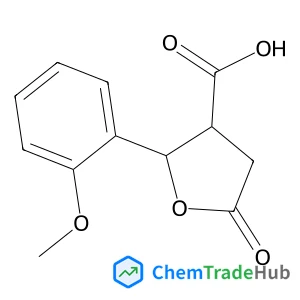
trans-2-(2-Methoxyphenyl)-5-oxotetrahydrofuran-3-carboxylic acid
CAS Number:
99226-02-5
Molecular Formula:
C12H12O5
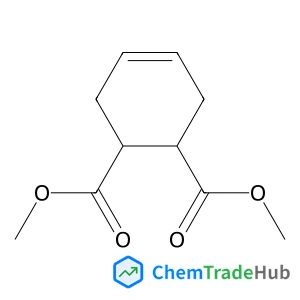
4-Cyclohexene-1,2-dicarboxylic acid, 1,2-dimethyl ester, (1R,2R)-rel-
CAS Number:
17673-68-6
Molecular Formula:
C10H14O4
Recommended Suppliers





Disclaimer
This page provides academic journal information for reference and research purposes only. We are not affiliated with any journal publishers and do not handle publication submissions. For publication-related inquiries, please contact the respective journal publishers directly.
If you notice any inaccuracies in the information displayed, please contact us at support@chemtradehub.com. We will promptly review and address your concerns.