












Catalytic conversion of biomass-derived levulinic acid to valerate esters as oxygenated fuels using supported ruthenium catalysts
Literature Information
Publication Date
2013-08-13
DOI
10.1039/C3GC40927A
Impact Factor
10.182
Authors
Tao Pan, Jin Deng, Qing Xu, Yang Xu, Qing-Xiang Guo, Yao Fu
View Original
Abstract
The development of the catalytic conversion of biomass-based platform molecules into oxygenated fuel molecules is of great significance in order to reduce the dependence on fossil resources and to solve environmental problems. Alkyl valerate esters were proven to have the potential to be renewable additives of gasoline and diesel. In this work, we studied the hydrogenation of levulinic acid (LA) to valerate esters over supported Ru catalysts, and found that the acidity was an important factor for the catalyst performance. A bifunctional catalyst Ru/SBA-SO3H was developed as an active catalyst, and a highest yield of 94% to ethyl valerate (EV) was achieved. The catalyst was characterized by nitrogen adsorption/desorption methods, X-ray power diffraction (XRD), transmission electron spectroscopy (TEM) and X-ray photoelectron spectroscopy (XPS). The effects of reaction conditions were comprehensively investigated and probable reaction pathways were proposed and verified. The conversion of LA to various alkyl valerate esters can also be catalyzed by the bifunctional catalyst. In addition, supported Cu and Ni catalysts were also screened under similar reaction conditions as Ru-based catalysts, and the combination of Ni/SBA-15 and SBA-SO3H exhibited activity for the conversion of LA to EV.
Related Literature
Catalytic asymmetric substitution of ortho-hydroxybenzyl alcohols with tetronic acid-derived enamines: enantioselective synthesis of tetronic acid-derived diarylmethanes
Meng-Meng Xu, Hai-Qing Wang, Ying Wan, Guofeng He, Jingjing Yan, Shu Zhang, Shu-Liang Wang, Feng Shi
2016-12-12
Research Article
DOI: 10.1039/C6QO00549G
The influence of the central acceptor unit on the optoelectronic properties and photovoltaic performance of A–D–A–D–A-type co-oligomers
Ibrahim Ata, Duško Popovic, Mika Lindén, Amaresh Mishra, Peter Bäuerle
2017-02-10
Research Article
DOI: 10.1039/C7QO00043J
A general synthesis of unnatural α-amino acids by iron-catalysed olefin–olefin coupling via generated radicals
Nadezhda V. Stoletova, Vladislav I. Kovalev, Tat'yana F. Savel'yeva, Victor I. Maleev
2019-02-18
Research Article
DOI: 10.1039/C9QO00108E
Synthesis of homoazafullerene [C59N(CH2)]R and azahomoazafullerene [C59N(NH)]R
Dan Xu, Yanbang Li, Ning Lou
2017-02-16
Research Article
DOI: 10.1039/C7QO00098G
Synthesis of 2,3-diaza-anthraquinones via the bidentate Lewis acid catalysed inverse electron-demand Diels–Alder (IEDDA) reaction
Longcheng Hong, Sebastian Ahles, Marcel A. Strauss, Christian Logemann, Hermann A. Wegner
2017-04-05
Research Article
DOI: 10.1039/C7QO00172J
A copper-catalyzed arylation/nucleophilic addition/fragmentation/C–S bond formation cascade: synthesis of bis(arylthio)imines
Wei-Si Guo, Yuan-Chao Wang, Qian Dou, Li-Rong Wen, Ming Li
2017-01-03
Research Article
DOI: 10.1039/C6QO00739B
AgNO3-catalyzed direct C–H arylation of quinolines by oxidative decarboxylation of aromatic carboxylic acids
Jin-Wei Yuan, Liang-Ru Yang, Pu Mao, Ling-Bo Qu
2016-12-05
Research Article
DOI: 10.1039/C6QO00533K
Electronic and steric effects on the three-fold Scholl-type cycloheptatriene ring formation around a tribenzotriquinacene core‡
Ho-Wang Ip, Hak-Fun Chow, Dietmar Kuck
2017-03-16
Research Article
DOI: 10.1039/C7QO00132K
Tuning liquid crystalline phase behaviour in columnar crown ethers by sulfur substituents
Jochen Kirres, Katharina Schmitt, Iris Wurzbach, Frank Giesselmann, Sabine Ludwigs, Mark Ringenberg, Angelika Baro, Sabine Laschat
2017-03-07
Research Article
DOI: 10.1039/C7QO00077D
Selective deprotonation of tetra[3,4]thienylene in the presence of n-BuLi
Bingbing Li, Chunli Li, Zhiying Ma, Li Xu, Hua Wang
2017-02-06
Research Article
DOI: 10.1039/C6QO00754F
You might also like
Compound Q&A
What precautions should be taken when handling 4-Methyl-6-(trifluoromethyl)quinoline (CAS: 40716-16-3)?
When handling 4-Methyl-6-(trifluoromethyl)quinoline (CAS: 40716-16-3), safety go...
40716-16-34-Methyl-6-(trifluor...
Compound Q&A
What is 4-(3,5-Difluorophenyl)aniline (CAS: 405058-00-6)?
4-(3,5-Difluorophenyl)aniline is an aromatic organic compound with the CAS numbe...
405058-00-64-(3,5-Difluoropheny...
Compound Q&A
How is 5-{[4-(Trifluoromethyl)phenyl]sulfanyl}-1,2,3-thiadiazole-4-carboxylic acid (CAS: 338982-07-3) typically synthesized?
5-{[4-(Trifluoromethyl)phenyl]sulfanyl}-1,2,3-thiadiazole-4-carboxylic acid can ...
338982-07-35-{[4-(Trifluorometh...
Compound Q&A
What is the market or research trend for 4-Benzylaniline hydrochloride (CAS: 6317-57-3)?
The market for 4-Benzylaniline hydrochloride (CAS: 6317-57-3) is steadily growin...
6317-57-34-Benzylaniline hydr...
Compound Q&A
Is [3-(Diethylsulfamoyl)phenyl]boronic acid (CAS: 871329-58-7) safe?
[3-(Diethylsulfamoyl)phenyl]boronic acid is generally considered safe when handl...
871329-58-7[3-(Diethylsulfamoyl...
Compound Q&A
What are the main uses of 3-Bromo-2,5-dimethoxyaniline (CAS: 115929-62-9)?
3-Bromo-2,5-dimethoxyaniline is mainly used in the pharmaceutical and chemical i...
115929-62-93-Bromo-2,5-dimethox...
Compound Q&A
What regulatory guidelines apply to N-Methyl-1-(5-methyl-1H-indol-3-yl)methanamine (CAS: 915922-67-7)?
N-Methyl-1-(5-methyl-1H-indol-3-yl)methanamine (CAS: 915922-67-7) is subject to ...
915922-67-7N-Methyl-1-(5-methyl...
Compound Q&A
What industries use Carbamic acid, N-[(5S)-5,6-diamino-6-oxohexyl]-, 1,1-dimethylethyl ester (CAS: 24828-96-4)?
This compound is primarily used in the pharmaceutical industry for the synthesis...
24828-96-4Carbamic acid, N-[(5...
Compound Q&A
How should 2-Methyl-2-propanyl [(1S,3R)-3-aminocyclohexyl]carbamate (CAS: 1298101-47-9) be stored?
2-Methyl-2-propanyl [(1S,3R)-3-aminocyclohexyl]carbamate (CAS: 1298101-47-9) sho...
1298101-47-92-Methyl-2-propanyl ...
Compound Q&A
What industries use Ethyl 2-bromo-4,4,4-trifluorobutanoate (CAS: 367-33-9)?
Ethyl 2-bromo-4,4,4-trifluorobutanoate (CAS: 367-33-9) is utilized in the pharma...
367-33-9Ethyl 2-bromo-4,4,4-...
Source Journal
Green Chemistry

CiteScore:
16.1
Self-citation Rate:
7.5%
Articles per Year:
944
Green Chemistry provides a unique forum for the publication of innovative research on the development of alternative green and sustainable technologies. The scope of Green Chemistry is based on, but not limited to, the definition proposed by Anastas and Warner (Green Chemistry: Theory and Practice, P T Anastas and J C Warner, Oxford University Press, Oxford, 1998). Green chemistry is the utilisation of a set of principles that reduces or eliminates the use or generation of hazardous substances in the design, manufacture and application of chemical products. Green Chemistry is at the frontiers of this continuously-evolving interdisciplinary science and publishes research that attempts to reduce the environmental impact of the chemical enterprise by developing a technology base that is inherently non-toxic to living things and the environment. Submissions on all aspects of research relating to the endeavour are welcome. The journal publishes original and significant cutting-edge research that is likely to be of wide general appeal. To be published, work must present a significant advance in green chemistry. Papers must contain a comparison with existing methods and demonstrate advantages over those methods before publication can be considered. For more information please see this Editorial. Coverage includes the following, but is not limited to: Design (e.g. biomimicry, design for degradation/recycling/reduced toxicity…) Reagents & Feedstocks (e.g. renewables, CO2, solvents, auxiliary agents, waste utilization…) Synthesis (e.g. organic, inorganic, synthetic biology…) Catalysis (e.g. homogeneous, heterogeneous, enzyme, whole cell…) Process (e.g. process design, intensification, separations, recycling, efficiency…) Energy (e.g. renewable energy, fuels, photovoltaics, fuel cells, energy storage, energy carriers…) Applications (e.g. electronics, dyes, consumer products, coatings, pharmaceuticals, preservatives, building materials, chemicals for industry/agriculture/mining…) Impact (e.g. safety, metrics, LCA, sustainability, (eco)toxicology…) Green chemistry is, by definition, a continuously-evolving frontier. Therefore, the inclusion of a particular material or technology does not, of itself, guarantee that a paper is suitable for the journal. To be suitable, the novel advance should have the potential for reduced environmental impact relative to the state of the art. Green Chemistry does not normally deal with research associated with 'end-of-pipe' or remediation issues.
Recommended Compounds
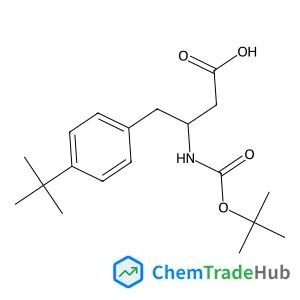
(S)-3-((tert-Butoxycarbonyl)amino)-4-(4-(tert-butyl)phenyl)butanoic acid
CAS Number:
403661-85-8
Molecular Formula:
C19H29NO4
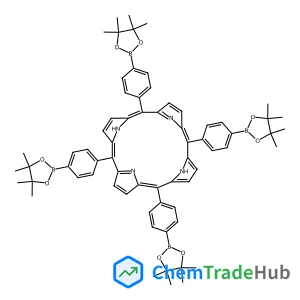
5,10,15,20-tetrakis(4-boronic acid pinacol ester phenyl) porphyrin
CAS Number:
1332748-00-1
Molecular Formula:
C68H74B4N4O8
![6-Bromo-3-ethyl-3H-imidazo[4,5-b]pyridine structure](https://static.chemtradehub.com/structs/103/1033202-59-3-2a8f.webp "6-Bromo-3-ethyl-3H-imidazo[4,5-b]pyridine structure")
Recommended Suppliers





Disclaimer
This page provides academic journal information for reference and research purposes only. We are not affiliated with any journal publishers and do not handle publication submissions. For publication-related inquiries, please contact the respective journal publishers directly.
If you notice any inaccuracies in the information displayed, please contact us at support@chemtradehub.com. We will promptly review and address your concerns.