












Back cover
Literature Information
Publication Date
DOI
10.1039/C3CP90173D
Impact Factor
3.676
Authors
View Original
Abstract
A graphical abstract is available for this content
Recommended Journals
Related Literature
Potential energy and free energy surfaces of the formic acid dimer: Correlated ab initio calculations and molecular dynamics simulations
Jana Chocholoušová, Jaroslav Vacek, Pavel Hobza
2002-04-22
Paper
DOI: 10.1039/B110872G
Reactions of chemically activated C9H9 species. Part I. The product distribution of the reaction of phenyl radicals with propyne
Luc Vereecken, Holger F. Bettinger, Jozef Peeters
2002-04-22
Paper
DOI: 10.1039/B109452A
A spectroscopic study of the fluorination and defluorination reactions on single-walled carbon nanotubes
Pierre R. Marcoux, Joachim Schreiber, Patrick Batail, Serge Lefrant, Joël Renouard, Guy Jacob, David Albertini, Jean-Yves Mevellec
2002-05-02
Paper
DOI: 10.1039/B109770A
Kinetics of gas phase reactions of OH and Cl with aromatic aldehydes
2002-04-23
Paper
DOI: 10.1039/B200609J
Micellar aggregation of sulfonate surfactants studied by electron paramagnetic resonance of a cationic nitroxide: an experimental and computational approach
A. M. Tedeschi, G. D'Errico, E. Busi, R. Basosi, V. Barone
2002-04-25
Paper
DOI: 10.1039/B106833D
Surface photochemistry on confined systems: UV-laser-induced photodesorption of NO from Pd-nanostructures on Al2O3
Margarethe Kampling, Katharina Al-Shamery, Hans-Joachim Freund, Markus Wilde, Katsuyuki Fukutani, Yoshitada Murata
2002-05-09
Paper
DOI: 10.1039/B201357F
Two-step mechanism in cationic lipoplex formation as observed by dynamic light scattering, dielectric relaxation and circular dichroism methods
2002-05-13
Paper
DOI: 10.1039/B110503E
Interaction between probe molecules and zeolites. Part II:Interpretation of the IR spectra of CO and N2 adsorbed in NaY and NaRbY
A. V. Larin, D. P. Vercauteren, C. Lamberti, S. Bordiga, A. Zecchina
2002-04-29
Paper
DOI: 10.1039/B107242K
Fragmentations and reactions of three isotopically labelled dimethyl methylphosphonate ions produced by electrospray ionisation in an ion trap mass spectrometer
J. D. Barr, A. J. Bell, D. O. Konn, J. Murrell, C. M. Timperley, M. J. Waters, P. Watts
2002-05-03
Paper
DOI: 10.1039/B111192M
IR spectroscopy study of NO adsorption and NO + O2 co-adsorption on Al2O3
Tzvetomir Venkov, Konstantin Hadjiivanov, Dimitar Klissurski
2002-05-01
Paper
DOI: 10.1039/B111396H
You might also like
Compound Q&A
How should waste containing (6-Bromo-2-naphthyl)oxy](dimethyl)(2-methyl-2-propanyl)silane be handled?
Waste containing (6-Bromo-2-naphthyl)oxy](dimethyl)(2-methyl-2-propanyl)silane (...
100751-65-3[(6-Bromo-2-naphthyl...
Compound Q&A
How is 7-Fluoro-4-isoquinolinecarboxylic acid (CAS: 1841081-40-0) typically synthesized?
7-Fluoro-4-isoquinolinecarboxylic acid can be synthesized via a multi-step proce...
1841081-40-07-Fluoro-4-isoquinol...
Compound Q&A
What are the physical and chemical properties of 2,3,5,6-Tetrabromothieno[3,2-b]thiophene (CAS: 124638-53-5)?
2,3,5,6-Tetrabromothieno[3,2-b]thiophene is a crystalline compound with a high m...
124638-53-52,3,5,6-Tetrabromoth...
Compound Q&A
Is 1-[4-(Benzylamino)-7,8-dihydro-5H-pyrano[4,3-d]pyrimidin-2-yl]-2-methyl-1H-indole-4-carboxamide (CAS: 1542705-92-9) safe?
1-[4-(Benzylamino)-7,8-dihydro-5H-pyrano[4,3-d]pyrimidin-2-yl]-2-methyl-1H-indol...
1542705-92-91-[4-(Benzylamino)-7...
Compound Q&A
What is the market or research trend for imidazo[5,1-d]-1,2,3,5-tetrazine-8-carboxylic acid, 3,4-dihydro-3-methyl-4-oxo- (CAS: 113942-30-6)?
The market for imidazo[5,1-d]-1,2,3,5-tetrazine-8-carboxylic acid, 3,4-dihydro-3...
113942-30-6Imidazo[5,1-d]-1,2,3...
Compound Q&A
What is 3-(Triisopropylsilyl)propiolaldehyde (CAS: 163271-80-5)?
3-(Triisopropylsilyl)propiolaldehyde is a synthetic organic compound with the CA...
163271-80-53-(Triisopropylsilyl...
Compound Q&A
What regulatory guidelines apply to 6-Nitro-2H-1,4-benzoxazin-3(4H)-one (CAS: 81721-87-1)?
6-Nitro-2H-1,4-benzoxazin-3(4H)-one (CAS: 81721-87-1) is subject to various regu...
81721-87-16-Nitro-2H-1,4-benzo...
Compound Q&A
How should waste containing (3-Fluorophenyl)(4-{[(2-methyl-2-propanyl)oxy]carbonyl}-1-piperazinyl)acetic acid (CAS: 885272-91-3) be handled?
Waste containing (3-Fluorophenyl)(4-{[(2-methyl-2-propanyl)oxy]carbonyl}-1-piper...
885272-91-3(3-Fluorophenyl)(4-{...
Compound Q&A
What are the physical and chemical properties of N,N'-4,4'-Biphenyldiyldiisonicotinamide (CAS: 55119-40-9)?
N,N'-4,4'-Biphenyldiyldiisonicotinamide is a white crystalline solid with a mole...
55119-40-9N,N'-4,4'-Biphenyldi...
Compound Q&A
What industries use 6-Bromo-8-fluoro-2-quinazolinol (CAS: 1036756-15-6)?
6-Bromo-8-fluoro-2-quinazolinol is primarily used in the pharmaceutical industry...
1036756-15-66-Bromo-8-fluoro-2-q...
Source Journal
Physical Chemistry Chemical Physics

CiteScore:
5.5
Self-citation Rate:
10.3%
Articles per Year:
3036
Physical Chemistry Chemical Physics (PCCP) is an international journal co-owned by 19 physical chemistry and physics societies from around the world. This journal publishes original, cutting-edge research in physical chemistry, chemical physics and biophysical chemistry. To be suitable for publication in PCCP, articles must include significant innovation and/or insight into physical chemistry; this is the most important criterion that reviewers and Editors will judge against when evaluating submissions. The journal has a broad scope and welcomes contributions spanning experiment, theory, computation and data science. Topical coverage includes spectroscopy, dynamics, kinetics, statistical mechanics, thermodynamics, electrochemistry, catalysis, surface science, quantum mechanics, quantum computing and machine learning. Interdisciplinary research areas such as polymers and soft matter, materials, nanoscience, energy, surfaces/interfaces, and biophysical chemistry are welcomed if they demonstrate significant innovation and/or insight into physical chemistry. Joined experimental/theoretical studies are particularly appreciated when complementary and based on up-to-date approaches.
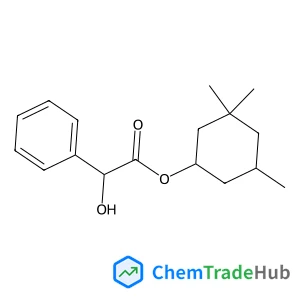
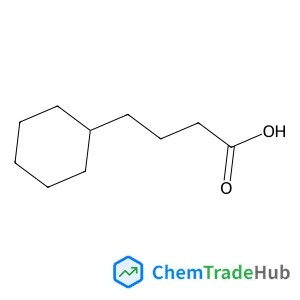
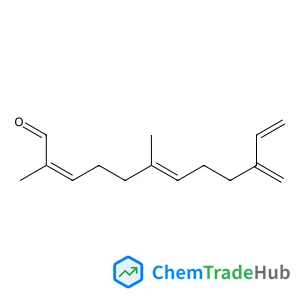
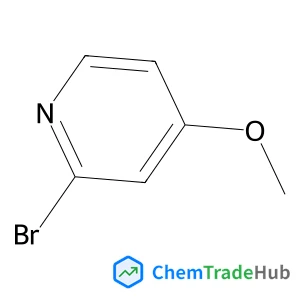
Recommended Compounds
Recommended Suppliers






Disclaimer
This page provides academic journal information for reference and research purposes only. We are not affiliated with any journal publishers and do not handle publication submissions. For publication-related inquiries, please contact the respective journal publishers directly.
If you notice any inaccuracies in the information displayed, please contact us at support@chemtradehub.com. We will promptly review and address your concerns.