


Kinetically controlled seed-mediated growth of narrow dispersed silver nanoparticles up to 120 nm: secondary nucleation, size focusing, and Ostwald ripening
Literature Information
Publication Date
2014-01-06
DOI
10.1039/C3CP54846E
Impact Factor
3.676
Authors
Ruilong Zong, Shikao Shi, Yongfa Zhu
View Original
Abstract
A facile synthesis method was developed based on the seed-mediated growth to get the narrow dispersed silver nanoparticles with controllable sizes ranging from 20 nm to larger than 120 nm. Environmentally friendly glucose acts as a reducing agent. Because of its weak reducing ability, the secondary nucleation is prevented in the seed-mediated growth, and the size of silver nanoparticles can be tuned continuously by the continuous addition of reactants. Controlling the supersaturation level is critical to suppress both the nucleation and Ostwald ripening, which can be realized by carefully controlling the addition rate of the reactants. We also set up a convenient method to determine the size and size-distribution of silver nanoparticles from the size-dependent absorption spectra of the colloids, and optimize the growth parameters using this method to get narrow dispersed silver nanoparticles.
Recommended Journals

Main Group Chemistry

Biocatalysis and Biotransformation

Acta Metallurgica Sinica-English Letters

Bioorganic & Medicinal Chemistry

Medicinal Chemistry Research

Electroanalysis

Atomization and Sprays

Journal of Asian Natural Products Research

Bioorganic & Medicinal Chemistry Letters

Chinese Journal of Chemistry
Related Literature
Mutual induced coordination in halogen-bonded anionic assemblies with (6,3) cation-templated topologies
Pierangelo Metrangolo, Frank Meyer, Tullio Pilati, Giancarlo Terraneo
2008-01-14
Communication
DOI: 10.1039/B716879A
Interpenetrating single helical capsules
Emanuela Berni, Joachim Garric, Corinne Lamit, Brice Kauffmann, Jean-Michel Léger, Ivan Huc
2008-02-28
Communication
DOI: 10.1039/B719712H
A new NCN pincer ruthenium complex and its catalytic activity for enantioselective hydrogenation of ketones
Jun-ichi Ito, Satoshi Ujiie, Hisao Nishiyama
2008-03-12
Communication
DOI: 10.1039/B800387D
Highly efficient quenching of excimer fluorescence by perylene diimide in DNA
Nicolas Bouquin, Vladimir L. Malinovskii, Robert Häner
2008-03-28
Communication
DOI: 10.1039/B802193G
Lewis acid-catalyzed hydrogenation: B(C6F5)3-mediated reduction of imines and nitriles with H2‡
Preston A. Chase, Titel Jurca, Douglas W. Stephan
2008-03-06
Communication
DOI: 10.1039/B718598G
Asymmetric oxidation of sulfides under solvent-free or highly concentrated conditions
Kazuhiro Matsumoto, Tetsufumi Yamaguchi, Tsutomu Katsuki
2008-02-05
Communication
DOI: 10.1039/B719265G
Synthesis of metallic magnesium nanoparticles by sonoelectrochemistry
Iris Haas, Aharon Gedanken
2008-02-08
Communication
DOI: 10.1039/B717670H
Exploring the relationship between cocrystal stability and symmetry: is Wallach's rule applicable to multi-component solids?
Tomislav Friščić, László Fábián, Jonathan C. Burley, David G. Reid, Melinda J. Duer, William Jones
2008-01-30
Communication
DOI: 10.1039/B717532A
Palladium-catalyzed three-component coupling of arynes with allylic acetates or halides and terminal alkynes promoted by cuprous iodide
Sivakolundu Bhuvaneswari, Masilamani Jeganmohan, Ming-Che Yang, Chien-Hong Cheng
2008-03-03
Communication
DOI: 10.1039/B800118A
You might also like
Compound Q&A
What is the market or research trend for N-(4-Methoxybenzyl)-2-pyridinamine (CAS: 52818-63-0)?
N-(4-Methoxybenzyl)-2-pyridinamine (CAS: 52818-63-0) is increasingly being used ...
52818-63-0N-(4-Methoxybenzyl)-...
Compound Q&A
What precautions should be taken when handling Ethyl 4-(2-chlorophenyl)-1,3-thiazole-2-carboxylate (CAS: 1050507-06-6)?
When handling Ethyl 4-(2-chlorophenyl)-1,3-thiazole-2-carboxylate, appropriate p...
1050507-06-6Ethyl 4-(2-chlorophe...
Compound Q&A
What regulatory guidelines apply to diethyldiselane (CAS: 628-39-7)?
Diethyldiselane (CAS: 628-39-7) is classified under the Globally Harmonized Syst...
628-39-7Diethyldiselane
Compound Q&A
What is the market or research trend for oxocopper (CAS: 12053-18-8)?
The market for oxocopper (CAS: 12053-18-8) is primarily driven by its use in cat...
12053-18-8oxocopper; oxo-(oxoc...
Compound Q&A
What is the market or research trend for 5-{[(2-Methyl-2-propanyl)oxy]carbonyl}-5-azaspiro[2.4]heptane-7-carboxylic acid?
The market for 5-{[(2-Methyl-2-propanyl)oxy]carbonyl}-5-azaspiro[2.4]heptane-7-c...
1268519-54-55-{[(2-Methyl-2-prop...
Compound Q&A
What is 2-(1-Pyrrolidinyl)-4-pyridinamine (CAS: 35981-63-6)?
2-(1-Pyrrolidinyl)-4-pyridinamine is a chemical compound with the CAS number 359...
35981-63-62-(1-Pyrrolidinyl)-4...
Compound Q&A
What are the physical and chemical properties of 2-(3-Pyridinyl)-1-azabicyclo[2.2.2]octane (CAS: 91556-75-1)?
2-(3-Pyridinyl)-1-azabicyclo[2.2.2]octane (CAS: 91556-75-1) is a crystalline sol...
91556-75-12-(3-Pyridinyl)-1-az...
Compound Q&A
How is (S)-Alpha-allyl-proline hydrochloride (CAS: 129704-91-2) typically synthesized?
(S)-Alpha-allyl-proline hydrochloride is usually synthesized via a Wittig reacti...
129704-91-2(S)-Alpha-allyl-prol...
Compound Q&A
What is 3-Methyl-1,2-oxazole-5-carboxylic acid (CAS: 4857-42-5)?
3-Methyl-1,2-oxazole-5-carboxylic acid (CAS: 4857-42-5) is an organic compound w...
4857-42-53-Methyl-1,2-oxazole...
Compound Q&A
How is Lys-SMCC-DM1 (CAS: 1281816-04-3) typically synthesized?
Lys-SMCC-DM1 is synthesized via a multi-step process involving the coupling of S...
1281816-04-3Lys-SMCC-DM1
Source Journal
Physical Chemistry Chemical Physics

CiteScore:
5.5
Self-citation Rate:
10.3%
Articles per Year:
3036
Physical Chemistry Chemical Physics (PCCP) is an international journal co-owned by 19 physical chemistry and physics societies from around the world. This journal publishes original, cutting-edge research in physical chemistry, chemical physics and biophysical chemistry. To be suitable for publication in PCCP, articles must include significant innovation and/or insight into physical chemistry; this is the most important criterion that reviewers and Editors will judge against when evaluating submissions. The journal has a broad scope and welcomes contributions spanning experiment, theory, computation and data science. Topical coverage includes spectroscopy, dynamics, kinetics, statistical mechanics, thermodynamics, electrochemistry, catalysis, surface science, quantum mechanics, quantum computing and machine learning. Interdisciplinary research areas such as polymers and soft matter, materials, nanoscience, energy, surfaces/interfaces, and biophysical chemistry are welcomed if they demonstrate significant innovation and/or insight into physical chemistry. Joined experimental/theoretical studies are particularly appreciated when complementary and based on up-to-date approaches.
Recommended Compounds
![1-(1-Benzyl-1,2,3,6-tetrahydropyridin-4-yl)-1H-benzo[d]imidazol-2(3H)-one structure](https://static.chemtradehub.com/structs/603/60373-71-9-7dfb.webp "1-(1-Benzyl-1,2,3,6-tetrahydropyridin-4-yl)-1H-benzo[d]imidazol-2(3H)-one structure")
1-(1-Benzyl-1,2,3,6-tetrahydropyridin-4-yl)-1H-benzo[d]imidazol-2(3H)-one
CAS Number:
60373-71-9
Molecular Formula:
C19H19N3O
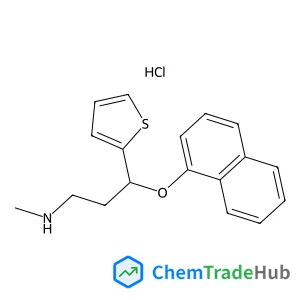
N-Methyl-3-(1-naphthyloxy)-3-(2-thienyl)-1-propanamine hydrochloride (1:1)
CAS Number:
1188266-11-6
Molecular Formula:
C18H20ClNOS
![N-{[(2-Methyl-2-propanyl)oxy]carbonyl}-L-methionylglycine structure](https://static.chemtradehub.com/structs/234/23446-03-9-e1e5.webp "N-{[(2-Methyl-2-propanyl)oxy]carbonyl}-L-methionylglycine structure")
N-{[(2-Methyl-2-propanyl)oxy]carbonyl}-L-methionylglycine
CAS Number:
23446-03-9
Molecular Formula:
C12H22N2O5S
Recommended Suppliers







Disclaimer
This page provides academic journal information for reference and research purposes only. We are not affiliated with any journal publishers and do not handle publication submissions. For publication-related inquiries, please contact the respective journal publishers directly.
If you notice any inaccuracies in the information displayed, please contact us at support@chemtradehub.com. We will promptly review and address your concerns.