












A Ru–Co hybrid material based on a molecular photosensitizer and a heterogeneous catalyst for light-driven water oxidation
Literature Information
Publication Date
2014-01-02
DOI
10.1039/C3CP54500H
Impact Factor
3.676
Authors
Hong-Yan Wang, Jia Liu, Jiefang Zhu, Stenbjörn Styring, Sascha Ott, Anders Thapper
View Original
Abstract
A novel approach to anchor a molecular photosensitizer onto a heterogeneous water oxidation catalyst via coordination bonds is presented. A photosensitizer (1) based on [Ru(bpy)3]2+ and decorated with two methylenediphosphonate (M2P) groups has been designed and synthesized for this purpose. The M2P groups in complex 1 allow for coordination of cobalt ions to afford a novel molecular–heterogeneous hybrid material P1. Scanning electron microscopy (SEM), energy-dispersive X-ray (EDX) spectroscopy and X-ray photoelectron spectroscopy (XPS) were used to characterize P1 as an amorphous, non-uniform material that contains Ru and Co in a ratio of 1 : 2. A suspension of P1 in a buffered aqueous solution is active as a light-driven water oxidation catalyst in the presence of persulfate (S2O82−) as electron acceptor. The yield of oxygen is higher when P1 is prepared in situ by mixing and illuminating 1 and Co2+ in the presence of S2O82−. After oxygen evolution ceases, a second material P2 can be isolated from the reaction mixture. P2 is characterized by a lower Ru content than P1, and contains Co in a higher oxidation state. Interestingly, P2 as a freshly prepared suspension is also active for light-driven water oxidation. It is shown that 1 resides in the interior of P1 and P2, and is thus in a location where undesirable quenching pathways of the photo-excited state of 1 limit the oxygen production yields for both P1 and P2.
Recommended Journals
Related Literature
Ruthenium-catalyzed enantioselective hydrogenation of quinoxalinones and quinazolinones
Chenghao Li, Shuxin Zhang, Shan Li, Yu Feng, Qing-Hua Fan
2021-12-03
Research Article
DOI: 10.1039/D1QO01598B
Molecular tweezers with a rotationally restricted linker and freely rotating porphyrin moieties
Rhys B. Murphy, Duc-Truc Pham, Jonathan M. White, Stephen F. Lincoln, Martin R. Johnston
2018-08-14
Paper
DOI: 10.1039/C8OB00944A
Natural products as modulators of the cyclic-AMP pathway: evaluation and synthesis of lead compounds
Saumitra Sengupta, Goverdhan Mehta
2018-08-24
Review Article
DOI: 10.1039/C8OB01388H
Synthesis and evaluation of N,S-compounds as chiral ligands for transfer hydrogenation of acetophenone
Jenny K. Ekegren, Peter Roth, Klas Källström, Tibor Tarnai, Pher G. Andersson
2002-12-09
Paper
DOI: 10.1039/B208907F
Chemoselective synthesis of isolated and fused fluorenones and their photophysical and antiviral properties
Ismail Althagafi, Ranjay Shaw, Rahul Panwar, Shally, Chanda Sinha, Amit Kumar, Yong-Tang Zheng, Ramendra Pratap
2018-09-19
Paper
DOI: 10.1039/C8OB01733F
Synthesis of protectin D1 analogs: novel pro-resolution and radiotracer agents
J. E. Tungen, M. Aursnes, S. Ramon, R. A. Colas, C. N. Serhan, S. Nuruddin, F. Willoch, T. V. Hansen
2018-08-31
Paper
DOI: 10.1039/C8OB01232F
Eugenunilones A–H: rearranged sesquiterpenoids from Eugenia uniflora
Mu Chen, Jia-Qing Cao, Song Ang, Ting-Ni Zeng, Ni-Ping Li, Tang-Jia Yang, Jun-Shan Liu, Yan Wu, Wen-Cai Ye, Lei Wang
2021-12-03
Research Article
DOI: 10.1039/D1QO01629F
Tuning the biomimetic performances of 4-hydroxyproline-containing cyclic peptoids
R. Schettini, C. Costabile, G. Della Sala, J. Buirey, M. Tosolini, P. Tecilla, M. C. Vaccaro, I. Bruno, F. De Riccardis, I. Izzo
2018-08-27
Paper
DOI: 10.1039/C8OB01522H
Möbius bis and tris-spiroaromatic systems
David Hall, Henry S. Rzepa
2002-12-02
Paper
DOI: 10.1039/B210415F
Preparation of polysubstituted dihydrofurans through a PhI(OAc)2-promoted haloenolcyclization of olefinic dicarbonyl compounds
Ji Liu, Qing-Yun Liu, Xing-Xiao Fang, Gong-Qing Liu, Yong Ling
2018-09-24
Paper
DOI: 10.1039/C8OB02161A
You might also like
Compound Q&A
What is the market or research trend for N-(4-Methoxybenzyl)-2-pyridinamine (CAS: 52818-63-0)?
N-(4-Methoxybenzyl)-2-pyridinamine (CAS: 52818-63-0) is increasingly being used ...
52818-63-0N-(4-Methoxybenzyl)-...
Compound Q&A
What precautions should be taken when handling Ethyl 4-(2-chlorophenyl)-1,3-thiazole-2-carboxylate (CAS: 1050507-06-6)?
When handling Ethyl 4-(2-chlorophenyl)-1,3-thiazole-2-carboxylate, appropriate p...
1050507-06-6Ethyl 4-(2-chlorophe...
Compound Q&A
What regulatory guidelines apply to diethyldiselane (CAS: 628-39-7)?
Diethyldiselane (CAS: 628-39-7) is classified under the Globally Harmonized Syst...
628-39-7Diethyldiselane
Compound Q&A
What is the market or research trend for oxocopper (CAS: 12053-18-8)?
The market for oxocopper (CAS: 12053-18-8) is primarily driven by its use in cat...
12053-18-8oxocopper; oxo-(oxoc...
Compound Q&A
What is the market or research trend for 5-{[(2-Methyl-2-propanyl)oxy]carbonyl}-5-azaspiro[2.4]heptane-7-carboxylic acid?
The market for 5-{[(2-Methyl-2-propanyl)oxy]carbonyl}-5-azaspiro[2.4]heptane-7-c...
1268519-54-55-{[(2-Methyl-2-prop...
Compound Q&A
What is 2-(1-Pyrrolidinyl)-4-pyridinamine (CAS: 35981-63-6)?
2-(1-Pyrrolidinyl)-4-pyridinamine is a chemical compound with the CAS number 359...
35981-63-62-(1-Pyrrolidinyl)-4...
Compound Q&A
What are the physical and chemical properties of 2-(3-Pyridinyl)-1-azabicyclo[2.2.2]octane (CAS: 91556-75-1)?
2-(3-Pyridinyl)-1-azabicyclo[2.2.2]octane (CAS: 91556-75-1) is a crystalline sol...
91556-75-12-(3-Pyridinyl)-1-az...
Compound Q&A
How is (S)-Alpha-allyl-proline hydrochloride (CAS: 129704-91-2) typically synthesized?
(S)-Alpha-allyl-proline hydrochloride is usually synthesized via a Wittig reacti...
129704-91-2(S)-Alpha-allyl-prol...
Compound Q&A
What is 3-Methyl-1,2-oxazole-5-carboxylic acid (CAS: 4857-42-5)?
3-Methyl-1,2-oxazole-5-carboxylic acid (CAS: 4857-42-5) is an organic compound w...
4857-42-53-Methyl-1,2-oxazole...
Compound Q&A
How is Lys-SMCC-DM1 (CAS: 1281816-04-3) typically synthesized?
Lys-SMCC-DM1 is synthesized via a multi-step process involving the coupling of S...
1281816-04-3Lys-SMCC-DM1
Source Journal
Physical Chemistry Chemical Physics

CiteScore:
5.5
Self-citation Rate:
10.3%
Articles per Year:
3036
Physical Chemistry Chemical Physics (PCCP) is an international journal co-owned by 19 physical chemistry and physics societies from around the world. This journal publishes original, cutting-edge research in physical chemistry, chemical physics and biophysical chemistry. To be suitable for publication in PCCP, articles must include significant innovation and/or insight into physical chemistry; this is the most important criterion that reviewers and Editors will judge against when evaluating submissions. The journal has a broad scope and welcomes contributions spanning experiment, theory, computation and data science. Topical coverage includes spectroscopy, dynamics, kinetics, statistical mechanics, thermodynamics, electrochemistry, catalysis, surface science, quantum mechanics, quantum computing and machine learning. Interdisciplinary research areas such as polymers and soft matter, materials, nanoscience, energy, surfaces/interfaces, and biophysical chemistry are welcomed if they demonstrate significant innovation and/or insight into physical chemistry. Joined experimental/theoretical studies are particularly appreciated when complementary and based on up-to-date approaches.
Recommended Compounds
![1-{3-[4-Amino-3-(4-phenoxyphenyl)-1H-pyrazolo[3,4-d]pyrimidin-1-yl]-1-piperidinyl}-2,3-dihydroxy-1-propanone structure](https://static.chemtradehub.com/structs/122/1226872-27-0-e037.webp "1-{3-[4-Amino-3-(4-phenoxyphenyl)-1H-pyrazolo[3,4-d]pyrimidin-1-yl]-1-piperidinyl}-2,3-dihydroxy-1-propanone structure")
1-{3-[4-Amino-3-(4-phenoxyphenyl)-1H-pyrazolo[3,4-d]pyrimidin-1-yl]-1-piperidinyl}-2,3-dihydroxy-1-propanone
CAS Number:
1226872-27-0
Molecular Formula:
C25H26N6O4
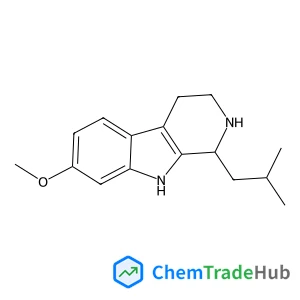
1-Isobutyl-7-methoxy-2,3,4,9-tetrahydro-1H-beta-carboline
CAS Number:
175975-76-5
Molecular Formula:
C16H22N2O
![(2R,6S)-6-[(Benzyloxy)methyl]-4-{[(2-methyl-2-propanyl)oxy]carbonyl}-2-morpholinecarboxylic acid structure](https://static.chemtradehub.com/structs/109/1093085-91-6-3382.webp "(2R,6S)-6-[(Benzyloxy)methyl]-4-{[(2-methyl-2-propanyl)oxy]carbonyl}-2-morpholinecarboxylic acid structure")
(2R,6S)-6-[(Benzyloxy)methyl]-4-{[(2-methyl-2-propanyl)oxy]carbonyl}-2-morpholinecarboxylic acid
CAS Number:
1093085-91-6
Molecular Formula:
C18H25NO6
![1,10-bis(3,5-dimethylphenyl)-12-hydroxy-4,5,6,7-tetrahydroiindeno[7,1-de:1',7'-fg][1,3,2]dioxaphosphocine 12-oxide structure](https://static.chemtradehub.com/structs/141/1412439-82-7-b9a9.webp "1,10-bis(3,5-dimethylphenyl)-12-hydroxy-4,5,6,7-tetrahydroiindeno[7,1-de:1',7'-fg][1,3,2]dioxaphosphocine 12-oxide structure")
1,10-bis(3,5-dimethylphenyl)-12-hydroxy-4,5,6,7-tetrahydroiindeno[7,1-de:1',7'-fg][1,3,2]dioxaphosphocine 12-oxide
CAS Number:
1412439-82-7
Molecular Formula:
C33H31O4P
Recommended Suppliers



Disclaimer
This page provides academic journal information for reference and research purposes only. We are not affiliated with any journal publishers and do not handle publication submissions. For publication-related inquiries, please contact the respective journal publishers directly.
If you notice any inaccuracies in the information displayed, please contact us at support@chemtradehub.com. We will promptly review and address your concerns.