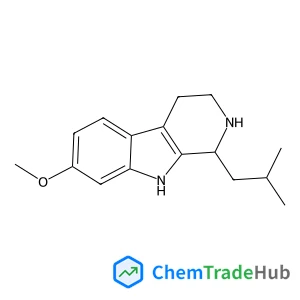
1-Isobutyl-7-methoxy-2,3,4,9-tetrahydro-1H-beta-carboline
CAS Number:
175975-76-5
Molecular Formula:
C16H22N2O
Z. Y. Li, Roy L. Johnston
The structural preferences of nanoparticles are important for understanding their chemical properties and potential applications, and remain widely debated. Based on recent experimental observations, we present calculations on the stability of high-symmetry AuN and PdN clusters of various structural motifs, performing a systematic search of faceting preferences using mathematical constructs, a semi-empirical potential with two different parameter sets, and a quasi-Newtonian minimisation technique. We have studied the preferred ratios of (100) and (111) faces for two experimentally observed nanostructures: (a) FCC crystals, comparing octahedra with 8 (111) faces to cuboctahedra where the vertices have been systematically removed (for N < 1500); and (b) Marks-decahedra, with differing “stellation” depths (for N < 6000). For PdN and AuN we see preference towards minimisation of (100) surfaces using the parameter sets of both Cleri and Rosato [Cleri and Rosato, Phys. Rev. B: Condens. Matter Mater. Phys., 1993, 48, 22] and Baletto et al. [Baletto et al., J. Chem. Phys., 2002, 116, 3856]. Fully stellated Marks-decahedra are found to be unfavourable at large sizes, with truncated facets identified which are similar to recent experimental observations. We find however that these stellations are deeper in PdN particles than AuN. Truncated-octahedra are found to prefer much reduced (100) surfaces and increased (111) surface areas.
Lei Li, Marius Herzog, Simone Möbitz, Roland Winter
DOI: 10.1039/D1CP00007A
Kaori Fujii, Hiroshi Nakano, Hirofumi Sato, Yoshifumi Kimura
DOI: 10.1039/D0CP06588A
Nikola Stamenković, Nataša Poklar Ulrih, Janez Cerkovnik
DOI: 10.1039/D0CP05245K
Kewei Sun
DOI: 10.1039/D0CP05764A
Vidushi Sharma, Dibakar Datta
DOI: 10.1039/D0CP06190E
William D. Neilson, Helen Steele, Samuel T. Murphy
DOI: 10.1039/D0CP06497A
Chuan Liu, Shuaishuai Wang, Xuchun Wang, Xiangju Ye, Zirong Li, Jumeng Wei, Ping Cheng, Yingjie Li
DOI: 10.1039/D0CP06504H
Benjamin Ramberger, Georg Kresse
DOI: 10.1039/D0CP06607A
Nelson Euceda, Joyce Jahnke, Aileen Espinal, Monique F. Louis, Edan Bashkin, Patricia Roccanova, Abraham Espaillat, German V. Fuentes, Fernando Nieto, Ruomei Gao
DOI: 10.1039/D1CP00101A
N-(4-Methoxybenzyl)-2-pyridinamine (CAS: 52818-63-0) is increasingly being used ...
When handling Ethyl 4-(2-chlorophenyl)-1,3-thiazole-2-carboxylate, appropriate p...
Diethyldiselane (CAS: 628-39-7) is classified under the Globally Harmonized Syst...
The market for oxocopper (CAS: 12053-18-8) is primarily driven by its use in cat...
The market for 5-{[(2-Methyl-2-propanyl)oxy]carbonyl}-5-azaspiro[2.4]heptane-7-c...
2-(1-Pyrrolidinyl)-4-pyridinamine is a chemical compound with the CAS number 359...
2-(3-Pyridinyl)-1-azabicyclo[2.2.2]octane (CAS: 91556-75-1) is a crystalline sol...
(S)-Alpha-allyl-proline hydrochloride is usually synthesized via a Wittig reacti...
3-Methyl-1,2-oxazole-5-carboxylic acid (CAS: 4857-42-5) is an organic compound w...
Lys-SMCC-DM1 is synthesized via a multi-step process involving the coupling of S...

Physical Chemistry Chemical Physics (PCCP) is an international journal co-owned by 19 physical chemistry and physics societies from around the world. This journal publishes original, cutting-edge research in physical chemistry, chemical physics and biophysical chemistry. To be suitable for publication in PCCP, articles must include significant innovation and/or insight into physical chemistry; this is the most important criterion that reviewers and Editors will judge against when evaluating submissions. The journal has a broad scope and welcomes contributions spanning experiment, theory, computation and data science. Topical coverage includes spectroscopy, dynamics, kinetics, statistical mechanics, thermodynamics, electrochemistry, catalysis, surface science, quantum mechanics, quantum computing and machine learning. Interdisciplinary research areas such as polymers and soft matter, materials, nanoscience, energy, surfaces/interfaces, and biophysical chemistry are welcomed if they demonstrate significant innovation and/or insight into physical chemistry. Joined experimental/theoretical studies are particularly appreciated when complementary and based on up-to-date approaches.