












Hydrogen and carbon monoxide generation from laser-induced graphitized nanodiamonds in water
Literature Information
Publication Date
2013-03-19
DOI
10.1039/C3CP50769F
Impact Factor
3.676
Authors
Dong Myung Jang, Hyung Soon Im, Yoon Myung, Yong Jae Cho, Han Sung Kim, Seung Hyuk Back, Jeunghee Park, Eun Hee Cha, Minyung Lee
View Original
Abstract
Nanodiamonds (ND) were found to generate hydrogen (H2) and carbon monoxide (CO) from water at a remarkable rate under pulsed laser (532 nm) irradiation. The transformation of diamond structure into graphitic layers takes place to form an onion-like carbon structure. The CO generation suggests the oxidative degradation reaction of graphitic layers, C + H2O → CO + 2H+ + 2e−, which produced a unique laser-induced reaction: C + H2O → CO + H2. Au, Pt, Pd, Ag, and Cu nanoparticles on the ND enhance both gas evolution rates (∼2 times for Au) and graphitization and, specifically, Au was found to be the most efficient amongst other nanoparticles. The enhancement effect was ascribed to effective charge separation between the metal nanoparticles and ND. The Au–ND hybrid on the reduced graphene oxide produced consistently a greater photocurrent than the ND upon visible light irradiation.
Recommended Journals
Related Literature
Faceting preferences for AuN and PdN nanoclusters with high-symmetry motifs
Z. Y. Li, Roy L. Johnston
2013-04-15
Paper
DOI: 10.1039/C3CP50978H
The electronic structure of pyracene: a spectroscopic and computational study
Johannes Auerswald, Bernd Engels, Ingo Fischer, Thiemo Gerbich, Jörg Herterich, Anke Krueger, Melanie Lang, Hans-Christian Schmitt, Christof Schon, Christof Walter
2013-03-27
Paper
DOI: 10.1039/C3CP44271C
The chemical sensitivity of X-ray spectroscopy: high energy resolution XANESversusX-ray emission spectroscopy of substituted ferrocenes
Andrew J. Atkins, Matthias Bauer, Christoph R. Jacob
2013-04-12
Paper
DOI: 10.1039/C3CP50999K
Morphology-controlled preparation and enhanced simulated sunlight and visible-light photocatalytic activity of Pt/Bi5Nb3O15 heterostructures
Ling Chen, Wan Guo, Yuxin Yang, Ang Zhang, Shengqu Zhang, Yihang Guo, Yingna Guo
2013-03-25
Paper
DOI: 10.1039/C3CP00084B
Tip enhanced Raman spectroscopy (TERS) as a probe for the buckling distortion in silicene
Deepthi Jose, A. Nijamudheen
2013-04-18
Communication
DOI: 10.1039/C3CP51028J
Physical and chemical transformations of highly compressed carbon dioxide at bond energies
Choong-Shik Yoo
2013-03-21
Perspective
DOI: 10.1039/C3CP50761K
Field effect transistors and RC filters from pencil-trace on paper
Narendra Kurra, Dipanwita Dutta, Giridhar U. Kulkarni
2013-03-25
Paper
DOI: 10.1039/C3CP50675D
Spectral assignments and NMR parameter–structure relationships in borates using high-resolution 11B NMR and density functional theory
Oliver L. G. Alderman, Dinu Iuga, Andrew P. Howes, Diane Holland, Ray Dupree
2013-04-05
Paper
DOI: 10.1039/C3CP50772F
Influence of adsorption thermodynamics on guest diffusivities in nanoporous crystalline materials
Rajamani Krishna, Jasper M. van Baten
2013-03-26
Perspective
DOI: 10.1039/C3CP50449B
You might also like
Compound Q&A
What is the market or research trend for N-(4-Methoxybenzyl)-2-pyridinamine (CAS: 52818-63-0)?
N-(4-Methoxybenzyl)-2-pyridinamine (CAS: 52818-63-0) is increasingly being used ...
52818-63-0N-(4-Methoxybenzyl)-...
Compound Q&A
What precautions should be taken when handling Ethyl 4-(2-chlorophenyl)-1,3-thiazole-2-carboxylate (CAS: 1050507-06-6)?
When handling Ethyl 4-(2-chlorophenyl)-1,3-thiazole-2-carboxylate, appropriate p...
1050507-06-6Ethyl 4-(2-chlorophe...
Compound Q&A
What regulatory guidelines apply to diethyldiselane (CAS: 628-39-7)?
Diethyldiselane (CAS: 628-39-7) is classified under the Globally Harmonized Syst...
628-39-7Diethyldiselane
Compound Q&A
What is the market or research trend for oxocopper (CAS: 12053-18-8)?
The market for oxocopper (CAS: 12053-18-8) is primarily driven by its use in cat...
12053-18-8oxocopper; oxo-(oxoc...
Compound Q&A
What is the market or research trend for 5-{[(2-Methyl-2-propanyl)oxy]carbonyl}-5-azaspiro[2.4]heptane-7-carboxylic acid?
The market for 5-{[(2-Methyl-2-propanyl)oxy]carbonyl}-5-azaspiro[2.4]heptane-7-c...
1268519-54-55-{[(2-Methyl-2-prop...
Compound Q&A
What is 2-(1-Pyrrolidinyl)-4-pyridinamine (CAS: 35981-63-6)?
2-(1-Pyrrolidinyl)-4-pyridinamine is a chemical compound with the CAS number 359...
35981-63-62-(1-Pyrrolidinyl)-4...
Compound Q&A
What are the physical and chemical properties of 2-(3-Pyridinyl)-1-azabicyclo[2.2.2]octane (CAS: 91556-75-1)?
2-(3-Pyridinyl)-1-azabicyclo[2.2.2]octane (CAS: 91556-75-1) is a crystalline sol...
91556-75-12-(3-Pyridinyl)-1-az...
Compound Q&A
How is (S)-Alpha-allyl-proline hydrochloride (CAS: 129704-91-2) typically synthesized?
(S)-Alpha-allyl-proline hydrochloride is usually synthesized via a Wittig reacti...
129704-91-2(S)-Alpha-allyl-prol...
Compound Q&A
What is 3-Methyl-1,2-oxazole-5-carboxylic acid (CAS: 4857-42-5)?
3-Methyl-1,2-oxazole-5-carboxylic acid (CAS: 4857-42-5) is an organic compound w...
4857-42-53-Methyl-1,2-oxazole...
Compound Q&A
How is Lys-SMCC-DM1 (CAS: 1281816-04-3) typically synthesized?
Lys-SMCC-DM1 is synthesized via a multi-step process involving the coupling of S...
1281816-04-3Lys-SMCC-DM1
Source Journal
Physical Chemistry Chemical Physics

CiteScore:
5.5
Self-citation Rate:
10.3%
Articles per Year:
3036
Physical Chemistry Chemical Physics (PCCP) is an international journal co-owned by 19 physical chemistry and physics societies from around the world. This journal publishes original, cutting-edge research in physical chemistry, chemical physics and biophysical chemistry. To be suitable for publication in PCCP, articles must include significant innovation and/or insight into physical chemistry; this is the most important criterion that reviewers and Editors will judge against when evaluating submissions. The journal has a broad scope and welcomes contributions spanning experiment, theory, computation and data science. Topical coverage includes spectroscopy, dynamics, kinetics, statistical mechanics, thermodynamics, electrochemistry, catalysis, surface science, quantum mechanics, quantum computing and machine learning. Interdisciplinary research areas such as polymers and soft matter, materials, nanoscience, energy, surfaces/interfaces, and biophysical chemistry are welcomed if they demonstrate significant innovation and/or insight into physical chemistry. Joined experimental/theoretical studies are particularly appreciated when complementary and based on up-to-date approaches.
Recommended Compounds
![1-(1-Benzyl-1,2,3,6-tetrahydropyridin-4-yl)-1H-benzo[d]imidazol-2(3H)-one structure](https://static.chemtradehub.com/structs/603/60373-71-9-7dfb.webp "1-(1-Benzyl-1,2,3,6-tetrahydropyridin-4-yl)-1H-benzo[d]imidazol-2(3H)-one structure")
1-(1-Benzyl-1,2,3,6-tetrahydropyridin-4-yl)-1H-benzo[d]imidazol-2(3H)-one
CAS Number:
60373-71-9
Molecular Formula:
C19H19N3O
![N-{15-[(2,5-Dioxo-1-pyrrolidinyl)oxy]-15-oxo-3,6,9,12-tetraoxapentadec-1-yl}-2-(2-propyn-1-yloxy)acetamide structure](https://static.chemtradehub.com/structs/210/2101206-92-0-2eb5.webp "N-{15-[(2,5-Dioxo-1-pyrrolidinyl)oxy]-15-oxo-3,6,9,12-tetraoxapentadec-1-yl}-2-(2-propyn-1-yloxy)acetamide structure")
N-{15-[(2,5-Dioxo-1-pyrrolidinyl)oxy]-15-oxo-3,6,9,12-tetraoxapentadec-1-yl}-2-(2-propyn-1-yloxy)acetamide
CAS Number:
2101206-92-0
Molecular Formula:
C20H30N2O10
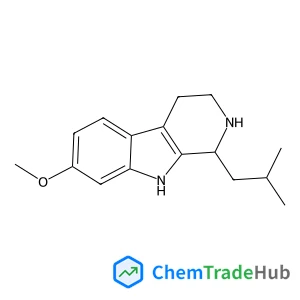
1-Isobutyl-7-methoxy-2,3,4,9-tetrahydro-1H-beta-carboline
CAS Number:
175975-76-5
Molecular Formula:
C16H22N2O
Recommended Suppliers







Disclaimer
This page provides academic journal information for reference and research purposes only. We are not affiliated with any journal publishers and do not handle publication submissions. For publication-related inquiries, please contact the respective journal publishers directly.
If you notice any inaccuracies in the information displayed, please contact us at support@chemtradehub.com. We will promptly review and address your concerns.