













Study of the tryptophan–terbium FRET pair coupled to silver nanoprisms for biosensing applications
Literature Information
Publication Date
2013-04-16
DOI
10.1039/C3CP50742D
Impact Factor
3.676
Authors
Ane K. di Gennaro, Leonid Gurevich, Esben Skovsen, Michael T. Overgaard, Peter Fojan
View Original
Abstract
Plasmonic coupling between fluorophores and metal surfaces has become a focal point of optical research during the last two decades, however, the interactions of FRET couples with metal surfaces remain relatively unexplored. In this study, interactions of the tryptophan–Tb3+ FRET pair with silver nanoprisms for potential biosensor development have been investigated. For this purpose an engineered lanthanide binding peptide (LBTtrp) containing tryptophan as the sensitizer for bound lanthanide ions (Tb3+) as well as a trypsin cleavage site was synthesized. The modified LBTtrp peptide contained two N-terminal cysteine residues to provide a stronger coupling to the silver nanoprisms (∼6 nm high, ∼50 nm wide). This study investigated the interaction between tryptophan, chelated Tb3+ ions, and silver nanoprisms in solution using fluorescence and transient absorption spectroscopy. We have found that Tb3+ luminescence decreases upon binding of the LBTtrp–Tb3+ to silver nanoprisms and increases upon trypsin cleavage. The transient absorption spectroscopy measurements showed a significant decrease in the lifetime of the excited singlet state of tryptophan upon Tb3+ chelation, while coupling to the silver nanoprisms did not show a significant effect on tryptophan. The results obtained in this work demonstrate a first proof of concept for a new sensitive optical biosensor in solution.
Recommended Journals
Related Literature
Wearable superhigh energy density supercapacitors using a hierarchical ternary metal selenide composite of CoNiSe2 microspheres decorated with CoFe2Se4 nanorods
Chandu V. V. Muralee Gopi, Araveeti Eswar Reddy, Hee-Je Kim
2018-03-19
Paper
DOI: 10.1039/C8TA01141A
Ultrasensitive fluorometric biosensor based on Ti3C2 MXenes with Hg2+-triggered exonuclease III-assisted recycling amplification
Liling Lu, Xiao Han, Jingwen Lin, Yingxin Zhang, Minghao Qiu, Ying Chen, Meijin Li, Dianping Tang
2021-02-22
Paper
DOI: 10.1039/D1AN00178G
Enhanced thermoelectric properties of p-type Ag2Te by Cu substitution
Hangtian Zhu, Jun Luo, Huaizhou Zhao, Jingkui Liang
2015-04-13
Paper
DOI: 10.1039/C5TA01266J
Self-assembled nanomaterials for biosensing and therapeutics: recent advances and challenges
Shan Huang, Yuexin Song, Zhimei He, Jian-Rong Zhang, Jun-Jie Zhu
2021-03-10
Minireview
DOI: 10.1039/D1AN00077B
An integrated self-powered 3D printed sample concentrator for highly sensitive molecular detection of HIV in whole blood at the point of care
Karteek Kadimisetty, Aoife M. Roche, Yanjie Yi, Frederic D. Bushman, Liang Feng
2021-03-30
Paper
DOI: 10.1039/D0AN02482A
Effect of boron incorporation on the bioactivity, structure, and mechanical properties of ordered mesoporous bioactive glasses
Leonie Deilmann, Oliver Winter, Bianca Cerrutti, Henrik Bradtmüller, Christopher Herzig, Andreas Limbeck, Olaf Lahayne, Christian Hellmich, Dominik Eder
2020-01-09
Paper
DOI: 10.1039/C9TB01805K
Simple enrichment and analysis of plasma lysophosphatidic acids
Jialu Wang, Martha Sibrian-Vazquez, Jorge O. Escobedo, Mark Lowry, Lei Wang, Yu-Hsuan Chu, Richard G. Moore, Robert M. Strongin
2013-09-26
Paper
DOI: 10.1039/C3AN01168B
Accurate and rapid microfluidic ELISA to monitor Infliximab titers in patients with inflammatory bowel diseases
Virginia Chu, João Gonçalves
2021-12-30
Paper
DOI: 10.1039/D1AN01810H
A rapid and highly sensitive paper-based colorimetric device for the on-site screening of ammonia gas
Kawin Khachornsakkul, Kuen-Hau Hung, Jung-Jung Chang, Wijitar Dungchai, Chih-Hsin Chen
2021-03-02
Paper
DOI: 10.1039/D1AN00032B
You might also like
Compound Q&A
What is the market or research trend for N-(4-Methoxybenzyl)-2-pyridinamine (CAS: 52818-63-0)?
N-(4-Methoxybenzyl)-2-pyridinamine (CAS: 52818-63-0) is increasingly being used ...
52818-63-0N-(4-Methoxybenzyl)-...
Compound Q&A
What precautions should be taken when handling Ethyl 4-(2-chlorophenyl)-1,3-thiazole-2-carboxylate (CAS: 1050507-06-6)?
When handling Ethyl 4-(2-chlorophenyl)-1,3-thiazole-2-carboxylate, appropriate p...
1050507-06-6Ethyl 4-(2-chlorophe...
Compound Q&A
What regulatory guidelines apply to diethyldiselane (CAS: 628-39-7)?
Diethyldiselane (CAS: 628-39-7) is classified under the Globally Harmonized Syst...
628-39-7Diethyldiselane
Compound Q&A
What is the market or research trend for oxocopper (CAS: 12053-18-8)?
The market for oxocopper (CAS: 12053-18-8) is primarily driven by its use in cat...
12053-18-8oxocopper; oxo-(oxoc...
Compound Q&A
What is the market or research trend for 5-{[(2-Methyl-2-propanyl)oxy]carbonyl}-5-azaspiro[2.4]heptane-7-carboxylic acid?
The market for 5-{[(2-Methyl-2-propanyl)oxy]carbonyl}-5-azaspiro[2.4]heptane-7-c...
1268519-54-55-{[(2-Methyl-2-prop...
Compound Q&A
What is 2-(1-Pyrrolidinyl)-4-pyridinamine (CAS: 35981-63-6)?
2-(1-Pyrrolidinyl)-4-pyridinamine is a chemical compound with the CAS number 359...
35981-63-62-(1-Pyrrolidinyl)-4...
Compound Q&A
What are the physical and chemical properties of 2-(3-Pyridinyl)-1-azabicyclo[2.2.2]octane (CAS: 91556-75-1)?
2-(3-Pyridinyl)-1-azabicyclo[2.2.2]octane (CAS: 91556-75-1) is a crystalline sol...
91556-75-12-(3-Pyridinyl)-1-az...
Compound Q&A
How is (S)-Alpha-allyl-proline hydrochloride (CAS: 129704-91-2) typically synthesized?
(S)-Alpha-allyl-proline hydrochloride is usually synthesized via a Wittig reacti...
129704-91-2(S)-Alpha-allyl-prol...
Compound Q&A
What is 3-Methyl-1,2-oxazole-5-carboxylic acid (CAS: 4857-42-5)?
3-Methyl-1,2-oxazole-5-carboxylic acid (CAS: 4857-42-5) is an organic compound w...
4857-42-53-Methyl-1,2-oxazole...
Compound Q&A
How is Lys-SMCC-DM1 (CAS: 1281816-04-3) typically synthesized?
Lys-SMCC-DM1 is synthesized via a multi-step process involving the coupling of S...
1281816-04-3Lys-SMCC-DM1
Source Journal
Physical Chemistry Chemical Physics

CiteScore:
5.5
Self-citation Rate:
10.3%
Articles per Year:
3036
Physical Chemistry Chemical Physics (PCCP) is an international journal co-owned by 19 physical chemistry and physics societies from around the world. This journal publishes original, cutting-edge research in physical chemistry, chemical physics and biophysical chemistry. To be suitable for publication in PCCP, articles must include significant innovation and/or insight into physical chemistry; this is the most important criterion that reviewers and Editors will judge against when evaluating submissions. The journal has a broad scope and welcomes contributions spanning experiment, theory, computation and data science. Topical coverage includes spectroscopy, dynamics, kinetics, statistical mechanics, thermodynamics, electrochemistry, catalysis, surface science, quantum mechanics, quantum computing and machine learning. Interdisciplinary research areas such as polymers and soft matter, materials, nanoscience, energy, surfaces/interfaces, and biophysical chemistry are welcomed if they demonstrate significant innovation and/or insight into physical chemistry. Joined experimental/theoretical studies are particularly appreciated when complementary and based on up-to-date approaches.
Recommended Compounds

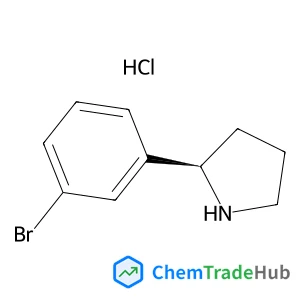
(2R)-2-(3-Bromophenyl)pyrrolidine hydrochloride (1:1)
CAS Number:
1391550-13-2
Molecular Formula:
C10H13BrClN
![(2R,6S)-6-[(Benzyloxy)methyl]-4-{[(2-methyl-2-propanyl)oxy]carbonyl}-2-morpholinecarboxylic acid structure](https://static.chemtradehub.com/structs/109/1093085-91-6-3382.webp "(2R,6S)-6-[(Benzyloxy)methyl]-4-{[(2-methyl-2-propanyl)oxy]carbonyl}-2-morpholinecarboxylic acid structure")
(2R,6S)-6-[(Benzyloxy)methyl]-4-{[(2-methyl-2-propanyl)oxy]carbonyl}-2-morpholinecarboxylic acid
CAS Number:
1093085-91-6
Molecular Formula:
C18H25NO6
Recommended Suppliers





Disclaimer
This page provides academic journal information for reference and research purposes only. We are not affiliated with any journal publishers and do not handle publication submissions. For publication-related inquiries, please contact the respective journal publishers directly.
If you notice any inaccuracies in the information displayed, please contact us at support@chemtradehub.com. We will promptly review and address your concerns.