


![1-oxaspiro[4.4]nonan-6-one structure](https://static.chemtradehub.com/structs/134/134179-01-4-e051.webp "1-oxaspiro[4.4]nonan-6-one structure")
Ultrasensitive fluorometric biosensor based on Ti3C2 MXenes with Hg2+-triggered exonuclease III-assisted recycling amplification
Literature Information
Publication Date
2021-02-22
DOI
10.1039/D1AN00178G
Impact Factor
4.616
Authors
Liling Lu, Xiao Han, Jingwen Lin, Yingxin Zhang, Minghao Qiu, Ying Chen, Meijin Li, Dianping Tang
View Original
Abstract
Herein a rapid and sensitive fluorometric bioanalysis platform for mercury(II) (Hg2+) detection was innovatively developed using ultrathin two-dimensional MXenes (Ti3C2) as fluorescence quencher and Hg2+-induced exonuclease III (Exo III)-assisted target recycling strategy for efficient signal amplification. Initially, fluorophore-labeled single-stranded DNA (FAM-labeled probe) can be easily adsorbed onto the surface of ultrathin Ti3C2 nanosheets by hydrogen bonding and metal chelating interaction, and the fluorescence signal emitted by the FAM-labeled probe is quenched strongly owing to the fluorescence resonance energy transfer between the FAM and ultrathin Ti3C2 nanosheets. Upon sensing the target Hg2+, the protruding DNA fragment at the 3′ end of hairpin will hybridize with primer (hairpin-Hg2+-primer), and then further digested by Exo III to produce a probe (nicker). The released target Hg2+ and primer continue to participate in the next recycling, resulting in more hairpin probes becoming nickers. The combination of a large number of nickers and FAM-probe resulted in a significant increase in the fluorescence signal of the system, which was attributed to the fact that the double helix DNA was more rigid and separated from the surface of the ultrathin Ti3C2 nanosheets. The obvious fluorescence signal change of the Ti3C2-based Exo III-assisted target recycling can be accurately monitored by fluorescence spectrometry, which is also proportional to the concentration of Hg2+. Under optimum operating conditions, the peak intensity (520 nm wavelength) of fluorescence increased with increasing Hg2+ within a wide dynamic working range from 0.05 nM to 50 nM (R2 = 0.9913) with a limit of detection down to 42.5 pM. The proposed strategy uses ultrathin MXenes as a platform for binding nucleic acids, which contributes to its potential in nucleic acid hybridization-based biosensing and/or nucleic acid signal amplification bio-applications.
Recommended Journals

European Journal of Wood and Wood Products

Molecular Pharmacology

Journal of Heterocyclic Chemistry

Journal of Organometallic Chemistry

Israel Journal of Chemistry

Journal of Medicinal Chemistry

Journal of Physics and Chemistry of Solids

Proceedings of the National Academy of Sciences of the United States of America

Journal of Catalysis

Kinetics and Catalysis
Related Literature
Significant promotional effect of CCl4 on fullerene yield in the graphite arc-discharge reaction
Fei Gao, Su-Yuan Xie, Rong-Bin Huang, Lan-Sun Zheng
2003-09-24
Communication
DOI: 10.1039/B306921B
Synthesis and structure of [Na11(OtBu)10(OH)]: 1H NMR shift of a hydroxide ion encapsulated in a 21-vertex alcoholate cage
2003-10-17
Communication
DOI: 10.1039/B308105B
Different thermal reactivity of a 1,2-thiaphospholo[a]phosphirane in free and metal carbonyl complexed form
Tamaki Jikyo, Gerhard Maas
2003-10-14
Communication
DOI: 10.1039/B310256D
First example of high loaded polymer-stabilized nanoclusters immobilized on hydrotalcite: effects in alkynehydrogenation
Jules C. A. A. Roelofs, Peter H. Berben
2004-03-16
Communication
DOI: 10.1039/B400737A
On the relative migratory aptitudes of carbon and heteroatoms in borate complexes. A surprising α-thia effect
Jonathan M. Stoddard, Kenneth J. Shea
2004-02-27
Communication
DOI: 10.1039/B311292F
High efficiency photocurrent generation by two-dimensional mixed J-aggregates of cyanine dyes
Mitsuo Kawasaki, Satoshi Aoyama
2004-03-19
Communication
DOI: 10.1039/B400071D
Coordinative and electrostatic forces in action: from the design of differential chromogenic anion sensors to selective carboxylate recognition
Beatriz García-Acosta, Xavier Albiach-Martí, Eduardo García, Luis Gil, Ramón Martínez-Máñez, Knut Rurack, Félix Sancenón, Juan Soto
2004-02-26
Communication
DOI: 10.1039/B314997H
Using two photonmicroscopy to quantify enzymatic reaction rates on polymer beads
Annie Y. Bosma, Gail McConnell, John Girkin, Peter J. Halling, Sabine L. Flitsch
2003-10-13
Communication
DOI: 10.1039/B308078A
A catalytic and iterative route to β-substituted estersvia highly enantioselective conjugate addition of dimethylzinc to unsaturated malonates
Julia Schuppan, Adriaan J. Minnaard, Ben L. Feringa
2004-02-24
Communication
DOI: 10.1039/B315871C
Vapour diffusion hydrolysis of a self-assembled silylated organogel, the OG–HG transcription process: a new way to cast and handle fluorescent silsesquioxane
Olivier J. Dautel, Jean-Pierre Lère-Porte, Joël J. E. Moreau, Michel Wong Chi Man
2003-09-24
Communication
DOI: 10.1039/B308703D
You might also like
Compound Q&A
What is the market or research trend for N-(4-Methoxybenzyl)-2-pyridinamine (CAS: 52818-63-0)?
N-(4-Methoxybenzyl)-2-pyridinamine (CAS: 52818-63-0) is increasingly being used ...
52818-63-0N-(4-Methoxybenzyl)-...
Compound Q&A
What precautions should be taken when handling Ethyl 4-(2-chlorophenyl)-1,3-thiazole-2-carboxylate (CAS: 1050507-06-6)?
When handling Ethyl 4-(2-chlorophenyl)-1,3-thiazole-2-carboxylate, appropriate p...
1050507-06-6Ethyl 4-(2-chlorophe...
Compound Q&A
What regulatory guidelines apply to diethyldiselane (CAS: 628-39-7)?
Diethyldiselane (CAS: 628-39-7) is classified under the Globally Harmonized Syst...
628-39-7Diethyldiselane
Compound Q&A
What is the market or research trend for oxocopper (CAS: 12053-18-8)?
The market for oxocopper (CAS: 12053-18-8) is primarily driven by its use in cat...
12053-18-8oxocopper; oxo-(oxoc...
Compound Q&A
What is the market or research trend for 5-{[(2-Methyl-2-propanyl)oxy]carbonyl}-5-azaspiro[2.4]heptane-7-carboxylic acid?
The market for 5-{[(2-Methyl-2-propanyl)oxy]carbonyl}-5-azaspiro[2.4]heptane-7-c...
1268519-54-55-{[(2-Methyl-2-prop...
Compound Q&A
What is 2-(1-Pyrrolidinyl)-4-pyridinamine (CAS: 35981-63-6)?
2-(1-Pyrrolidinyl)-4-pyridinamine is a chemical compound with the CAS number 359...
35981-63-62-(1-Pyrrolidinyl)-4...
Compound Q&A
What are the physical and chemical properties of 2-(3-Pyridinyl)-1-azabicyclo[2.2.2]octane (CAS: 91556-75-1)?
2-(3-Pyridinyl)-1-azabicyclo[2.2.2]octane (CAS: 91556-75-1) is a crystalline sol...
91556-75-12-(3-Pyridinyl)-1-az...
Compound Q&A
How is (S)-Alpha-allyl-proline hydrochloride (CAS: 129704-91-2) typically synthesized?
(S)-Alpha-allyl-proline hydrochloride is usually synthesized via a Wittig reacti...
129704-91-2(S)-Alpha-allyl-prol...
Compound Q&A
What is 3-Methyl-1,2-oxazole-5-carboxylic acid (CAS: 4857-42-5)?
3-Methyl-1,2-oxazole-5-carboxylic acid (CAS: 4857-42-5) is an organic compound w...
4857-42-53-Methyl-1,2-oxazole...
Compound Q&A
How is Lys-SMCC-DM1 (CAS: 1281816-04-3) typically synthesized?
Lys-SMCC-DM1 is synthesized via a multi-step process involving the coupling of S...
1281816-04-3Lys-SMCC-DM1
Source Journal
Analyst

CiteScore:
7.8
Self-citation Rate:
5.6%
Articles per Year:
653
Analyst publishes analytical and bioanalytical research that reports premier fundamental discoveries and inventions, and the applications of those discoveries, unconfined by traditional discipline barriers.
Recommended Compounds
![5'-Fluoro-[2,3'-biindolinylidene]-2',3-dione structure](https://static.chemtradehub.com/structs/251/251903-00-1-9cb1.webp "5'-Fluoro-[2,3'-biindolinylidene]-2',3-dione structure")
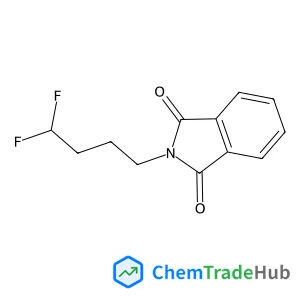
2-(4,4-Difluorobutyl)-1H-isoindole-1,3(2H)-dione
CAS Number:
1265341-14-7
Molecular Formula:
C12H11F2NO2

Recommended Suppliers





Disclaimer
This page provides academic journal information for reference and research purposes only. We are not affiliated with any journal publishers and do not handle publication submissions. For publication-related inquiries, please contact the respective journal publishers directly.
If you notice any inaccuracies in the information displayed, please contact us at support@chemtradehub.com. We will promptly review and address your concerns.