












Photofragmentation at 263 nm of small peptides containing tyrosine: the role of the charge transfer on CO
Literature Information
Publication Date
2013-04-05
DOI
10.1039/C3CP50720C
Impact Factor
3.676
Authors
Christophe Dehon, Satchin Soorkia, Mélanie Pedrazzani, Christophe Jouvet, Michel Barat, Jacqueline A. Fayeton, Bruno Lucas
View Original
Abstract
The photofragmentation pathways at 263 nm of several small peptides containing tyrosine as the UV chromophore have been characterized using a multi-coincidence technique. A detailed study of the fragmentation dynamics of protonated Glycine-Tyrosine (GYH+), Tyrosine-Glycine (YGH+), Glycine-Tyrosine-Glycine (GYGH+), Alanine-Tyrosine (AYH+) and Tyrosine-Alanine (YAH+) is presented in this paper. Fragmentations occurring or initiated in an excited state are distinguished from those occurring after internal conversion to the ground electronic state by their rapid fragmentation times and binary nature. For the studied systems, it is shown that fragmentations occurring after internal conversion to the ground state are the dominant processes compared to fragmentations occurring in the excited state. The low abundances associated with the observed UV photospecific channels, i.e. Cα–Cβ bond breakage in YGH+ and YAH+ and direct z-type bond breakage in GYGH+, respectively, can be rationalized upon consideration of charge transfer states accessible after absorption of one UV photon. Indeed, excited state calculations performed at the RI-CC2 level of theory indicate that charge transfer on the active CO group is a prerequisite for photospecific bond ruptures. The fragmentation mechanisms and the localization of the charge on the side chain after fragmentation are discussed in terms of ionization energies of the fragments.
Related Literature
Viscosity sensitive endoplasmic reticulum fluorescent probes based on oxazolopyridinium
Ya-Nan Wang, Xiao-Qing Zhang, Ru Sun, Yu-Jie Xu, Jian-Feng Ge
2021-06-09
Paper
DOI: 10.1039/D1TB01106E
Hollow double-layered polymer nanoparticles with S-nitrosothiols for tumor targeted therapy
Tuanwei Liu, Jingjing Hu, Xiaoye Ma, Bing Kong, Jilan Wang, Zhide Zhang, Dian-Shun Guo, Xinlin Yang
2017-08-17
Paper
DOI: 10.1039/C7TB01715D
A rapid and highly sensitive paper-based colorimetric device for the on-site screening of ammonia gas
Kawin Khachornsakkul, Kuen-Hau Hung, Jung-Jung Chang, Wijitar Dungchai, Chih-Hsin Chen
2021-03-02
Paper
DOI: 10.1039/D1AN00032B
Protein hydration in living cells probed by Fourier transform infrared (FT-IR) spectroscopic imaging
B. Turner, J. Mizukado, S. G. Kazarian
2017-05-15
Paper
DOI: 10.1039/C7AN00337D
Aerosol deposition-carbon furnace atomisation for simultaneous multi-element atomic absorption spectrometry
Paper
DOI: 10.1039/JA9860100287
Hollow Cu–TiO2/C nanospheres derived from a Ti precursor encapsulated MOF coating for efficient photocatalytic hydrogen evolution
Zhi-Gang Gu, Salma Mirza, Shu-Hua Zhang, Jian Zhang
2018-03-14
Paper
DOI: 10.1039/C8TA01034J
A colorimetric aptasensor for the simple and rapid detection of human papillomavirus type 16 L1 proteins
Li Zhu, Yu Zhao, Shangchen Yao, Mingzhe Xu, Lihui Yin, Xihai Zhai, Xu Teng
2021-02-24
Paper
DOI: 10.1039/D1AN00251A
Enhanced electrochemiluminescence of CdS quantum dots capped with mercaptopropionic acid activated by EDC for Zika virus detection
Hui-Jun Zhang, Jin Zhu, Ning Bao, Shou-Nian Ding
2021-02-26
Paper
DOI: 10.1039/D0AN02437F
Balancing stability and specific energy in Li-rich cathodes for lithium ion batteries: a case study of a novel Li–Mn–Ni–Co oxide
Qi Li, Guangshe Li, Chaochao Fu, Dong Luo, Jianming Fan, Dongjiu Xie, Liping Li
2015-04-24
Paper
DOI: 10.1039/C5TA00929D
You might also like
Compound Q&A
What is the market or research trend for N-(4-Methoxybenzyl)-2-pyridinamine (CAS: 52818-63-0)?
N-(4-Methoxybenzyl)-2-pyridinamine (CAS: 52818-63-0) is increasingly being used ...
52818-63-0N-(4-Methoxybenzyl)-...
Compound Q&A
What precautions should be taken when handling Ethyl 4-(2-chlorophenyl)-1,3-thiazole-2-carboxylate (CAS: 1050507-06-6)?
When handling Ethyl 4-(2-chlorophenyl)-1,3-thiazole-2-carboxylate, appropriate p...
1050507-06-6Ethyl 4-(2-chlorophe...
Compound Q&A
What regulatory guidelines apply to diethyldiselane (CAS: 628-39-7)?
Diethyldiselane (CAS: 628-39-7) is classified under the Globally Harmonized Syst...
628-39-7Diethyldiselane
Compound Q&A
What is the market or research trend for oxocopper (CAS: 12053-18-8)?
The market for oxocopper (CAS: 12053-18-8) is primarily driven by its use in cat...
12053-18-8oxocopper; oxo-(oxoc...
Compound Q&A
What is the market or research trend for 5-{[(2-Methyl-2-propanyl)oxy]carbonyl}-5-azaspiro[2.4]heptane-7-carboxylic acid?
The market for 5-{[(2-Methyl-2-propanyl)oxy]carbonyl}-5-azaspiro[2.4]heptane-7-c...
1268519-54-55-{[(2-Methyl-2-prop...
Compound Q&A
What is 2-(1-Pyrrolidinyl)-4-pyridinamine (CAS: 35981-63-6)?
2-(1-Pyrrolidinyl)-4-pyridinamine is a chemical compound with the CAS number 359...
35981-63-62-(1-Pyrrolidinyl)-4...
Compound Q&A
What are the physical and chemical properties of 2-(3-Pyridinyl)-1-azabicyclo[2.2.2]octane (CAS: 91556-75-1)?
2-(3-Pyridinyl)-1-azabicyclo[2.2.2]octane (CAS: 91556-75-1) is a crystalline sol...
91556-75-12-(3-Pyridinyl)-1-az...
Compound Q&A
How is (S)-Alpha-allyl-proline hydrochloride (CAS: 129704-91-2) typically synthesized?
(S)-Alpha-allyl-proline hydrochloride is usually synthesized via a Wittig reacti...
129704-91-2(S)-Alpha-allyl-prol...
Compound Q&A
What is 3-Methyl-1,2-oxazole-5-carboxylic acid (CAS: 4857-42-5)?
3-Methyl-1,2-oxazole-5-carboxylic acid (CAS: 4857-42-5) is an organic compound w...
4857-42-53-Methyl-1,2-oxazole...
Compound Q&A
How is Lys-SMCC-DM1 (CAS: 1281816-04-3) typically synthesized?
Lys-SMCC-DM1 is synthesized via a multi-step process involving the coupling of S...
1281816-04-3Lys-SMCC-DM1
Source Journal
Physical Chemistry Chemical Physics

CiteScore:
5.5
Self-citation Rate:
10.3%
Articles per Year:
3036
Physical Chemistry Chemical Physics (PCCP) is an international journal co-owned by 19 physical chemistry and physics societies from around the world. This journal publishes original, cutting-edge research in physical chemistry, chemical physics and biophysical chemistry. To be suitable for publication in PCCP, articles must include significant innovation and/or insight into physical chemistry; this is the most important criterion that reviewers and Editors will judge against when evaluating submissions. The journal has a broad scope and welcomes contributions spanning experiment, theory, computation and data science. Topical coverage includes spectroscopy, dynamics, kinetics, statistical mechanics, thermodynamics, electrochemistry, catalysis, surface science, quantum mechanics, quantum computing and machine learning. Interdisciplinary research areas such as polymers and soft matter, materials, nanoscience, energy, surfaces/interfaces, and biophysical chemistry are welcomed if they demonstrate significant innovation and/or insight into physical chemistry. Joined experimental/theoretical studies are particularly appreciated when complementary and based on up-to-date approaches.
Recommended Compounds
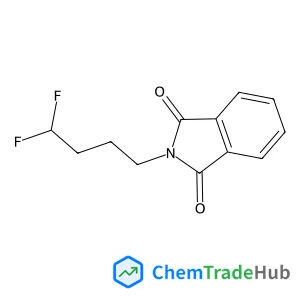
2-(4,4-Difluorobutyl)-1H-isoindole-1,3(2H)-dione
CAS Number:
1265341-14-7
Molecular Formula:
C12H11F2NO2
Recommended Suppliers



Disclaimer
This page provides academic journal information for reference and research purposes only. We are not affiliated with any journal publishers and do not handle publication submissions. For publication-related inquiries, please contact the respective journal publishers directly.
If you notice any inaccuracies in the information displayed, please contact us at support@chemtradehub.com. We will promptly review and address your concerns.