













Photocatalytic oxygen evolution triggered by photon upconverted emission based on triplet–triplet annihilation
Literature Information
Publication Date
2021-02-26
DOI
10.1039/D0CP06139E
Impact Factor
3.676
Authors
Shutaro Tateyama, Fuminao Kishimoto
View Original
Abstract
A visible light responsive photocatalyst, Mo-doped BiVO4 (Mo:BVO), was shown to promote oxygen evolution from water in response to photon upconverted emission based on triplet–triplet annihilation (TTA) in the same aqueous dispersion. Composites comprising a triplet sensitizer (Pt(II) octaethylporphyrin; PtOEP) and a singlet emitter (9,10-diphenylanthracene; DPA) intercalated in a layered clay compound (montmorillonite or saponite) were prepared using a facile but versatile solvothermal method. These composites were capable of converting green incident light (λ = 535 nm) to blue light (λ = 430 nm) even in air. The host layered clay as well as the co-intercalated surfactant evidently functioned as barriers against water and oxygen to prevent the quenching of the active compounds. The TTA upconversion driven photocatalytic oxygen evolution using the aqueous mixture of the dyes-clay composite and particulate photocatalysts can be a potential approach to eliminate the undesired optical losses and thus be a breakthrough for future industrial and large-scale installation in an inexpensive manner.
Related Literature
An electrochemical investigation of rutile TiO2 microspheres anchored by nanoneedle clusters for sodium storage
Yan Zhang, Xuli Pu, Yingchang Yang, Yirong Zhu, Hongshuai Hou, Mingjun Jing, Xuming Yang, Jun Chen, Xiaobo Ji
2015-05-08
Paper
DOI: 10.1039/C5CP01227A
Facile method for the synthesis of a magnetic CNTs–C@Fe–chitosan composite and its application in tetracycline removal from aqueous solutions
Jie Ma, Yuan Zhuang
2015-05-13
Paper
DOI: 10.1039/C5CP02542G
What type of nanoscopic environment does a cationic fluorophore experience in room temperature ionic liquids?
Anup Ghosh, Chayan K. De, Tanmay Chatterjee, Prasun K. Mandal
2015-05-26
Paper
DOI: 10.1039/C5CP02036K
Nanodusty plasma chemistry: a mechanistic and variational transition state theory study of the initial steps of silyl anion–silane and silylene anion–silane polymerization reactions
Junwei Lucas Bao, Prasenjit Seal, Donald G. Truhlar
2015-05-18
Paper
DOI: 10.1039/C5CP01979F
Unique properties of silver cations in solid-acid catalysis by zeolites and heteropolyacids
Yoshio Ono, Toshihide Baba
2015-05-19
Perspective
DOI: 10.1039/C5CP01839K
Interplay of donor–acceptor interactions in stabilizing boron nitride compounds: insights from theory
Mohammad R. Momeni, Lisa Shulman, Eric Rivard, Alex Brown
2015-05-27
Paper
DOI: 10.1039/C5CP01993A
The influence of hydrogen bonding on the dielectric constant and the piezoelectric energy harvesting performance of hydrated metal salt mediated PVDF films
Samiran Garain, Shrabanee Sen, Dipankar Mandal
2015-06-08
Paper
DOI: 10.1039/C5CP01820J
Enhanced photocatalytic activity of Cl-residual rutile TiO2 nanorods after targeted co-modification with phosphoric and boric acids
Jing Wu, Haiqin Cui, Xuliang Zhang, Yunbo Luan, Liqiang Jing
2015-05-14
Paper
DOI: 10.1039/C5CP02084K
Specific adhesion of membranes simultaneously supports dual heterogeneities in lipids and proteins
O. Shindell, N. Mica, M. Ritzer, V. D. Gordon
2015-04-02
Paper
DOI: 10.1039/C4CP05877A
Strong electronic polarization of the C60 fullerene by imidazolium-based ionic liquids: accurate insights from Born–Oppenheimer molecular dynamic simulations
Vitaly V. Chaban, Eudes Eterno Fileti
2015-05-13
Paper
DOI: 10.1039/C5CP00350D
You might also like
Compound Q&A
How should waste containing 6-Chloro-5-(2'-hydroxy-3'-methoxy-4-biphenylyl)-3-(3-methoxyphenyl)-1H-pyrrolo[3,2-d]pyrimidine-2,4(3H,5H)-dione (CAS: 1346607-05-3) be handled?
Waste containing 6-Chloro-5-(2'-hydroxy-3'-methoxy-4-biphenylyl)-3-(3-methoxyphe...
1346607-05-36-Chloro-5-(2'-hydro...
Compound Q&A
What are the main uses of (3alpha,5alpha)-3-Hydroxypregnane-11,20-dione (CAS: 23930-19-0)?
(3alpha,5alpha)-3-Hydroxypregnane-11,20-dione is primarily used in the pharmaceu...
23930-19-0(3alpha,5alpha)-3-Hy...
Compound Q&A
What is the market or research trend for 4-Amino-6-chloro-2-pyridinecarboxylic acid (CAS: 546141-56-4)?
The market for 4-Amino-6-chloro-2-pyridinecarboxylic acid (CAS: 546141-56-4) is ...
546141-56-44-Amino-6-chloro-2-p...
Compound Q&A
Are there alternatives to (2-Benzoylethyl)trimethylammonium chloride (CAS: 24472-88-6) in synthesis?
Alternatives to (2-Benzoylethyl)trimethylammonium chloride (CAS: 24472-88-6) in ...
24472-88-6(2-Benzoylethyl)trim...
Compound Q&A
Is N-[4-Nitro-3-(trifluoromethyl)phenyl]acetamide (CAS: 393-12-4) safe?
N-[4-Nitro-3-(trifluoromethyl)phenyl]acetamide (CAS: 393-12-4) is generally safe...
393-12-4N-[4-Nitro-3-(triflu...
Compound Q&A
Are there alternatives to [(4R,5R,6S)-5-hydroxy-10-imino-3,7-dioxa-1,9-diazatricyclo[6.4.0.02,6]dodeca-8,11-dien-4-yl]methyl dihydrogen phosphate (CAS: 39679-56-6) in synthesis?
Alternative reagents such as other phosphates or similar functional groups can b...
39679-56-6[(4R,5R,6S)-5-hydrox...
Compound Q&A
Are there alternatives to N,N'-Bis(3-aminopropyl)-1,3-propanediamine (CAS: 4605-14-5) in synthesis?
There are alternatives to N,N'-Bis(3-aminopropyl)-1,3-propanediamine (CAS: 4605-...
4605-14-5N,N'-Bis(3-aminoprop...
Compound Q&A
What precautions should be taken when handling Aluminium trihexadecanoate (CAS: 555-35-1)?
When handling Aluminium trihexadecanoate, it is important to use appropriate per...
555-35-1Aluminium trihexadec...
Compound Q&A
What is (1,1-Dioxido-3-oxo-1,2-benzothiazol-2(3H)-yl)acetic acid (CAS: 52188-11-1)?
(1,1-Dioxido-3-oxo-1,2-benzothiazol-2(3H)-yl)acetic acid is a chemical compound ...
52188-11-1(1,1-Dioxido-3-oxo-1...
Compound Q&A
Are there alternatives to 5,5-dimethyloxolan-2-one (CAS: 3123-97-5) in synthesis?
Several alternatives to 5,5-dimethyloxolan-2-one (CAS: 3123-97-5) can be used in...
3123-97-55,5-dimethyloxolan-2...
Source Journal
Physical Chemistry Chemical Physics

CiteScore:
5.5
Self-citation Rate:
10.3%
Articles per Year:
3036
Physical Chemistry Chemical Physics (PCCP) is an international journal co-owned by 19 physical chemistry and physics societies from around the world. This journal publishes original, cutting-edge research in physical chemistry, chemical physics and biophysical chemistry. To be suitable for publication in PCCP, articles must include significant innovation and/or insight into physical chemistry; this is the most important criterion that reviewers and Editors will judge against when evaluating submissions. The journal has a broad scope and welcomes contributions spanning experiment, theory, computation and data science. Topical coverage includes spectroscopy, dynamics, kinetics, statistical mechanics, thermodynamics, electrochemistry, catalysis, surface science, quantum mechanics, quantum computing and machine learning. Interdisciplinary research areas such as polymers and soft matter, materials, nanoscience, energy, surfaces/interfaces, and biophysical chemistry are welcomed if they demonstrate significant innovation and/or insight into physical chemistry. Joined experimental/theoretical studies are particularly appreciated when complementary and based on up-to-date approaches.
Recommended Compounds
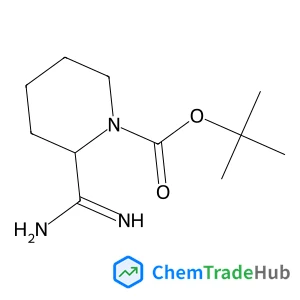
2-Methyl-2-propanyl 2-carbamimidoyl-1-piperidinecarboxylate
CAS Number:
1258640-98-0
Molecular Formula:
C11H21N3O2
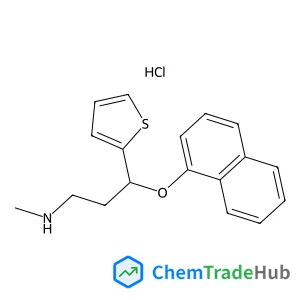
N-Methyl-3-(1-naphthyloxy)-3-(2-thienyl)-1-propanamine hydrochloride (1:1)
CAS Number:
1188266-11-6
Molecular Formula:
C18H20ClNOS
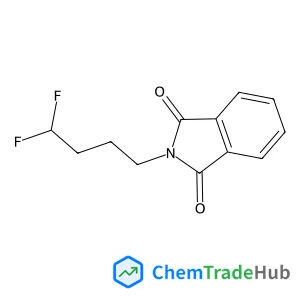
2-(4,4-Difluorobutyl)-1H-isoindole-1,3(2H)-dione
CAS Number:
1265341-14-7
Molecular Formula:
C12H11F2NO2
Recommended Suppliers





Disclaimer
This page provides academic journal information for reference and research purposes only. We are not affiliated with any journal publishers and do not handle publication submissions. For publication-related inquiries, please contact the respective journal publishers directly.
If you notice any inaccuracies in the information displayed, please contact us at support@chemtradehub.com. We will promptly review and address your concerns.