












Flow synthesis of conjugated polymers: exploring the effects of solvent and catalyst on molecular weight
Literature Information
Publication Date
2023-11-08
DOI
10.1039/D3PY00917C
Impact Factor
5.582
Authors
Jin Woo Jeon, Ye-Jin Hwang
View Original
Abstract
The high reproducibility of the flow synthesis system enabled accurate investigation of the relationship between reaction conditions and molecular weight in Stille polycondensation of conjugated polymers. Here, a conjugated polymer, PTB7, was synthesized in a customized flow reactor using various catalyst and solvent combinations, and their effect on molecular weight was studied. Specifically, common palladium catalysts (Pd(PPh3)4 and Pd2(dba)3) were screened in three different solvents (toluene, chlorobenzene, and o-xylene). A significant difference in molecular weight was observed depending on the type of solvent when using Pd2(dba)3 as a catalyst. It was discovered that the solubility of both the catalyst and PTB7 in the solvent played a critical role in determining the molecular weight of the polymer. By using the Pd2(dba)3 catalyst system, a high number-averaged molecular weight (Mn) for PTB7, ranging from 41.7 to 51.5 kDa, was achieved. This was 16 times higher than that obtained with the Pd(PPh3)4 catalyst system in any solvent. However, the Pd(PPh3)4 catalyst system showed high compatibility with dimethylformamide (DMF) co-solvent, and the Mn of PTB7 synthesized with the Pd(PPh3)4 catalyst showed a significant increase, ranging from 53.9 to 58.7 kDa, while the Mn of PTB7 synthesized with the Pd2(dba)3 catalyst decreased to 10.9– 15.0 kDa. The results can provide valuable guidance for optimizing the reaction conditions in the future synthesis of conjugated polymers in a flow reactor to achieve the desired molecular weight.
Related Literature
A time resolved high energy X-ray diffraction study of cooling liquid SiO2
C. J. Benmore, M. C. Wilding, S. K. Tumber
2013-04-05
Paper
DOI: 10.1039/C3CP44347G
Molecular dynamics investigation of the disordered crystal structure of hexagonal LiBH4
Keith Refson
2013-01-29
Paper
DOI: 10.1039/C3CP44520H
Single-layered V2O5 a promising cathode material for rechargeable Li and Mg ion batteries: an ab initio study
Zhiguo Wang, Qiulei Su, Huiqiu Deng
2013-04-12
Communication
DOI: 10.1039/C3CP51167G
From solvated ions to ion-pairing: a THz study of lanthanum(iii) hydration
Vinay Sharma, Fabian Böhm, Michael Seitz, Gerhard Schwaab, Martina Havenith
2013-04-10
Paper
DOI: 10.1039/C3CP50865J
Speciation of adsorbed CO2 on metal oxides by a new 2-dimensional approach: 2D infrared inversion spectroscopy (2D IRIS)
Sergey Sirotin, Philippe Bazin, Françoise Maugé, Arnaud Travert
2013-04-17
Paper
DOI: 10.1039/C3CP51146D
Low-density nanoporous phases of group-III nitrides built from sodalite cage clusters
Zhifeng Liu, Xinqiang Wang, Gaobin Liu, Jian Sui, Xuefang Wang, Hengjiang Zhu, Zhilin Hou
2013-04-03
Paper
DOI: 10.1039/C3CP50814E
Synchrotron high energy X-ray methods coupled to phase sensitive analysis to characterize aging of solid catalysts with enhanced sensitivity
Mark A. Newton, Marco Di Michiel, Songhak Yoon, Gian Luca Chiarello, Santhosh Kumar Matam, Myriam H. Aguirre, Anke Weidenkaff, Fei Wen, Jürgen Gieshoff
2013-04-26
Paper
DOI: 10.1039/C3CP44638G
Strain-induced Dirac cone-like electronic structures and semiconductor–semimetal transition in graphdiyne
Hui-Juan Cui, Xian-Lei Sheng, Qing-Bo Yan, Qing-Rong Zheng, Gang Su
2013-03-22
Paper
DOI: 10.1039/C3CP44457K
Oxidation stages of Ni electrodes in solid oxidefuel cell environments
Farid El Gabaly, Kevin F. McCarty, Hendrik Bluhm, Anthony H. McDaniel
2013-04-18
Paper
DOI: 10.1039/C3CP50366F
You might also like
Compound Q&A
What is the market or research trend for N-(4-Methoxybenzyl)-2-pyridinamine (CAS: 52818-63-0)?
N-(4-Methoxybenzyl)-2-pyridinamine (CAS: 52818-63-0) is increasingly being used ...
52818-63-0N-(4-Methoxybenzyl)-...
Compound Q&A
What precautions should be taken when handling Ethyl 4-(2-chlorophenyl)-1,3-thiazole-2-carboxylate (CAS: 1050507-06-6)?
When handling Ethyl 4-(2-chlorophenyl)-1,3-thiazole-2-carboxylate, appropriate p...
1050507-06-6Ethyl 4-(2-chlorophe...
Compound Q&A
What regulatory guidelines apply to diethyldiselane (CAS: 628-39-7)?
Diethyldiselane (CAS: 628-39-7) is classified under the Globally Harmonized Syst...
628-39-7Diethyldiselane
Compound Q&A
What is the market or research trend for oxocopper (CAS: 12053-18-8)?
The market for oxocopper (CAS: 12053-18-8) is primarily driven by its use in cat...
12053-18-8oxocopper; oxo-(oxoc...
Compound Q&A
What is the market or research trend for 5-{[(2-Methyl-2-propanyl)oxy]carbonyl}-5-azaspiro[2.4]heptane-7-carboxylic acid?
The market for 5-{[(2-Methyl-2-propanyl)oxy]carbonyl}-5-azaspiro[2.4]heptane-7-c...
1268519-54-55-{[(2-Methyl-2-prop...
Compound Q&A
What is 2-(1-Pyrrolidinyl)-4-pyridinamine (CAS: 35981-63-6)?
2-(1-Pyrrolidinyl)-4-pyridinamine is a chemical compound with the CAS number 359...
35981-63-62-(1-Pyrrolidinyl)-4...
Compound Q&A
What are the physical and chemical properties of 2-(3-Pyridinyl)-1-azabicyclo[2.2.2]octane (CAS: 91556-75-1)?
2-(3-Pyridinyl)-1-azabicyclo[2.2.2]octane (CAS: 91556-75-1) is a crystalline sol...
91556-75-12-(3-Pyridinyl)-1-az...
Compound Q&A
How is (S)-Alpha-allyl-proline hydrochloride (CAS: 129704-91-2) typically synthesized?
(S)-Alpha-allyl-proline hydrochloride is usually synthesized via a Wittig reacti...
129704-91-2(S)-Alpha-allyl-prol...
Compound Q&A
What is 3-Methyl-1,2-oxazole-5-carboxylic acid (CAS: 4857-42-5)?
3-Methyl-1,2-oxazole-5-carboxylic acid (CAS: 4857-42-5) is an organic compound w...
4857-42-53-Methyl-1,2-oxazole...
Compound Q&A
How is Lys-SMCC-DM1 (CAS: 1281816-04-3) typically synthesized?
Lys-SMCC-DM1 is synthesized via a multi-step process involving the coupling of S...
1281816-04-3Lys-SMCC-DM1
Source Journal
Polymer Chemistry

CiteScore:
8.6
Self-citation Rate:
7.3%
Articles per Year:
457
Polymer Chemistry welcomes submissions in all areas of polymer science that have a strong focus on macromolecular chemistry. Manuscripts may cover a broad range of fields, yet no direct application focus is required.
Recommended Compounds
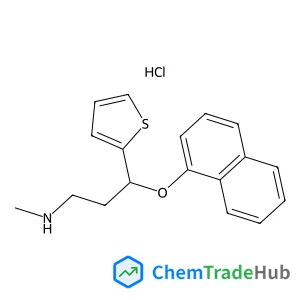
N-Methyl-3-(1-naphthyloxy)-3-(2-thienyl)-1-propanamine hydrochloride (1:1)
CAS Number:
1188266-11-6
Molecular Formula:
C18H20ClNOS
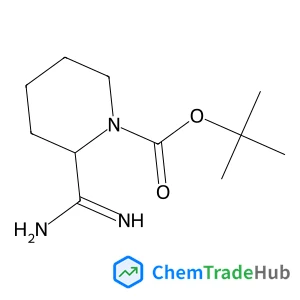
2-Methyl-2-propanyl 2-carbamimidoyl-1-piperidinecarboxylate
CAS Number:
1258640-98-0
Molecular Formula:
C11H21N3O2
![1-(1-Benzyl-1,2,3,6-tetrahydropyridin-4-yl)-1H-benzo[d]imidazol-2(3H)-one structure](https://static.chemtradehub.com/structs/603/60373-71-9-7dfb.webp "1-(1-Benzyl-1,2,3,6-tetrahydropyridin-4-yl)-1H-benzo[d]imidazol-2(3H)-one structure")
1-(1-Benzyl-1,2,3,6-tetrahydropyridin-4-yl)-1H-benzo[d]imidazol-2(3H)-one
CAS Number:
60373-71-9
Molecular Formula:
C19H19N3O
Recommended Suppliers





Disclaimer
This page provides academic journal information for reference and research purposes only. We are not affiliated with any journal publishers and do not handle publication submissions. For publication-related inquiries, please contact the respective journal publishers directly.
If you notice any inaccuracies in the information displayed, please contact us at support@chemtradehub.com. We will promptly review and address your concerns.