












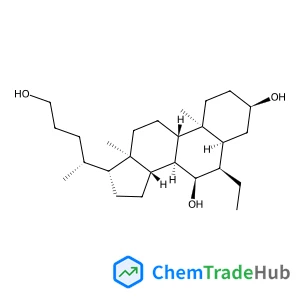
(3alpha,5beta,6alpha,7alpha)-6-Ethylcholane-3,7,24-triol
CAS Number:
1537866-49-1
Molecular Formula:
C26H46O3
Dong Jun Kim, Sang Jin Kim, Dong Kyu Roh, Jong Hak Kim
Low-cost, rubbery amphiphilic comb-like copolymers consisting of hydrophobic poly(lauryl methacrylate) (PLMA) and hydrophilic poly(oxyethylene methacrylate) (POEM) were synthesized via one-step free radical polymerization. The synthesis of PLMA–POEM copolymers was confirmed using Fourier transform infra-red spectroscopy (FT-IR), 1H-nuclear magnetic resonance (1H-NMR) and gel permeation spectroscopy (GPC). The PLMA–POEM copolymers were used as a structure-directing agent for the formation of anatase mesoporous TiO2 films. Careful adjustment of the precursor and polymer molecular weight (MW) was made to systematically vary the TiO2 structure and its effect on the performances of solid-state dye-sensitized solar cells (ssDSSCs). The use of a low MW polymer resulted in a worm-like structure with smaller pores, whereas an aggregated honeycomb-like structure with bimodal pores was obtained for the high MW system, as characterized by scanning electron microscopy (SEM), grazing incidence small-angle X-ray scattering (GI-SAXS) and N2 adsorption–desorption measurement. An efficiency of 4.2% was obtained at 100 mW cm−2 when using 2 μm-thick TiO2 film prepared with a high MW copolymer. The higher efficiency was due to better pore filling of the solid electrolyte and improved light scattering properties. By using a layer-by-layer method, the efficiency was further improved to 5.0% at 7 μm thickness, which was greater than that of commercially available paste (3.9%).
Junpeng Cao, Yanling Li, Yingxin Tan
DOI: 10.1039/D3PY01006F
Robert Röllig, Caroline E. Paul, Pierre Rousselot-Pailley, Véronique Alphand
DOI: 10.1039/D3RE00411B
José Carlos Velasco Calderón, Samir H. Mushrif
DOI: 10.1039/D3RE00340J
Qiang Tang, Minglang Zou, Yongming Wang, Jinyi Mu, Yuanzi Wu, Zhenyu Lin
DOI: 10.1039/D3PY01071F
Manfred Wagner, Christine Rosenauer, Jinhuo Dai, Priya Subramanian, Alasdair McKay, Jasper J. Michels, Tanja Junkers
DOI: 10.1039/D3PY01075A
DOI: 10.1039/D3RE00334E
Seon-Mi Jin, Jun Ho Hwang, Jaehyeong Park, Du Hyeon Ryu, BongSoo Kim, Chang Eun Song, Eunji Lee
DOI: 10.1039/D3PY00718A
François Ganachaud
DOI: 10.1039/D3PY00661A
N-(4-Methoxybenzyl)-2-pyridinamine (CAS: 52818-63-0) is increasingly being used ...
When handling Ethyl 4-(2-chlorophenyl)-1,3-thiazole-2-carboxylate, appropriate p...
Diethyldiselane (CAS: 628-39-7) is classified under the Globally Harmonized Syst...
The market for oxocopper (CAS: 12053-18-8) is primarily driven by its use in cat...
The market for 5-{[(2-Methyl-2-propanyl)oxy]carbonyl}-5-azaspiro[2.4]heptane-7-c...
2-(1-Pyrrolidinyl)-4-pyridinamine is a chemical compound with the CAS number 359...
2-(3-Pyridinyl)-1-azabicyclo[2.2.2]octane (CAS: 91556-75-1) is a crystalline sol...
(S)-Alpha-allyl-proline hydrochloride is usually synthesized via a Wittig reacti...
3-Methyl-1,2-oxazole-5-carboxylic acid (CAS: 4857-42-5) is an organic compound w...
Lys-SMCC-DM1 is synthesized via a multi-step process involving the coupling of S...

Physical Chemistry Chemical Physics (PCCP) is an international journal co-owned by 19 physical chemistry and physics societies from around the world. This journal publishes original, cutting-edge research in physical chemistry, chemical physics and biophysical chemistry. To be suitable for publication in PCCP, articles must include significant innovation and/or insight into physical chemistry; this is the most important criterion that reviewers and Editors will judge against when evaluating submissions. The journal has a broad scope and welcomes contributions spanning experiment, theory, computation and data science. Topical coverage includes spectroscopy, dynamics, kinetics, statistical mechanics, thermodynamics, electrochemistry, catalysis, surface science, quantum mechanics, quantum computing and machine learning. Interdisciplinary research areas such as polymers and soft matter, materials, nanoscience, energy, surfaces/interfaces, and biophysical chemistry are welcomed if they demonstrate significant innovation and/or insight into physical chemistry. Joined experimental/theoretical studies are particularly appreciated when complementary and based on up-to-date approaches.
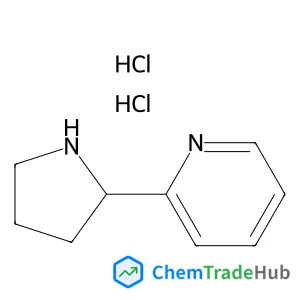
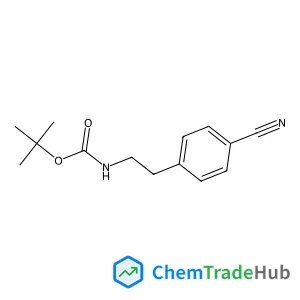
![1-oxaspiro[4.4]nonan-6-one structure](https://static.chemtradehub.com/structs/134/134179-01-4-e051.webp "1-oxaspiro[4.4]nonan-6-one structure")
![1-(1-Benzyl-1,2,3,6-tetrahydropyridin-4-yl)-1H-benzo[d]imidazol-2(3H)-one structure](https://static.chemtradehub.com/structs/603/60373-71-9-7dfb.webp "1-(1-Benzyl-1,2,3,6-tetrahydropyridin-4-yl)-1H-benzo[d]imidazol-2(3H)-one structure")





