












Computing vibrational spectra from ab initio molecular dynamics
Literature Information
Publication Date
2013-01-23
DOI
10.1039/C3CP44302G
Impact Factor
3.676
Authors
Martin Thomas, Martin Brehm, Reinhold Fligg, Peter Vöhringer, Barbara Kirchner
View Original
Abstract
We review several methods for the calculation of vibrational spectra from ab initio molecular dynamics (AIMD) simulations and we present a new implementation in the trajectory analyzer TRAVIS. In particular, we show mass-weighted power spectra, infrared spectra, and Raman spectra with corresponding depolarization ratios, which are based on time-correlation functions of velocities, dipole moments, and polarizabilities, respectively. Using the four organic molecules methanol, acetone, nitromethane, and pinacol as test systems, we compare the spectra from AIMD simulations of the isolated molecules in gas phase to static calculations relying on the harmonic approximation and to experimental spectra recorded in a nonpolar solvent. The AIMD approach turns out to give superior results when anharmonicity effects are of particular importance. Using the example of methanol, we demonstrate the application to bulk phase systems, which are not directly accessible by static calculations, but for which the AIMD spectra also provide a very good approximation to experimental data. Finally, we investigate the influence of simulation time and temperature in the AIMD on the resulting spectra.
Related Literature
Charge carrier separation in nanostructured TiO2 photoelectrodes for water splitting
Alexander J. Cowan, Wenhua Leng, Piers R. F. Barnes, David R. Klug, James R. Durrant
2013-04-17
Paper
DOI: 10.1039/C3CP50318F
Chemically modified ribbon edge stimulated H2 dissociation: a first-principles computational study
Ting Liao, Ziqi Sun, Aijun Du, Sean Smith
2013-04-12
Communication
DOI: 10.1039/C3CP50654A
Strain-induced Dirac cone-like electronic structures and semiconductor–semimetal transition in graphdiyne
Hui-Juan Cui, Xian-Lei Sheng, Qing-Bo Yan, Qing-Rong Zheng, Gang Su
2013-03-22
Paper
DOI: 10.1039/C3CP44457K
Morphology-controlled preparation and enhanced simulated sunlight and visible-light photocatalytic activity of Pt/Bi5Nb3O15 heterostructures
Ling Chen, Wan Guo, Yuxin Yang, Ang Zhang, Shengqu Zhang, Yihang Guo, Yingna Guo
2013-03-25
Paper
DOI: 10.1039/C3CP00084B
Synthesis and acid catalysis of zeolite-templated microporous carbons with SO3H groups
Kiichi Fukuhara, Masaaki Kitano, Shigenobu Hayashi, Michikazu Hara
2013-04-26
Paper
DOI: 10.1039/C3CP43853H
Elucidation of structure and nature of the PdO–Pd transformation using in situ PDF and XAS techniques
Jonathan Keating, Gopinathan Sankar, Timothy I. Hyde, Shinji Kohara, Koji Ohara
2013-04-26
Paper
DOI: 10.1039/C3CP50600B
Intrinsic fluorescence properties of rhodamine cations in gas-phase: triplet lifetimes and dispersed fluorescence spectra
Jean-François Greisch, Michael E. Harding, Mattias Kordel
2013-03-27
Paper
DOI: 10.1039/C3CP44362K
Effects of rare-earth co-doping on the local structure of rare-earth phosphate glasses using high and low energy X-ray diffraction
Vicky FitzGerald, Veijo Honkimaki, Mark A. Roberts, Tessa Brennan, Richard A. Martin, George A. Saunders, Robert J. Newport
2013-03-06
Paper
DOI: 10.1039/C3CP44298E
New Li-doped fullerene-intercalated phthalocyanine covalent organic frameworks designed for hydrogen storage
Jing-Hua Guo, Yoshiyuki Miyamoto
2013-04-23
Paper
DOI: 10.1039/C3CP50492A
The impact of spectator species on the interaction of H2O2 with platinum – implications for the oxygen reduction reaction pathways
Ioannis Katsounaros, Josef C. Meier, Udo Benedikt, P. Ulrich Biedermann, Angel Cuesta, Alexander A. Auer, Karl J. J. Mayrhofer
2013-03-01
Paper
DOI: 10.1039/C3CP50649E
You might also like
Compound Q&A
What is the market or research trend for N-(4-Methoxybenzyl)-2-pyridinamine (CAS: 52818-63-0)?
N-(4-Methoxybenzyl)-2-pyridinamine (CAS: 52818-63-0) is increasingly being used ...
52818-63-0N-(4-Methoxybenzyl)-...
Compound Q&A
What precautions should be taken when handling Ethyl 4-(2-chlorophenyl)-1,3-thiazole-2-carboxylate (CAS: 1050507-06-6)?
When handling Ethyl 4-(2-chlorophenyl)-1,3-thiazole-2-carboxylate, appropriate p...
1050507-06-6Ethyl 4-(2-chlorophe...
Compound Q&A
What regulatory guidelines apply to diethyldiselane (CAS: 628-39-7)?
Diethyldiselane (CAS: 628-39-7) is classified under the Globally Harmonized Syst...
628-39-7Diethyldiselane
Compound Q&A
What is the market or research trend for oxocopper (CAS: 12053-18-8)?
The market for oxocopper (CAS: 12053-18-8) is primarily driven by its use in cat...
12053-18-8oxocopper; oxo-(oxoc...
Compound Q&A
What is the market or research trend for 5-{[(2-Methyl-2-propanyl)oxy]carbonyl}-5-azaspiro[2.4]heptane-7-carboxylic acid?
The market for 5-{[(2-Methyl-2-propanyl)oxy]carbonyl}-5-azaspiro[2.4]heptane-7-c...
1268519-54-55-{[(2-Methyl-2-prop...
Compound Q&A
What is 2-(1-Pyrrolidinyl)-4-pyridinamine (CAS: 35981-63-6)?
2-(1-Pyrrolidinyl)-4-pyridinamine is a chemical compound with the CAS number 359...
35981-63-62-(1-Pyrrolidinyl)-4...
Compound Q&A
What are the physical and chemical properties of 2-(3-Pyridinyl)-1-azabicyclo[2.2.2]octane (CAS: 91556-75-1)?
2-(3-Pyridinyl)-1-azabicyclo[2.2.2]octane (CAS: 91556-75-1) is a crystalline sol...
91556-75-12-(3-Pyridinyl)-1-az...
Compound Q&A
How is (S)-Alpha-allyl-proline hydrochloride (CAS: 129704-91-2) typically synthesized?
(S)-Alpha-allyl-proline hydrochloride is usually synthesized via a Wittig reacti...
129704-91-2(S)-Alpha-allyl-prol...
Compound Q&A
What is 3-Methyl-1,2-oxazole-5-carboxylic acid (CAS: 4857-42-5)?
3-Methyl-1,2-oxazole-5-carboxylic acid (CAS: 4857-42-5) is an organic compound w...
4857-42-53-Methyl-1,2-oxazole...
Compound Q&A
How is Lys-SMCC-DM1 (CAS: 1281816-04-3) typically synthesized?
Lys-SMCC-DM1 is synthesized via a multi-step process involving the coupling of S...
1281816-04-3Lys-SMCC-DM1
Source Journal
Physical Chemistry Chemical Physics

CiteScore:
5.5
Self-citation Rate:
10.3%
Articles per Year:
3036
Physical Chemistry Chemical Physics (PCCP) is an international journal co-owned by 19 physical chemistry and physics societies from around the world. This journal publishes original, cutting-edge research in physical chemistry, chemical physics and biophysical chemistry. To be suitable for publication in PCCP, articles must include significant innovation and/or insight into physical chemistry; this is the most important criterion that reviewers and Editors will judge against when evaluating submissions. The journal has a broad scope and welcomes contributions spanning experiment, theory, computation and data science. Topical coverage includes spectroscopy, dynamics, kinetics, statistical mechanics, thermodynamics, electrochemistry, catalysis, surface science, quantum mechanics, quantum computing and machine learning. Interdisciplinary research areas such as polymers and soft matter, materials, nanoscience, energy, surfaces/interfaces, and biophysical chemistry are welcomed if they demonstrate significant innovation and/or insight into physical chemistry. Joined experimental/theoretical studies are particularly appreciated when complementary and based on up-to-date approaches.
Recommended Compounds
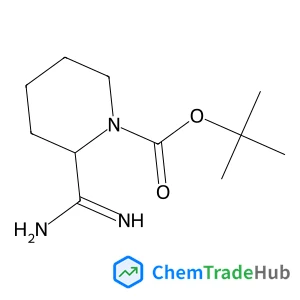
2-Methyl-2-propanyl 2-carbamimidoyl-1-piperidinecarboxylate
CAS Number:
1258640-98-0
Molecular Formula:
C11H21N3O2
![1-[6-(1H-Imidazol-1-yl)-3-pyridinyl]methanamine structure](https://static.chemtradehub.com/structs/914/914637-08-4-8825.webp "1-[6-(1H-Imidazol-1-yl)-3-pyridinyl]methanamine structure")
Recommended Suppliers




Disclaimer
This page provides academic journal information for reference and research purposes only. We are not affiliated with any journal publishers and do not handle publication submissions. For publication-related inquiries, please contact the respective journal publishers directly.
If you notice any inaccuracies in the information displayed, please contact us at support@chemtradehub.com. We will promptly review and address your concerns.