












Elucidation of structure and nature of the PdO–Pd transformation using in situ PDF and XAS techniques
Literature Information
Publication Date
2013-04-26
DOI
10.1039/C3CP50600B
Impact Factor
3.676
Authors
Jonathan Keating, Gopinathan Sankar, Timothy I. Hyde, Shinji Kohara, Koji Ohara
View Original
Abstract
The PdO–Pd phase transformation in a 4 wt% Pd/Al2O3 catalyst has been investigated using in situ X-ray absorption spectroscopy (XAS) and in situ X-ray total scattering (also known as high-energy X-ray diffraction) techniques. Both the partial and total pair distribution functions (PDF) from these respective techniques have been analysed in depth. New information from PDF analysis of total scattering data has been garnered using the differential PDF (d-PDF) approach where only correlations orginating from PdO and metallic Pd are extracted. This method circumvents problems encountered in characerising the catalytically active components due to the diffuse scattering from the disordered γ-Al2O3 support phase. Quantitative analysis of the palladium components within the catalyst allowed for the phase composition to be established at various temperatures. Above 850 °C it was found that PdO had converted to metallic Pd, however, the extent of reduction was of the order ca. 70% Pd metal and 30% PdO. Complementary in situ XANES and EXAFS were performed, with heating to high temperature and subsequent cooling in air, and the results of the analyses support the observations, that residual PdO is detected at elevated temperatures. Hysteresis in the transformation upon cooling is confirmed from XAS studies where reoxidation occurs below 680 °C.
Recommended Journals
Related Literature
Supramolecular assembly of a quaterthiophene surfactant
Lu Jiang, Robert C. Hughes, Darryl Y. Sasaki
2004-03-24
Communication
DOI: 10.1039/B316657K
Thiazole orange as fluorescent universal base in peptide nucleic acids
Olaf Köhler, Oliver Seitz
2003-10-21
Communication
DOI: 10.1039/B308299G
Vapour diffusion hydrolysis of a self-assembled silylated organogel, the OG–HG transcription process: a new way to cast and handle fluorescent silsesquioxane
Olivier J. Dautel, Jean-Pierre Lère-Porte, Joël J. E. Moreau, Michel Wong Chi Man
2003-09-24
Communication
DOI: 10.1039/B308703D
Long-term pervaporation performance of microporous methylated silica membranes
Jean Campaniello, Charles W. R. Engelen, Wim G. Haije, Paul P. A. C. Pex, Jaap F. Vente
2004-02-27
Communication
DOI: 10.1039/B401496K
On-chip separation of peptides prepared within a micro reactor
Vinod George, Paul Watts, Stephen J. Haswell, Esteban Pombo-Villar
2003-10-22
Communication
DOI: 10.1039/B310744B
Applying reversible chemistry of CO2 to supramolecular polymers
Heng Xu, Erin M. Hampe, Dmitry M. Rudkevich
2003-10-14
Communication
DOI: 10.1039/B309580K
Single-molecule magnets: control by a single solvent molecule of Jahn–Teller isomerism in [Mn12O12(O2CCH2But)16(H2O)4]
Mònica Soler, Wolfgang Wernsdorfer, Ziming Sun, John C. Huffman, David N. Hendrickson, George Christou
2003-09-25
Communication
DOI: 10.1039/B306246E
A rationally designed novel receptor for probing cooperative interaction between metal ions and bivalent tryptophan side chain in solution
Yitong Li, Chi Ming Yang
2003-10-22
Communication
DOI: 10.1039/B310543A
Assembly of a polyoxometalate into an anisotropic gel
Sophie Favette, Bernold Hasenknopf, Jacqueline Vaissermann, Pierre Gouzerh, Cécile Roux
2003-09-25
Communication
DOI: 10.1039/B308889H
Ring selectivity and migratory aptitude of Cp*Ru+ complexation to acecorannulene
T. Jon Seiders, Joseph M. O'Connor
2004-03-12
Communication
DOI: 10.1039/B316061K
You might also like
Compound Q&A
What is the market or research trend for N-(4-Methoxybenzyl)-2-pyridinamine (CAS: 52818-63-0)?
N-(4-Methoxybenzyl)-2-pyridinamine (CAS: 52818-63-0) is increasingly being used ...
52818-63-0N-(4-Methoxybenzyl)-...
Compound Q&A
What precautions should be taken when handling Ethyl 4-(2-chlorophenyl)-1,3-thiazole-2-carboxylate (CAS: 1050507-06-6)?
When handling Ethyl 4-(2-chlorophenyl)-1,3-thiazole-2-carboxylate, appropriate p...
1050507-06-6Ethyl 4-(2-chlorophe...
Compound Q&A
What regulatory guidelines apply to diethyldiselane (CAS: 628-39-7)?
Diethyldiselane (CAS: 628-39-7) is classified under the Globally Harmonized Syst...
628-39-7Diethyldiselane
Compound Q&A
What is the market or research trend for oxocopper (CAS: 12053-18-8)?
The market for oxocopper (CAS: 12053-18-8) is primarily driven by its use in cat...
12053-18-8oxocopper; oxo-(oxoc...
Compound Q&A
What is the market or research trend for 5-{[(2-Methyl-2-propanyl)oxy]carbonyl}-5-azaspiro[2.4]heptane-7-carboxylic acid?
The market for 5-{[(2-Methyl-2-propanyl)oxy]carbonyl}-5-azaspiro[2.4]heptane-7-c...
1268519-54-55-{[(2-Methyl-2-prop...
Compound Q&A
What is 2-(1-Pyrrolidinyl)-4-pyridinamine (CAS: 35981-63-6)?
2-(1-Pyrrolidinyl)-4-pyridinamine is a chemical compound with the CAS number 359...
35981-63-62-(1-Pyrrolidinyl)-4...
Compound Q&A
What are the physical and chemical properties of 2-(3-Pyridinyl)-1-azabicyclo[2.2.2]octane (CAS: 91556-75-1)?
2-(3-Pyridinyl)-1-azabicyclo[2.2.2]octane (CAS: 91556-75-1) is a crystalline sol...
91556-75-12-(3-Pyridinyl)-1-az...
Compound Q&A
How is (S)-Alpha-allyl-proline hydrochloride (CAS: 129704-91-2) typically synthesized?
(S)-Alpha-allyl-proline hydrochloride is usually synthesized via a Wittig reacti...
129704-91-2(S)-Alpha-allyl-prol...
Compound Q&A
What is 3-Methyl-1,2-oxazole-5-carboxylic acid (CAS: 4857-42-5)?
3-Methyl-1,2-oxazole-5-carboxylic acid (CAS: 4857-42-5) is an organic compound w...
4857-42-53-Methyl-1,2-oxazole...
Compound Q&A
How is Lys-SMCC-DM1 (CAS: 1281816-04-3) typically synthesized?
Lys-SMCC-DM1 is synthesized via a multi-step process involving the coupling of S...
1281816-04-3Lys-SMCC-DM1
Source Journal
Physical Chemistry Chemical Physics

CiteScore:
5.5
Self-citation Rate:
10.3%
Articles per Year:
3036
Physical Chemistry Chemical Physics (PCCP) is an international journal co-owned by 19 physical chemistry and physics societies from around the world. This journal publishes original, cutting-edge research in physical chemistry, chemical physics and biophysical chemistry. To be suitable for publication in PCCP, articles must include significant innovation and/or insight into physical chemistry; this is the most important criterion that reviewers and Editors will judge against when evaluating submissions. The journal has a broad scope and welcomes contributions spanning experiment, theory, computation and data science. Topical coverage includes spectroscopy, dynamics, kinetics, statistical mechanics, thermodynamics, electrochemistry, catalysis, surface science, quantum mechanics, quantum computing and machine learning. Interdisciplinary research areas such as polymers and soft matter, materials, nanoscience, energy, surfaces/interfaces, and biophysical chemistry are welcomed if they demonstrate significant innovation and/or insight into physical chemistry. Joined experimental/theoretical studies are particularly appreciated when complementary and based on up-to-date approaches.
Recommended Compounds
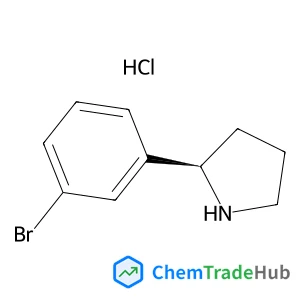
(2R)-2-(3-Bromophenyl)pyrrolidine hydrochloride (1:1)
CAS Number:
1391550-13-2
Molecular Formula:
C10H13BrClN
![1,10-bis(3,5-dimethylphenyl)-12-hydroxy-4,5,6,7-tetrahydroiindeno[7,1-de:1',7'-fg][1,3,2]dioxaphosphocine 12-oxide structure](https://static.chemtradehub.com/structs/141/1412439-82-7-b9a9.webp "1,10-bis(3,5-dimethylphenyl)-12-hydroxy-4,5,6,7-tetrahydroiindeno[7,1-de:1',7'-fg][1,3,2]dioxaphosphocine 12-oxide structure")
1,10-bis(3,5-dimethylphenyl)-12-hydroxy-4,5,6,7-tetrahydroiindeno[7,1-de:1',7'-fg][1,3,2]dioxaphosphocine 12-oxide
CAS Number:
1412439-82-7
Molecular Formula:
C33H31O4P
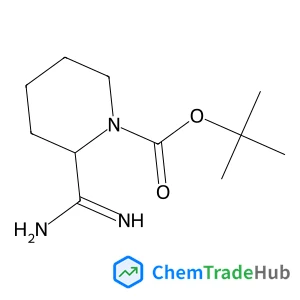
2-Methyl-2-propanyl 2-carbamimidoyl-1-piperidinecarboxylate
CAS Number:
1258640-98-0
Molecular Formula:
C11H21N3O2
Recommended Suppliers





Disclaimer
This page provides academic journal information for reference and research purposes only. We are not affiliated with any journal publishers and do not handle publication submissions. For publication-related inquiries, please contact the respective journal publishers directly.
If you notice any inaccuracies in the information displayed, please contact us at support@chemtradehub.com. We will promptly review and address your concerns.