













O species-decorated graphene shell encapsulating iridium–nickel alloy as an efficient electrocatalyst towards hydrogen evolution reaction
Literature Information
Publication Date
2019-06-06
DOI
10.1039/C9TA04361F
Impact Factor
12.732
Authors
Shipeng Gong, Changlai Wang, Peng Jiang, Kang Yang, Jian Lu, Minxue Huang, Shi Chen, Junzheng Wang
View Original
Abstract
In comparison to other electrocatalysts, graphene possesses two distinguished merits of superior electrical conductivity and anticorrosion performance. However, graphene and graphene oxide are electrocatalytically inert in hydrogen evolution reaction (HER) due to their electronic properties. Herein, for the first time, we report a highly active and stable graphene oxide electrocatalyst for the HER. The graphene oxide-encapsulated IrNi alloy catalyst (IrNi@OC) was prepared via the pyrolysis of Ir-doped Ni-BTC, which exhibited an excellent electrocatalytic activity for the HER, achieving 100 mA cm−2 at a low overpotential of 95 mV in 0.5 M H2SO4 and 10 mA cm−2 at 27 mV in 1 M KOH. Furthermore, these results are superior to those of commercial Pt/C. DFT calculations revealed that electrons were transferred from the IrNi alloy core to the graphene shell, and this process became more facile when graphene was decorated with O species, which tuned the electronic structure of the carbon atoms and made them favorable for the formation of C–H bonds, thereby decreasing the ΔGH* for the HER.
Related Literature
Peculiar surface–interface properties of nanocrystalline ceria–cobalt oxides with enhanced oxygen storage capacity
Nan Qiu, Jing Zhang
2014-09-04
Paper
DOI: 10.1039/C4CP03390F
Polarisation charge switching through the motion of metal atoms trapped in fullerene cages
G. Raggi, A. J. Stace, E. Bichoutskaia
2014-09-24
Paper
DOI: 10.1039/C4CP02672A
Diffusive and non-diffusive photo-induced proton coupled electron transfer from hydrogen bonded phenols to meso-tetrakis-5,10,15,20-pentafluorophenyl porphyrin
P. Hemant Kumar, Y. Venkatesh, S. Prashanthi, D. Siva, B. Ramakrishna, Prakriti Ranjan Bangal
2014-09-09
Paper
DOI: 10.1039/C4CP02505A
Entropy reduction in unfolded peptides (and proteins) due to conformational preferences of amino acid residues
Reinhard Schweitzer-Stenner, Siobhan E. Toal
2014-09-09
Paper
DOI: 10.1039/C4CP02108H
Monitoring the reversible photoisomerization of an azobenzene-functionalized molecular triazatriangulene platform on Au(111) by IRRAS
Hanne Jacob, Sandra Ulrich, Ulrich Jung, Sonja Lemke, Talina Rusch, Christian Schütt, Finn Petersen, Thomas Strunskus, Olaf Magnussen, Rainer Herges, Felix Tuczek
2014-09-17
Paper
DOI: 10.1039/C4CP03438D
Generation of guanine–amino acid cross-links by a free radical combination mechanism
Yuriy Uvaydov, Nicholas E. Geacintov, Vladimir Shafirovich
2014-04-25
Paper
DOI: 10.1039/C4CP00675E
Fast carbon dioxide recycling by reaction with γ-Mg(BH4)2
Jenny G. Vitillo, Elena Groppo, Elisa Gil Bardají, Marcello Baricco, Silvia Bordiga
2014-09-05
Communication
DOI: 10.1039/C4CP03300K
Optical trapping and Raman spectroscopy of solid particles
J. C. J. Camp, J. McGregor, I. M. Watson, R. A. Cox, M. Kalberer, A. D. Ward, F. D. Pope
2014-04-29
Paper
DOI: 10.1039/C4CP00994K
Brønsted acids in ionic liquids: how acidity depends on the liquid structure
Jade A. McCune, Peizhao He, Marina Petkovic, Fergal Coleman, John D. Holbrey, Kenneth R. Seddon, Małgorzata Swadźba-Kwaśny
2014-09-11
Paper
DOI: 10.1039/C4CP03217A
Competing reactions of selected atmospheric gases on Fe3O4 nanoparticles surfaces
N. Eltouny
2014-09-23
Paper
DOI: 10.1039/C4CP02379J
You might also like
Compound Q&A
What is the market or research trend for N-(4-Methoxybenzyl)-2-pyridinamine (CAS: 52818-63-0)?
N-(4-Methoxybenzyl)-2-pyridinamine (CAS: 52818-63-0) is increasingly being used ...
52818-63-0N-(4-Methoxybenzyl)-...
Compound Q&A
What precautions should be taken when handling Ethyl 4-(2-chlorophenyl)-1,3-thiazole-2-carboxylate (CAS: 1050507-06-6)?
When handling Ethyl 4-(2-chlorophenyl)-1,3-thiazole-2-carboxylate, appropriate p...
1050507-06-6Ethyl 4-(2-chlorophe...
Compound Q&A
What regulatory guidelines apply to diethyldiselane (CAS: 628-39-7)?
Diethyldiselane (CAS: 628-39-7) is classified under the Globally Harmonized Syst...
628-39-7Diethyldiselane
Compound Q&A
What is the market or research trend for oxocopper (CAS: 12053-18-8)?
The market for oxocopper (CAS: 12053-18-8) is primarily driven by its use in cat...
12053-18-8oxocopper; oxo-(oxoc...
Compound Q&A
What is the market or research trend for 5-{[(2-Methyl-2-propanyl)oxy]carbonyl}-5-azaspiro[2.4]heptane-7-carboxylic acid?
The market for 5-{[(2-Methyl-2-propanyl)oxy]carbonyl}-5-azaspiro[2.4]heptane-7-c...
1268519-54-55-{[(2-Methyl-2-prop...
Compound Q&A
What is 2-(1-Pyrrolidinyl)-4-pyridinamine (CAS: 35981-63-6)?
2-(1-Pyrrolidinyl)-4-pyridinamine is a chemical compound with the CAS number 359...
35981-63-62-(1-Pyrrolidinyl)-4...
Compound Q&A
What are the physical and chemical properties of 2-(3-Pyridinyl)-1-azabicyclo[2.2.2]octane (CAS: 91556-75-1)?
2-(3-Pyridinyl)-1-azabicyclo[2.2.2]octane (CAS: 91556-75-1) is a crystalline sol...
91556-75-12-(3-Pyridinyl)-1-az...
Compound Q&A
How is (S)-Alpha-allyl-proline hydrochloride (CAS: 129704-91-2) typically synthesized?
(S)-Alpha-allyl-proline hydrochloride is usually synthesized via a Wittig reacti...
129704-91-2(S)-Alpha-allyl-prol...
Compound Q&A
What is 3-Methyl-1,2-oxazole-5-carboxylic acid (CAS: 4857-42-5)?
3-Methyl-1,2-oxazole-5-carboxylic acid (CAS: 4857-42-5) is an organic compound w...
4857-42-53-Methyl-1,2-oxazole...
Compound Q&A
How is Lys-SMCC-DM1 (CAS: 1281816-04-3) typically synthesized?
Lys-SMCC-DM1 is synthesized via a multi-step process involving the coupling of S...
1281816-04-3Lys-SMCC-DM1
Source Journal
Journal of Materials Chemistry A

CiteScore:
19.5
Self-citation Rate:
4.7%
Articles per Year:
2211
Journal of Materials Chemistry A, B & C cover high quality studies across all fields of materials chemistry. The journals focus on those theoretical or experimental studies that report new understanding, applications, properties and synthesis of materials. The journals have a strong history of publishing quality reports of interest to interdisciplinary communities and providing an efficient and rigorous service through peer review and publication. The journals are led by an international team of Editors-in-Chief and Associate Editors who are all active researchers in their fields. Journal of Materials Chemistry A, B & C are separated by the intended application of the material studied. Broadly, applications in energy and sustainability are of interest to Journal of Materials Chemistry A, applications in biology and medicine are of interest to Journal of Materials Chemistry B, and applications in optical, magnetic and electronic devices are of interest to Journal of Materials Chemistry C. More than one Journal of Materials Chemistry journal may be suitable for certain fields and researchers are encouraged to submit their paper to the journal that they feel best fits for their particular article. Example topic areas within the scope of Journal of Materials Chemistry A are listed below. This list is neither exhaustive nor exclusive. Artificial photosynthesis Batteries Carbon dioxide conversion Catalysis Fuel cells Gas capture/separation/storage Green/sustainable materials Hydrogen generation Hydrogen storage Photocatalysis Photovoltaics Self-cleaning materials Self-healing materials Sensors Supercapacitors Thermoelectrics Water splitting Water treatment
Recommended Compounds
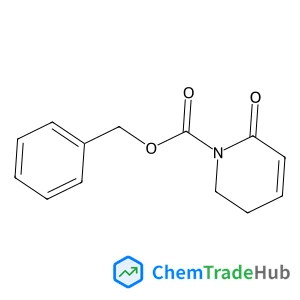
Benzyl 6-oxo-3,6-dihydro-1(2H)-pyridinecarboxylate
CAS Number:
725746-35-0
Molecular Formula:
C13H13NO3
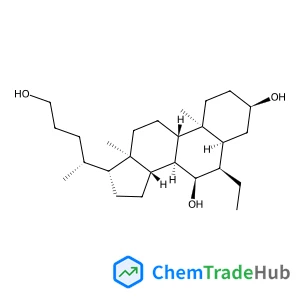
(3alpha,5beta,6alpha,7alpha)-6-Ethylcholane-3,7,24-triol
CAS Number:
1537866-49-1
Molecular Formula:
C26H46O3

2-(4,4-Difluorobutyl)-1H-isoindole-1,3(2H)-dione
CAS Number:
1265341-14-7
Molecular Formula:
C12H11F2NO2

Recommended Suppliers




Disclaimer
This page provides academic journal information for reference and research purposes only. We are not affiliated with any journal publishers and do not handle publication submissions. For publication-related inquiries, please contact the respective journal publishers directly.
If you notice any inaccuracies in the information displayed, please contact us at support@chemtradehub.com. We will promptly review and address your concerns.