












A versatile macro-initiator with dual functional anchoring groups for surface-initiated atom transfer radical polymerization on various substrates
Literature Information
Publication Date
2012-04-18
DOI
10.1039/C2PY20148H
Impact Factor
5.582
Authors
Xiaolong Wang, Feng Zhou
View Original
Abstract
A versatile macro-initiator with dual functional anchoring groups for surface-initiated atom transfer radical polymerization (SI-ATRP) on various substrates is reported. Conventional free radical copolymerization was performed with N-(3,4-dihydroxyphenyl) ethyl methacrylamide (a dopamine anchor-containing monomer), 4-(1-pyrenyl) butyl methacrylate (a pyrene anchor-containing monomer), and 2-(2-bromoisobutyryloxy) ethyl methacrylate (an ATRP-initiating monomer) to produce a random copolymer. Dopamine anchors on the copolymer could assemble on the macroscopic planar substrates (e.g., Si, Ti, Au, Cu, stainless steel, Al2O3, PI, PTFE, PDMS, textile, and wood) and pyrene anchors on the carbon-based nanoscaled materials (e.g., two-dimensional graphene oxide and one-dimensional carbon nanotubes). The successful preparation of polymer brushes through SI-ATRP in a water and methanol system from various substrates was characterized via ATR-IR, AFM, XPS, TGA, and TEM, which confirmed the versatility of the macro-initiator. More importantly, a synergistic anchoring effect between catechol and pyrene groups was discovered, leading to high quantities of grafted polymers from the graphene oxide substrates. Microcontact printing of the macro-initiator was also demonstrated in the formation of patterned surfaces on the Ti substrate.
Related Literature
Functionalization of aliphatic polyesters by nitroxide radical coupling
Francesca Cicogna, Serena Coiai, Paola Rizzarelli, Sabrina Carroccio, Cristian Gambarotti, Ilaria Domenichelli, Chengcheng Yang, Nadka Tz. Dintcheva, Giovanni Filippone, Calogero Pinzino, Elisa Passaglia
2014-05-29
Paper
DOI: 10.1039/C4PY00641K
Self-healable polymer gels with multi-responsiveness of gel–sol–gel transition and degradability
Ruixue Chang, Heng An, Xu Li, Ruyi Zhou, Jianglei Qin, Yuelan Tian, Kuilin Deng
2017-01-10
Paper
DOI: 10.1039/C6PY02122K
tBCPMA: a new trifunctional acrylic monomer for convenient synthesis of a well-defined amphiphilic graft copolymer by successive RDRP
Chun Feng, Guolin Lu, Gang Sun, Xunwei Liu, Xiaoyu Huang
2014-06-30
Paper
DOI: 10.1039/C4PY00772G
In situ synthesis of thermo-responsive ABC triblock terpolymer nano-objects by seeded RAFT polymerization
Yaqing Qu, Fei Huo, Quanlong Li, Xin He, Shentong Li, Wangqing Zhang
2014-05-30
Paper
DOI: 10.1039/C4PY00510D
Preparation of sulfonic acid functional proton conducting phosphazenes by covalent protection
Ferda Hacıvelioğlu
2017-04-17
Paper
DOI: 10.1039/C7PY00189D
Highly thermal conductive resins formed from wide-temperature-range eutectic mixtures of liquid crystalline epoxies bearing diglycidyl moieties at the side positions
Hyeonuk Yeo, Nam-Ho You, Se Gyu Jang, Seokhoon Ahn, Kwang-Un Jeong, Seung Hee Lee, Munju Goh
2017-04-05
Paper
DOI: 10.1039/C7PY00243B
Ultra-sensitive detection of explosives in solution and film as well as the development of thicker film effectiveness by tetraphenylethene moiety in AIE active fluorescent conjugated polymer
Khama Rani Ghosh, Sukanta Kumar Saha
2014-06-11
Paper
DOI: 10.1039/C4PY00673A
Copolymers of carbazole and phenazine derivatives: minor structural modification, but totally different photodetector performance
Shuang Li, Xianyu Deng, Lei Feng, Xincheng Miao, Kuangyi Tang, Qianqian Li, Zhen Li
2016-12-21
Paper
DOI: 10.1039/C6PY01733A
6-Oxoverdazyl radical polymers with tunable electrochemical properties
2014-07-04
Communication
DOI: 10.1039/C4PY00829D
Reduction- and thermo-sensitive core-cross-linked polypeptide hybrid micelles for triggered and intracellular drug release
Yuanfeng Gao
2017-01-06
Paper
DOI: 10.1039/C6PY01929C
You might also like
Compound Q&A
Are there alternatives to 1-(4-Chlorophenyl)-N-hydroxymethanimine (CAS: 3848-36-0) in synthesis?
When considering alternatives to 1-(4-Chlorophenyl)-N-hydroxymethanimine (CAS: 3...
3848-36-01-(4-Chlorophenyl)-N...
Compound Q&A
How should (1R,9S,10S,12S,14E,16S,19R,20R,21S,22R)-3,9,21-Trihydroxy-5,10,12,14,16,20,22-heptamethyl-23,24-dioxatetracyclo[17.3.1.1~6,9~.0~2,7~]tetracosa-2,5,7,14-tetraen-4-one (CAS: 183202-73-5) be stored?
This compound should be stored in a cool, dry place away from direct sunlight. I...
183202-73-5(1R,9S,10S,12S,14E,1...
Compound Q&A
How is 3-(4-Bromophenyl)-5-(2-fluorophenyl)-1,2,4-oxadiazole (CAS: 419553-16-5) typically synthesized?
3-(4-Bromophenyl)-5-(2-fluorophenyl)-1,2,4-oxadiazole is synthesized through a m...
419553-16-53-(4-Bromophenyl)-5-...
Compound Q&A
How is 5-Chloro-2-(4-chlorophenyl)-4-methyl-6-[3-(1-piperidinyl)propoxy]pyrimidine (CAS: 1639220-19-1) typically synthesized?
5-Chloro-2-(4-chlorophenyl)-4-methyl-6-[3-(1-piperidinyl)propoxy]pyrimidine (CAS...
1639220-19-15-Chloro-2-(4-chloro...
Compound Q&A
What industries use 2-Chloro-4-(difluoromethoxy)pyridine (CAS: 1206978-15-5)?
2-Chloro-4-(difluoromethoxy)pyridine is used in the pharmaceutical industry for ...
1206978-15-52-Chloro-4-(difluoro...
Compound Q&A
What regulatory guidelines apply to 3-Chloro-6-methylpyridazine (CAS: 1121-79-5)?
3-Chloro-6-methylpyridazine (CAS: 1121-79-5) is classified under the Globally Ha...
1121-79-53-Chloro-6-methylpyr...
Compound Q&A
Are there alternatives to Methyl 4,5-dimethyl-2-nitrobenzoate in synthesis?
Several alternatives can be used in the synthesis of Methyl 4,5-dimethyl-2-nitro...
90922-74-0Methyl 4,5-dimethyl-...
Compound Q&A
Are there alternatives to (2E,2'E)-3,3'-(1,4-Phenylene)bisacrylaldehyde in synthesis?
Alternatives to (2E,2'E)-3,3'-(1,4-Phenylene)bisacrylaldehyde include other acry...
63405-68-5(2E,2'E)-3,3'-(1,4-P...
Compound Q&A
What is 3-Amino-5-chloropyridin-2-ol hydrochloride (CAS: 1261906-29-9)?
3-Amino-5-chloropyridin-2-ol hydrochloride is an organic compound with the CAS n...
1261906-29-93-Amino-5-chloropyri...
Compound Q&A
What precautions should be taken when handling 6,7-Difluoro-2,3-dihydro-4H-chromen-4-one (CAS: 1092349-93-3)?
When handling 6,7-Difluoro-2,3-dihydro-4H-chromen-4-one, it is essential to wear...
1092349-93-36,7-Difluoro-2,3-dih...
Source Journal
Polymer Chemistry

CiteScore:
8.6
Self-citation Rate:
7.3%
Articles per Year:
457
Polymer Chemistry welcomes submissions in all areas of polymer science that have a strong focus on macromolecular chemistry. Manuscripts may cover a broad range of fields, yet no direct application focus is required.
Recommended Compounds
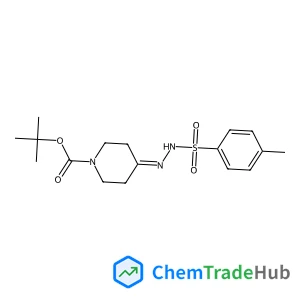
tert-Butyl 4-(2-(p-Tolylsulfonyl)hydrazono)piperidine-1-carboxylate
CAS Number:
1046478-89-0
Molecular Formula:
C17H25N3O4S
![4-[(3-Chloro-2-fluorophenyl)amino]-7-methoxy-6-quinazolinyl acetate structure](https://static.chemtradehub.com/structs/740/740081-22-5-f58f.webp "4-[(3-Chloro-2-fluorophenyl)amino]-7-methoxy-6-quinazolinyl acetate structure")
4-[(3-Chloro-2-fluorophenyl)amino]-7-methoxy-6-quinazolinyl acetate
CAS Number:
740081-22-5
Molecular Formula:
C17H13ClFN3O3
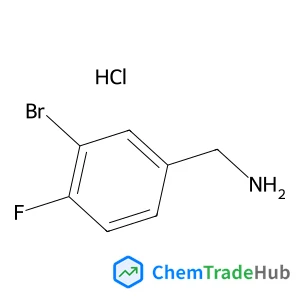
1-(3-Bromo-4-fluorophenyl)methanamine hydrochloride (1:1)
CAS Number:
202865-68-7
Molecular Formula:
C7H8BrClFN
Recommended Suppliers




Disclaimer
This page provides academic journal information for reference and research purposes only. We are not affiliated with any journal publishers and do not handle publication submissions. For publication-related inquiries, please contact the respective journal publishers directly.
If you notice any inaccuracies in the information displayed, please contact us at support@chemtradehub.com. We will promptly review and address your concerns.