












Highly thermal conductive resins formed from wide-temperature-range eutectic mixtures of liquid crystalline epoxies bearing diglycidyl moieties at the side positions
Literature Information
Publication Date
2017-04-05
DOI
10.1039/C7PY00243B
Impact Factor
5.582
Authors
Hyeonuk Yeo, Nam-Ho You, Se Gyu Jang, Seokhoon Ahn, Kwang-Un Jeong, Seung Hee Lee, Munju Goh
View Original
Abstract
To develop advanced thermally conductive epoxy resins with liquid crystallinity, three novel liquid crystalline epoxies (LCEs) were synthesized via the substitution of phenylcyclohexyl (PCH) mesogenic moieties into the 2,5 positions of diglycidyl terephthalate. Mesomorphic properties of LCEs were evaluated by differential scanning calorimetry (DSC), polarized optical microscopy (POM), and X-ray diffraction (XRD). All LCEs exhibited an enantiotropic smectic phase on heating and cooling. Remarkably, the smectic phase with a wide temperature range of 98–145 °C was observed for the eutectic mixtures of a family of stable smectic LCEs. The selection of optimum curing agents, compositions of LCEs and curing agents, and curing conditions were determined based on physical, chemical, and thermal properties of LCEs and curing agents. The thermally cured LCEs at the LC phase exhibited a high thermal conductivity of 0.4 W m−1 K−1.
Recommended Journals
Related Literature
Taming quantum interference in single molecule junctions: induction and resonance are key
2020-01-31
Paper
DOI: 10.1039/C9CP06384F
Synergistic effect of supercritical CO2 and organic solvent on exfoliation of graphene: experiment and atomistic simulation studies
Lixi Liu, Yan Chen, Fei Dang, Yilun Liu, Xiaogeng Tian
2019-09-17
Paper
DOI: 10.1039/C9CP03654G
H/D solvent isotope effects on the photoracemization reaction of enantiomeric the tris(2,2′-bipyridine)ruthenium(ii) complex and its analogues
Masahiro Asahara, Haruhiko Kurimoto, Masato Nakamizu, Shingo Hattori, Kazuteru Shinozaki
2020-03-02
Paper
DOI: 10.1039/C9CP06758B
Investigation of glycerol hydrogen-bonding networks in choline chloride/glycerol eutectic-forming liquids using neutron diffraction
2019-09-19
Paper
DOI: 10.1039/C9CP04343H
Static and dynamic scavenging of ammoniated electrons by nitromethane
Nicolás Rivas, Germán Sciaini, Ernesto Marceca
2019-09-16
Paper
DOI: 10.1039/C9CP03342D
Embedding of atoms into the nanopore sites of the C6N6 and C6N8 porous carbon nitride monolayers with tunable electronic properties
Catherine Stampfl, Berna Akgenc, Mitra Ghergherehchi, Ch. V. Nguyen
2020-02-20
Paper
DOI: 10.1039/D0CP00093K
Automated exploration of the low-energy chemical space with fast quantum chemical methods
Philipp Pracht, Fabian Bohle, Stefan Grimme
2020-02-12
Paper
DOI: 10.1039/C9CP06869D
Tailoring the structural and electronic properties of an SnSe2/MoS2 van der Waals heterostructure with an electric field and the insertion of a graphene sheet
Nguyen V. Hieu, Le T. P. Thao, Nguyen N. Hieu, Huynh V. Phuc, H. D. Bui, M. Idrees, B. Amin, Le M. Duc, Chuong V. Nguyen
2019-09-24
Paper
DOI: 10.1039/C9CP04689E
Dissociative chemisorption of O2 on Agn and Agn−1Ir (n = 3–26) clusters: a first-principle study
Chuangchuang Wang, Yongpeng Yang, Xiaojing Liu, Yuanjie Li, Dandan Song, Yun Tian, Zhaojun Zhang
2020-04-06
Paper
DOI: 10.1039/D0CP01005G
The tetracapped truncated tetrahedron in 16-vertex tetrametallaborane structures: spherical aromaticity with an isocloso rather than a closo skeletal electron count
Amr A. A. Attia, Alexandru Lupan, R. Bruce King, Sundargopal Ghosh
2019-09-20
Paper
DOI: 10.1039/C9CP04263F
You might also like
Compound Q&A
What are the main uses of 4-Nitrophenyl phosphate disodium salt hexahydrate (CAS: 333338-18-4)?
4-Nitrophenyl phosphate disodium salt hexahydrate is primarily used as a substra...
333338-18-44-Nitrophenyl phosph...
Compound Q&A
What are the main uses of 2-(Trifluoromethyl)-1,3-oxazole-4-carboxylic Acid (CAS: 1060816-01-4)?
2-(Trifluoromethyl)-1,3-oxazole-4-carboxylic Acid (CAS: 1060816-01-4) is widely ...
1060816-01-42-(Trifluoromethyl)-...
Compound Q&A
How should 2-Fluoro-4-biphenylcarboxylic acid (CAS: 137045-30-8) be stored?
2-Fluoro-4-biphenylcarboxylic acid should be stored in a cool, dry place at room...
137045-30-82-Fluoro-4-biphenylc...
Compound Q&A
What industries use Prednisolone-21-Carboxylic Acid (CAS: 61549-70-0)?
Prednisolone-21-Carboxylic Acid is primarily used in the pharmaceutical industry...
61549-70-0Prednisolone-21-Carb...
Compound Q&A
How should 4-(Hydrazinomethyl)-1,2,3-benzenetriol (CAS: 3614-72-0) be stored?
4-(Hydrazinomethyl)-1,2,3-benzenetriol (CAS: 3614-72-0) should be stored in a co...
3614-72-04-(Hydrazinomethyl)-...
Compound Q&A
What industries use 4-Amino-1-methyl-1H-pyrazole-5-carboxylic acid hydrochloride (CAS: 92534-70-8)?
4-Amino-1-methyl-1H-pyrazole-5-carboxylic acid hydrochloride (CAS: 92534-70-8) i...
92534-70-84-Amino-1-methyl-1H-...
Compound Q&A
What regulatory guidelines apply to dehydropachymic acid (CAS: 77012-31-8)?
Dehydropachymic acid (CAS: 77012-31-8) is regulated by various agencies. It fall...
77012-31-8Dehydropachymic acid
Compound Q&A
What is the market or research trend for 6-[(2,2-Dimethylpropanoyl)amino]nicotinic acid (CAS: 898561-66-5)?
The market and research trends for 6-[(2,2-Dimethylpropanoyl)amino]nicotinic aci...
898561-66-56-[(2,2-Dimethylprop...
Compound Q&A
How should 1,10-Phenanthroline-2,9-dicarbaldehyde (CAS: 57709-62-3) be stored?
1,10-Phenanthroline-2,9-dicarbaldehyde should be stored in a cool, dry place awa...
57709-62-31,10-Phenanthroline-...
Compound Q&A
How is 5-Carbamoyl-11-oxo-10,11-dihydro-5H-dibenzo[b,f]azepin-10-yl acetate (CAS: 113952-21-9) typically synthesized?
5-Carbamoyl-11-oxo-10,11-dihydro-5H-dibenzo[b,f]azepin-10-yl acetate can be synt...
113952-21-95-Carbamoyl-11-oxo-1...
Source Journal
Polymer Chemistry

CiteScore:
8.6
Self-citation Rate:
7.3%
Articles per Year:
457
Polymer Chemistry welcomes submissions in all areas of polymer science that have a strong focus on macromolecular chemistry. Manuscripts may cover a broad range of fields, yet no direct application focus is required.
Recommended Compounds
![[(1S,2S,3R,4S,7R,9S,10S,12R,15S)-4,12-Diacetyloxy-15-[(2R,3S)-3-benzamido-3-phenyl-2-(2,2,2-trichloroethoxycarbonyloxy)propanoyl]oxy-1,9-dihydroxy-10,14,17,17-tetramethyl-11-oxo-6-oxatetracyclo[11.3.1.03,10.04,7]heptadec-13-en-2-yl] benzoate structure](https://static.chemtradehub.com/structs/100/100431-55-8-7104.webp "[(1S,2S,3R,4S,7R,9S,10S,12R,15S)-4,12-Diacetyloxy-15-[(2R,3S)-3-benzamido-3-phenyl-2-(2,2,2-trichloroethoxycarbonyloxy)propanoyl]oxy-1,9-dihydroxy-10,14,17,17-tetramethyl-11-oxo-6-oxatetracyclo[11.3.1.03,10.04,7]heptadec-13-en-2-yl] benzoate structure")
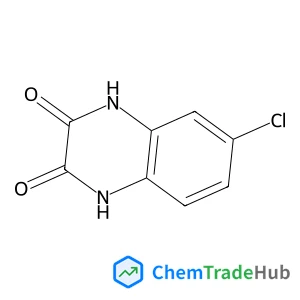
6-CHLORO-2,3-DIOXO-1,2,3,4-TETRAHYDROQUINOXALINE, 97
CAS Number:
169-14-2
Molecular Formula:
C8H5ClN2O2
![(3R,5R)-1-[(Benzyloxy)carbonyl]-5-methyl-3-piperidinecarboxylic acid structure](https://static.chemtradehub.com/structs/126/1269757-29-0-c552.webp "(3R,5R)-1-[(Benzyloxy)carbonyl]-5-methyl-3-piperidinecarboxylic acid structure")
(3R,5R)-1-[(Benzyloxy)carbonyl]-5-methyl-3-piperidinecarboxylic acid
CAS Number:
1269757-29-0
Molecular Formula:
C15H19NO4
Recommended Suppliers






Disclaimer
This page provides academic journal information for reference and research purposes only. We are not affiliated with any journal publishers and do not handle publication submissions. For publication-related inquiries, please contact the respective journal publishers directly.
If you notice any inaccuracies in the information displayed, please contact us at support@chemtradehub.com. We will promptly review and address your concerns.