












tBCPMA: a new trifunctional acrylic monomer for convenient synthesis of a well-defined amphiphilic graft copolymer by successive RDRP
Literature Information
Publication Date
2014-06-30
DOI
10.1039/C4PY00772G
Impact Factor
5.582
Authors
Chun Feng, Guolin Lu, Gang Sun, Xunwei Liu, Xiaoyu Huang
View Original
Abstract
A series of well-defined amphiphilic graft copolymers, consisting of a hydrophobic poly(tert-butyl acrylate) backbone and hydrophilic poly(N-isopropylacrylamide) side chains, were synthesized by successive reversible addition–fragmentation chain transfer (RAFT) polymerization and supplemental activator and reducing agent atom transfer radical polymerization (SARA ATRP) in the presence of Cu(0). A new Cl-containing acrylate monomer, tert-butyl 2-((2-chloropropanoyloxy)methyl)acrylate, was first RAFT homopolymerized in a controlled way to give a well-defined homopolymer with a narrow molecular weight distribution (Mw/Mn = 1.10). This homopolymer directly initiated SARA ATRP of N-isopropylacrylamide to afford well-defined poly(tert-butyl acrylate)-g-poly(N-isopropylacrylamide) (PtBA-g-PNIPAM) graft copolymers (Mw/Mn ≤ 1.30) via the grafting—from a strategy without polymeric functionality transformation to introduce the initiating group. Finally, the hydrophobic PtBA backbone was selectively hydrolyzed in an acidic environment without affecting PNIPAM side chains to provide poly(acrylic acid)-g-poly(N-isopropylacrylamide) (PAA-g-PNIPAM) graft copolymers. The influences of the length of PNIPAM side chains and the salinity on the critical micelle concentration of the PtBA-g-PNIPAM amphiphilic graft copolymer were examined by fluorescence spectroscopy. Furthermore, thermo-responsive behaviors of the copolymers were investigated by UV-vis spectroscopy, dynamic light scattering, and transmission electron microscopy.
Related Literature
Intensification of esterification through emulsification: isolation of dilute low molecular weight carboxylic acids
Andreas Toth, Susanne Lux, Daniela Painer, Matthäus Siebenhofer
2018-10-08
Paper
DOI: 10.1039/C8RE00194D
Continuous synthesis of elastomeric macroporous microbeads
Jeffrey A. Bennett, Zachary S. Campbell, Milad Abolhasani
2018-11-09
Communication
DOI: 10.1039/C8RE00189H
New process for producing butane-2,3-dione by oxidative dehydrogenation of 3-hydroxybutanone
M. Huchede, Q. Gu, G. Gauthier, V. Bellière-Baca, C. Michel, J. M. M. Millet
2019-03-06
Paper
DOI: 10.1039/C9RE00045C
Effect of metal chlorides on glucose mutarotation and possible implications on humin formation
Pranav Ramesh, Athanasios Kritikos, George Tsilomelekis
2018-12-10
Communication
DOI: 10.1039/C8RE00233A
Hydrogel/enzyme dots as adaptable tool for non-compartmentalized multi-enzymatic reactions in microfluidic devices
Sebastian Haefner, Toni Heroldt, Martin Peiter, Frank Simon, Andreas Richter, Dietmar Appelhans
2018-11-14
Paper
DOI: 10.1039/C8RE00180D
Low-catalyst concentration atom transfer radical polymerization of a phosphonium salt-type monomer
Yannick P. Borguet, Nicolay V. Tsarevsky
2012-06-21
Paper
DOI: 10.1039/C2PY20303K
Towards a continuous formic acid synthesis: a two-step carbon dioxide hydrogenation in flow
Helena Reymond, Juan José Corral-Pérez, Atsushi Urakawa, Philipp Rudolf von Rohr
2018-10-04
Paper
DOI: 10.1039/C8RE00142A
Thermoformed fluoropolymer tubing for in-line mixing
Haomiao Zhang, Yi Shen, Andrea Adamo, Klavs F. Jensen
2018-07-18
Paper
DOI: 10.1039/C8RE00112J
Liquid–liquid extraction in flow of the radioisotope titanium-45 for positron emission tomography applications
Joseph Imbrogno, Jesper Fonslet, Marcella Lusardi, Fedor Zhuravlev
2018-10-12
Paper
DOI: 10.1039/C8RE00175H
You might also like
Compound Q&A
What regulatory guidelines apply to 6-Bromo-2-methylimidazo[1,2-a]pyrimidine (CAS: 1111638-05-1)?
6-Bromo-2-methylimidazo[1,2-a]pyrimidine (CAS: 1111638-05-1) falls under various...
1111638-05-16-Bromo-2-methylimid...
Compound Q&A
Are there alternatives to 1-Pyrrolidineethanol, β-methyl-α-phenyl-, (αS,βR) (CAS: 123620-80-4) in synthesis?
While there are no direct alternatives, similar compounds like 1-Pyrrolidineetha...
123620-80-41-Pyrrolidineethanol...
Compound Q&A
Is 4-Methyl-2,6-bis(2-methyl-2-propanyl)phenyl methylcarbamate (CAS: 1918-11-2) safe?
4-Methyl-2,6-bis(2-methyl-2-propanyl)phenyl methylcarbamate (CAS: 1918-11-2) is ...
1918-11-24-Methyl-2,6-bis(2-m...
Compound Q&A
How should 2-(3-Bromo-4-fluorophenyl)-1,3-dioxolane (CAS: 77771-04-1) be stored?
2-(3-Bromo-4-fluorophenyl)-1,3-dioxolane (CAS: 77771-04-1) should be stored in a...
77771-04-12-(3-Bromo-4-fluorop...
Compound Q&A
What are the physical and chemical properties of 4,5,6,7-Tetrahydro-1H-indazole hydrochloride (CAS: 18161-11-0)?
4,5,6,7-Tetrahydro-1H-indazole hydrochloride is a white crystalline solid with a...
18161-11-04,5,6,7-Tetrahydro-1...
Compound Q&A
What is (2R)-1-Methoxy-3-phenyl-2-propanamine (CAS: 59919-07-2)?
(2R)-1-Methoxy-3-phenyl-2-propanamine is a chiral organic compound with the CAS ...
59919-07-2(2R)-1-Methoxy-3-phe...
Compound Q&A
What industries use Ethyl 1-(1-phenylethyl)-1H-imidazole-5-carboxylate (CAS: 56649-47-9)?
Ethyl 1-(1-phenylethyl)-1H-imidazole-5-carboxylate is used in various industries...
56649-47-9Ethyl 1-(1-phenyleth...
Compound Q&A
What regulatory guidelines apply to 4-[(1E,3S)-1-(4-Hydroxyphenyl)-1,4-pentadien-3-yl]phenol (CAS: 17676-24-3)?
4-[(1E,3S)-1-(4-Hydroxyphenyl)-1,4-pentadien-3-yl]phenol (CAS: 17676-24-3) falls...
17676-24-34-[(1E,3S)-1-(4-Hydr...
Compound Q&A
What industries use (S)-3-Amino-5-phenylpentanoic acid hydrochloride (CAS: 331846-97-0)?
(S)-3-Amino-5-phenylpentanoic acid hydrochloride is primarily used in the pharma...
331846-97-0(S)-3-Amino-5-phenyl...
Compound Q&A
How is 7-methoxy-1-benzothiophene-2-carboxylic acid (CAS: 88791-07-5) typically synthesized?
7-Methoxy-1-benzothiophene-2-carboxylic acid is typically synthesized by reactin...
88791-07-57-methoxy-1-benzothi...
Source Journal
Polymer Chemistry

CiteScore:
8.6
Self-citation Rate:
7.3%
Articles per Year:
457
Polymer Chemistry welcomes submissions in all areas of polymer science that have a strong focus on macromolecular chemistry. Manuscripts may cover a broad range of fields, yet no direct application focus is required.
Recommended Compounds
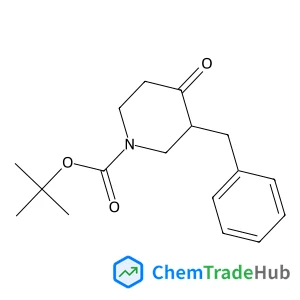
2-Methyl-2-propanyl 3-benzyl-4-oxo-1-piperidinecarboxylate
CAS Number:
193274-82-7
Molecular Formula:
C17H23NO3
Recommended Suppliers





Disclaimer
This page provides academic journal information for reference and research purposes only. We are not affiliated with any journal publishers and do not handle publication submissions. For publication-related inquiries, please contact the respective journal publishers directly.
If you notice any inaccuracies in the information displayed, please contact us at support@chemtradehub.com. We will promptly review and address your concerns.