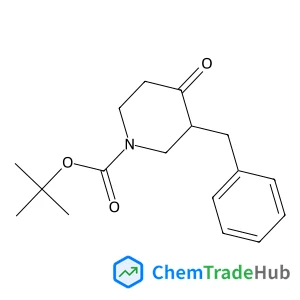
2-Methyl-2-propanyl 3-benzyl-4-oxo-1-piperidinecarboxylate
CAS Number:
193274-82-7
Molecular Formula:
C17H23NO3
Yuanfeng Gao
The dynamic instability, premature burst drug release, and lack of intracellular stimuli-sensitivity of current polymeric nanocarriers still hinder them from potential clinical applications. To address these challenges, a novel type of reduction- and thermo-sensitive core-cross-linked polypeptide hybrid micelle (CCM) was developed. The trimethoxysilane-terminated and disulfide-bond-centered polyglutamate with pendant diethylene glycol was synthesized from ring-opening polymerization followed by an amino-epoxy ring-opening reaction. FT-IR, 1H NMR, and thermo-gravimetric analyses verified the formation of Si–O–Si cross-linking networks in the CCMs, which have an approximately 6.6-fold lower critical aggregation concentration than the non-cross-linked counterparts. Their size, morphology and dual stimuli-sensitivity were fully characterized by DLS, TEM, and AFM. The CCMs presented a similar thermo-reversibility to non-cross-linked ones; but their size and morphology remained unchanged in 10 mM DTT at 37 °C while non-cross-linked micelles reassembled into smaller ones. The cross-linking effect in the CCMs greatly attenuated the premature burst-release behavior compared to the non-cross-linked counterparts although a reduction-triggered accelerating drug release profile was similarly observed. Furthermore, flow cytometry and CLSM confirm that the anticancer drug doxorubicin-loaded CCMs can efficiently enter the HeLa cells. Hence, this work establishes a facile platform for the fabrication of stimuli-sensitive silica-cross-linked polypeptide hybrid micelles, which hold promise to overcome the above-mentioned challenges for advanced drug delivery systems.
Bernhard V. K. J. Schmidt, Martin Hetzer, Helmut Ritter, Christopher Barner-Kowollik
DOI: 10.1039/C2PY20214J
Darren L. Riley, Ian Strydom, Rachel Chikwamba, Jenny-Lee Panayides
DOI: 10.1039/C8RE00236C
Haomiao Zhang, Yi Shen, Andrea Adamo, Klavs F. Jensen
DOI: 10.1039/C8RE00112J
C. Chatard, A. Graillot, G. Boutevin, C. Loubat, D. Grosso
DOI: 10.1039/C8RE00062J
Helena Reymond, Juan José Corral-Pérez, Atsushi Urakawa, Philipp Rudolf von Rohr
DOI: 10.1039/C8RE00142A
Aaron D. Baldwin
DOI: 10.1039/C2PY20576A
Nicolas Allard, Ahmed Najari, Jean-Rémi Pouliot, Agnieszka Pron, François Grenier, Mario Leclerc
DOI: 10.1039/C2PY20422C
Léo Violet, Alexis Mifleur, Laurent Vanoye, Duc Hanh Nguyen, Régis Philippe, Régis M. Gauvin, Pascal Fongarland
DOI: 10.1039/C8RE00238J
Nathalie Márquez, Jacob A. Moulijn, Michiel Makkee, Michiel T. Kreutzer, Pedro Castaño
DOI: 10.1039/C9RE00056A
6-Bromo-2-methylimidazo[1,2-a]pyrimidine (CAS: 1111638-05-1) falls under various...
While there are no direct alternatives, similar compounds like 1-Pyrrolidineetha...
4-Methyl-2,6-bis(2-methyl-2-propanyl)phenyl methylcarbamate (CAS: 1918-11-2) is ...
2-(3-Bromo-4-fluorophenyl)-1,3-dioxolane (CAS: 77771-04-1) should be stored in a...
4,5,6,7-Tetrahydro-1H-indazole hydrochloride is a white crystalline solid with a...
(2R)-1-Methoxy-3-phenyl-2-propanamine is a chiral organic compound with the CAS ...
Ethyl 1-(1-phenylethyl)-1H-imidazole-5-carboxylate is used in various industries...
4-[(1E,3S)-1-(4-Hydroxyphenyl)-1,4-pentadien-3-yl]phenol (CAS: 17676-24-3) falls...
(S)-3-Amino-5-phenylpentanoic acid hydrochloride is primarily used in the pharma...
7-Methoxy-1-benzothiophene-2-carboxylic acid is typically synthesized by reactin...

Polymer Chemistry welcomes submissions in all areas of polymer science that have a strong focus on macromolecular chemistry. Manuscripts may cover a broad range of fields, yet no direct application focus is required.