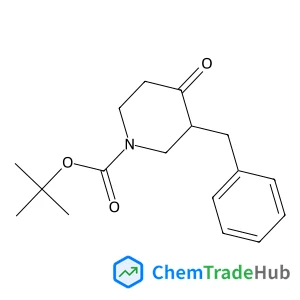
2-Methyl-2-propanyl 3-benzyl-4-oxo-1-piperidinecarboxylate
CAS Number:
193274-82-7
Molecular Formula:
C17H23NO3
Xiaoqing Lu, Li Liu, Yang Li, Wenyue Guo, Lianming Zhao, Honghong Shan
The conversion of acetylene to ethylidyne on Pt(111) has been comprehensively investigated using self-consistent periodic density functional theory. Geometries and energies for all of the intermediates involved as well as the conversion mechanism were analyzed. On Pt(111), the carbon atoms in the majority of stable C2Hx (x = 1–4) intermediates prefer saturated sp3 configurations with the missing H atoms substituted by the adjacent metal atoms. The most favorable conversion pathway for acetylene to ethylidyne is via a three-step reaction mechanism, acetylene → vinyl → vinylidene → ethylidyne. The first step, acetylene → vinyl, depends on the availability of surface H atoms: without preadsorbed H the reaction occurs via the initial disproportionation of acetylene, which resulted in adsorbed vinyl; with an abundance of preadsorbed H, acetylene could transform to vinyl via both the disproportionation and hydrogenation reactions. Conversions through initial dehydrogenation of acetylene and isomerizations of acetylene and vinyl are unfavorable due to high energy barriers along the relevant pathways. The conversion rate involving vinylidene as an intermediate is at least 100 times larger than that involving ethylidene.

Journal of Enzyme inhibition and Medicinal Chemistry

Environmental Toxicology and Pharmacology

Molecules

Faraday Discussions

Physical Chemistry Chemical Physics

Nature Reviews Drug Discovery

Mini-Reviews in Medicinal Chemistry

Molecular Diversity

European Journal of Organic Chemistry

Photochemical & Photobiological Sciences
Denisio M. Togashi, Sílvia M. B. Costa
DOI: 10.1039/B109960B
Karl Jug, Igor P. Gloriozov
DOI: 10.1039/B107803H
DOI: 10.1039/B108724J
Stephen J. Paddison, Reginald Paul, Klaus-Dieter Kreuer
DOI: 10.1039/B109791A
S. M. Handford-Styring, R. W. Walker
DOI: 10.1039/B108578F
Vitaly B. Rogankov, Leonid Z. Boshkov
DOI: 10.1039/B107989C
María T. Baumgartner, Raúl A. Taccone, Mariano A. Teruel, Silvia I. Lane
DOI: 10.1039/B108856B
Yoshio Nosaka, Masatsugu Nakamura, Tsutomu Hirakawa
DOI: 10.1039/B108441K
Sara Y. Yu, Javier Garcia-Martinez, Wei Li, George D. Meitzner, Enrique Iglesia
DOI: 10.1039/B108640P
Kenichi Izawa, Toshiaki Ogasawara, Hideki Masuda, Hirofumi Okabayashi, Charmian J. O'Connor, Isao Noda
DOI: 10.1039/B107556J
6-Bromo-2-methylimidazo[1,2-a]pyrimidine (CAS: 1111638-05-1) falls under various...
While there are no direct alternatives, similar compounds like 1-Pyrrolidineetha...
4-Methyl-2,6-bis(2-methyl-2-propanyl)phenyl methylcarbamate (CAS: 1918-11-2) is ...
2-(3-Bromo-4-fluorophenyl)-1,3-dioxolane (CAS: 77771-04-1) should be stored in a...
4,5,6,7-Tetrahydro-1H-indazole hydrochloride is a white crystalline solid with a...
(2R)-1-Methoxy-3-phenyl-2-propanamine is a chiral organic compound with the CAS ...
Ethyl 1-(1-phenylethyl)-1H-imidazole-5-carboxylate is used in various industries...
4-[(1E,3S)-1-(4-Hydroxyphenyl)-1,4-pentadien-3-yl]phenol (CAS: 17676-24-3) falls...
(S)-3-Amino-5-phenylpentanoic acid hydrochloride is primarily used in the pharma...
7-Methoxy-1-benzothiophene-2-carboxylic acid is typically synthesized by reactin...
Physical Chemistry Chemical Physics (PCCP) is an international journal co-owned by 19 physical chemistry and physics societies from around the world. This journal publishes original, cutting-edge research in physical chemistry, chemical physics and biophysical chemistry. To be suitable for publication in PCCP, articles must include significant innovation and/or insight into physical chemistry; this is the most important criterion that reviewers and Editors will judge against when evaluating submissions. The journal has a broad scope and welcomes contributions spanning experiment, theory, computation and data science. Topical coverage includes spectroscopy, dynamics, kinetics, statistical mechanics, thermodynamics, electrochemistry, catalysis, surface science, quantum mechanics, quantum computing and machine learning. Interdisciplinary research areas such as polymers and soft matter, materials, nanoscience, energy, surfaces/interfaces, and biophysical chemistry are welcomed if they demonstrate significant innovation and/or insight into physical chemistry. Joined experimental/theoretical studies are particularly appreciated when complementary and based on up-to-date approaches.