












Excited state quenching kinetics of zinc meso-tetrakis (N-methylpyridinium-4-yl) porphyrin by methyl viologen in AOT reverse micelles
Literature Information
Publication Date
2002-02-27
DOI
10.1039/B109960B
Impact Factor
3.676
Authors
Denisio M. Togashi, Sílvia M. B. Costa
View Original
Abstract
The singlet and triplet excited state quenching of Zn (II) meso-tetrakis (N-methylpyridinum-4-yl) porphyrin (ZnTMPyP4+) by methyl viologen (Mv2+) in AOT reverse micelles has been studied using steady state fluorescence and laser flash photolysis techniques. The water content in the reverse micelle was varied by using different values of W0 = [H2O]/[AOT] at fixed AOT (0.1 M) concentration and the quenching process efficiency was found to decrease with increasing W0. The ZnTMPyP4+ triplet state is strongly quenched by Mv2+ and the probe decay profiles were nonexponential. Data analysis with an active sites quenching model gave aggregation numbers which compare well with the literature values reported for the AOT reverse micelles. The rate constants for the quenching of singlet and triplet excited states correlate with the micelle size and were found to decrease with increasing micellar radii giving evidence of a geometrical confinement effect. The magnitudes of the rate constants are of the order of diffusion controlled reactions affected by electrostatic interactions between charged species in the interfacial micellar region.
Related Literature
Correction: Base-catalyzed C-alkylation of potassium enolates with styrenes via a metal–ene reaction: a mechanistic study
Thierry N. J. Fouquet, Yasuo Norikane
2020-03-18
Correction
DOI: 10.1039/D0OB90032J
Blue emissive dimethylmethylene-bridged triphenylamine derivatives appending cross-linkable groups
Kangyu Zhou, Hongfei Pan, Yongjie Zhang, Houchen Wang, Xiaofei Dong, Xiangkui Ren, Xianggao Li, Shirong Wang, Zhijian Chen
2020-04-24
Paper
DOI: 10.1039/D0OB00622J
Rhodium(iii)-catalyzed ortho-C–H amidation of 2-arylindazoles with a dioxazolone as an amidating reagent
Payel Ghosh, Sadhanendu Samanta, Alakananda Hajra
2020-01-27
Communication
DOI: 10.1039/C9OB02756D
Copper-catalyzed direct amination of benzylic hydrocarbons and inactive aliphatic alkanes with arylamines
Hua Yao, Bo Xie, Xiaoyang Zhong, Shengzhou Jin, Sen Lin, Zhaohua Yan
2020-04-10
Communication
DOI: 10.1039/D0OB00491J
CuBr2-catalyzed diastereoselective allylation: total synthesis of decytospolides A and B and their C6-epimers
Birakishore Padhi, G. Sudhakar Reddy, N. Arjunreddy Mallampudi, Utkal Mani Choudhury, Debendra K. Mohapatra
2020-03-09
Paper
DOI: 10.1039/C9OB02689D
Modular synthesis of oligoacetylacetones via site-selective silylation of acetylacetone derivatives
Parantap Sarkar, Yuya Inaba, Hayato Shirakura, Tomoki Yoneda
2020-04-08
Paper
DOI: 10.1039/D0OB00501K
1,2-cis-Selective glucosylation enabled by halogenated benzyl protecting groups
Dancan K. Njeri, Claude J. Pertuit, Justin R. Ragains
2020-03-10
Communication
DOI: 10.1039/D0OB00373E
Asymmetric total syntheses of naturally occurring α,β-enone-containing RALs, L-783290 and L-783277 through intramolecular base-mediated macrolactonization reaction
Joy Chakraborty, Samik Nanda
2020-03-09
Paper
DOI: 10.1039/D0OB00237B
Dearomatization of 3-cyanoindoles by (3 + 2) cycloaddition: from batch to flow chemistry
Maxime Manneveau, Saori Tanii, Fanny Gens, Julien Legros
2020-04-20
Communication
DOI: 10.1039/D0OB00582G
The quasi-irreversible inactivation of cytochrome P450 enzymes by paroxetine: a computational approach
2020-04-06
Paper
DOI: 10.1039/D0OB00529K
You might also like
Compound Q&A
What regulatory guidelines apply to 6-Bromo-2-methylimidazo[1,2-a]pyrimidine (CAS: 1111638-05-1)?
6-Bromo-2-methylimidazo[1,2-a]pyrimidine (CAS: 1111638-05-1) falls under various...
1111638-05-16-Bromo-2-methylimid...
Compound Q&A
Are there alternatives to 1-Pyrrolidineethanol, β-methyl-α-phenyl-, (αS,βR) (CAS: 123620-80-4) in synthesis?
While there are no direct alternatives, similar compounds like 1-Pyrrolidineetha...
123620-80-41-Pyrrolidineethanol...
Compound Q&A
Is 4-Methyl-2,6-bis(2-methyl-2-propanyl)phenyl methylcarbamate (CAS: 1918-11-2) safe?
4-Methyl-2,6-bis(2-methyl-2-propanyl)phenyl methylcarbamate (CAS: 1918-11-2) is ...
1918-11-24-Methyl-2,6-bis(2-m...
Compound Q&A
How should 2-(3-Bromo-4-fluorophenyl)-1,3-dioxolane (CAS: 77771-04-1) be stored?
2-(3-Bromo-4-fluorophenyl)-1,3-dioxolane (CAS: 77771-04-1) should be stored in a...
77771-04-12-(3-Bromo-4-fluorop...
Compound Q&A
What are the physical and chemical properties of 4,5,6,7-Tetrahydro-1H-indazole hydrochloride (CAS: 18161-11-0)?
4,5,6,7-Tetrahydro-1H-indazole hydrochloride is a white crystalline solid with a...
18161-11-04,5,6,7-Tetrahydro-1...
Compound Q&A
What is (2R)-1-Methoxy-3-phenyl-2-propanamine (CAS: 59919-07-2)?
(2R)-1-Methoxy-3-phenyl-2-propanamine is a chiral organic compound with the CAS ...
59919-07-2(2R)-1-Methoxy-3-phe...
Compound Q&A
What industries use Ethyl 1-(1-phenylethyl)-1H-imidazole-5-carboxylate (CAS: 56649-47-9)?
Ethyl 1-(1-phenylethyl)-1H-imidazole-5-carboxylate is used in various industries...
56649-47-9Ethyl 1-(1-phenyleth...
Compound Q&A
What regulatory guidelines apply to 4-[(1E,3S)-1-(4-Hydroxyphenyl)-1,4-pentadien-3-yl]phenol (CAS: 17676-24-3)?
4-[(1E,3S)-1-(4-Hydroxyphenyl)-1,4-pentadien-3-yl]phenol (CAS: 17676-24-3) falls...
17676-24-34-[(1E,3S)-1-(4-Hydr...
Compound Q&A
What industries use (S)-3-Amino-5-phenylpentanoic acid hydrochloride (CAS: 331846-97-0)?
(S)-3-Amino-5-phenylpentanoic acid hydrochloride is primarily used in the pharma...
331846-97-0(S)-3-Amino-5-phenyl...
Compound Q&A
How is 7-methoxy-1-benzothiophene-2-carboxylic acid (CAS: 88791-07-5) typically synthesized?
7-Methoxy-1-benzothiophene-2-carboxylic acid is typically synthesized by reactin...
88791-07-57-methoxy-1-benzothi...
Source Journal
Physical Chemistry Chemical Physics

CiteScore:
5.5
Self-citation Rate:
10.3%
Articles per Year:
3036
Physical Chemistry Chemical Physics (PCCP) is an international journal co-owned by 19 physical chemistry and physics societies from around the world. This journal publishes original, cutting-edge research in physical chemistry, chemical physics and biophysical chemistry. To be suitable for publication in PCCP, articles must include significant innovation and/or insight into physical chemistry; this is the most important criterion that reviewers and Editors will judge against when evaluating submissions. The journal has a broad scope and welcomes contributions spanning experiment, theory, computation and data science. Topical coverage includes spectroscopy, dynamics, kinetics, statistical mechanics, thermodynamics, electrochemistry, catalysis, surface science, quantum mechanics, quantum computing and machine learning. Interdisciplinary research areas such as polymers and soft matter, materials, nanoscience, energy, surfaces/interfaces, and biophysical chemistry are welcomed if they demonstrate significant innovation and/or insight into physical chemistry. Joined experimental/theoretical studies are particularly appreciated when complementary and based on up-to-date approaches.
Recommended Compounds
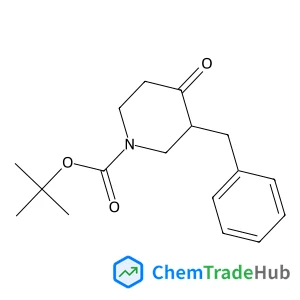
2-Methyl-2-propanyl 3-benzyl-4-oxo-1-piperidinecarboxylate
CAS Number:
193274-82-7
Molecular Formula:
C17H23NO3
![4-Penten-1-yl 2-[(2-furylmethyl)(1H-imidazol-1-ylcarbonyl)amino]butanoate structure](https://static.chemtradehub.com/structs/101/101903-30-4-ac34.webp "4-Penten-1-yl 2-[(2-furylmethyl)(1H-imidazol-1-ylcarbonyl)amino]butanoate structure")
4-Penten-1-yl 2-[(2-furylmethyl)(1H-imidazol-1-ylcarbonyl)amino]butanoate
CAS Number:
101903-30-4
Molecular Formula:
C18H23N3O4
Recommended Suppliers



Disclaimer
This page provides academic journal information for reference and research purposes only. We are not affiliated with any journal publishers and do not handle publication submissions. For publication-related inquiries, please contact the respective journal publishers directly.
If you notice any inaccuracies in the information displayed, please contact us at support@chemtradehub.com. We will promptly review and address your concerns.