


Thermodynamic properties and dielectric constants in water/methanol mixtures by integral equation theory and molecular dynamics simulations
Literature Information
Publication Date
2002-02-06
DOI
10.1039/B108724J
Impact Factor
3.676
Authors
View Original
Abstract
A dielectrically adjusted version of the RISM equation for the situation of ions in mixed solvents is applied to model mixtures of water with methanol in concentrations covering the complete concentration range. Calculated structures from the integral equation theory are compared to corresponding results from NVT molecular dynamics simulations. The structure calculated from the integral equation is generally in good agreement with the molecular dynamics results. The agreement in calculated energies between integral equation theory and molecular dynamics simulations are also generally good over the entire concentration range for the specific model applied. For the first time this type of integral equation theory is also applied to the direct calculation of free energy. For the specific water model the free energy is lower than the experimental value for pure water. Under-predictions of the structure and corresponding higher entropy for the specific water model might be one of the reasons for these results. The dielectric constant in a uniform liquid mixture can be described in terms of the dipole moments of the molecules involved and the molecular correlation functions for the different molecular pair combinations in the mixture. In this work I reformulate the theory into a corresponding interaction site formulation. The reformulated theory is illustrated for the water/methanol model mixtures.
Recommended Journals

Journal of Natural Medicines

Russian Journal of Coordination Chemistry

Journal of Peptide Science

Crystallography Reports

Journal of Saudi Chemical Society

Chemical Communications

Chemistry Education Research and Practice

Russian Journal of Organic Chemistry

Russian Journal of General Chemistry

Drug Discovery Today
Related Literature
Iron-catalyzed regioselective alkylation of 1,4-quinones and coumarins with functionalized alkyl bromides
Dengke Li, Xianfu Shen
2019-12-23
Paper
DOI: 10.1039/C9OB02289A
Total synthesis of isatindigotindoline C
Juha H. Siitonen, Sherlin Lira, Muhammed Yousufuddin, László Kürti
2020-03-02
Communication
DOI: 10.1039/D0OB00270D
Copper-catalyzed direct amination of benzylic hydrocarbons and inactive aliphatic alkanes with arylamines
Hua Yao, Bo Xie, Xiaoyang Zhong, Shengzhou Jin, Sen Lin, Zhaohua Yan
2020-04-10
Communication
DOI: 10.1039/D0OB00491J
Mechanism and stereoselectivity of benzylic C–H hydroxylation by Ru–porphyrin: a computational study
Xiahe Chen, Qunmin Wang, Haimin Shen, Guijie Li, Yun-Fang Yang, Yuan-Bin She
2019-12-09
Paper
DOI: 10.1039/C9OB02415H
Examination of pinanediol–boronic acid ester formation in aqueous media: relevance to the relative stability of trigonal and tetrahedral boronate esters
Mayte A. Martínez-Aguirre, Marcos Flores-Alamo, Felipe Medrano, Anatoly K. Yatsimirsky
2020-03-18
Paper
DOI: 10.1039/D0OB00201A
Head-to-head comparison of LNA, MPγPNA, INA and Invader probes targeting mixed-sequence double-stranded DNA
Raymond G. Emehiser, Eric Hall, Dale C. Guenther, Saswata Karmakar, Patrick J. Hrdlicka
2019-10-25
Paper
DOI: 10.1039/C9OB02111F
Visible light photoredox catalyzed deprotection of 1,3-oxathiolanes
Mingyang Yang, Zhimin Xing, Bowen Fang, Xingang Xie, Xuegong She
2019-12-06
Paper
DOI: 10.1039/C9OB02517K
You might also like
Compound Q&A
What regulatory guidelines apply to 6-Bromo-2-methylimidazo[1,2-a]pyrimidine (CAS: 1111638-05-1)?
6-Bromo-2-methylimidazo[1,2-a]pyrimidine (CAS: 1111638-05-1) falls under various...
1111638-05-16-Bromo-2-methylimid...
Compound Q&A
Are there alternatives to 1-Pyrrolidineethanol, β-methyl-α-phenyl-, (αS,βR) (CAS: 123620-80-4) in synthesis?
While there are no direct alternatives, similar compounds like 1-Pyrrolidineetha...
123620-80-41-Pyrrolidineethanol...
Compound Q&A
Is 4-Methyl-2,6-bis(2-methyl-2-propanyl)phenyl methylcarbamate (CAS: 1918-11-2) safe?
4-Methyl-2,6-bis(2-methyl-2-propanyl)phenyl methylcarbamate (CAS: 1918-11-2) is ...
1918-11-24-Methyl-2,6-bis(2-m...
Compound Q&A
How should 2-(3-Bromo-4-fluorophenyl)-1,3-dioxolane (CAS: 77771-04-1) be stored?
2-(3-Bromo-4-fluorophenyl)-1,3-dioxolane (CAS: 77771-04-1) should be stored in a...
77771-04-12-(3-Bromo-4-fluorop...
Compound Q&A
What are the physical and chemical properties of 4,5,6,7-Tetrahydro-1H-indazole hydrochloride (CAS: 18161-11-0)?
4,5,6,7-Tetrahydro-1H-indazole hydrochloride is a white crystalline solid with a...
18161-11-04,5,6,7-Tetrahydro-1...
Compound Q&A
What is (2R)-1-Methoxy-3-phenyl-2-propanamine (CAS: 59919-07-2)?
(2R)-1-Methoxy-3-phenyl-2-propanamine is a chiral organic compound with the CAS ...
59919-07-2(2R)-1-Methoxy-3-phe...
Compound Q&A
What industries use Ethyl 1-(1-phenylethyl)-1H-imidazole-5-carboxylate (CAS: 56649-47-9)?
Ethyl 1-(1-phenylethyl)-1H-imidazole-5-carboxylate is used in various industries...
56649-47-9Ethyl 1-(1-phenyleth...
Compound Q&A
What regulatory guidelines apply to 4-[(1E,3S)-1-(4-Hydroxyphenyl)-1,4-pentadien-3-yl]phenol (CAS: 17676-24-3)?
4-[(1E,3S)-1-(4-Hydroxyphenyl)-1,4-pentadien-3-yl]phenol (CAS: 17676-24-3) falls...
17676-24-34-[(1E,3S)-1-(4-Hydr...
Compound Q&A
What industries use (S)-3-Amino-5-phenylpentanoic acid hydrochloride (CAS: 331846-97-0)?
(S)-3-Amino-5-phenylpentanoic acid hydrochloride is primarily used in the pharma...
331846-97-0(S)-3-Amino-5-phenyl...
Compound Q&A
How is 7-methoxy-1-benzothiophene-2-carboxylic acid (CAS: 88791-07-5) typically synthesized?
7-Methoxy-1-benzothiophene-2-carboxylic acid is typically synthesized by reactin...
88791-07-57-methoxy-1-benzothi...
Source Journal
Physical Chemistry Chemical Physics

CiteScore:
5.5
Self-citation Rate:
10.3%
Articles per Year:
3036
Physical Chemistry Chemical Physics (PCCP) is an international journal co-owned by 19 physical chemistry and physics societies from around the world. This journal publishes original, cutting-edge research in physical chemistry, chemical physics and biophysical chemistry. To be suitable for publication in PCCP, articles must include significant innovation and/or insight into physical chemistry; this is the most important criterion that reviewers and Editors will judge against when evaluating submissions. The journal has a broad scope and welcomes contributions spanning experiment, theory, computation and data science. Topical coverage includes spectroscopy, dynamics, kinetics, statistical mechanics, thermodynamics, electrochemistry, catalysis, surface science, quantum mechanics, quantum computing and machine learning. Interdisciplinary research areas such as polymers and soft matter, materials, nanoscience, energy, surfaces/interfaces, and biophysical chemistry are welcomed if they demonstrate significant innovation and/or insight into physical chemistry. Joined experimental/theoretical studies are particularly appreciated when complementary and based on up-to-date approaches.
Recommended Compounds
![(3aS,6aS)-1-Methyloctahydropyrrolo[3,4-b]pyrrole structure](https://static.chemtradehub.com/structs/877/877212-98-1-9157.webp "(3aS,6aS)-1-Methyloctahydropyrrolo[3,4-b]pyrrole structure")
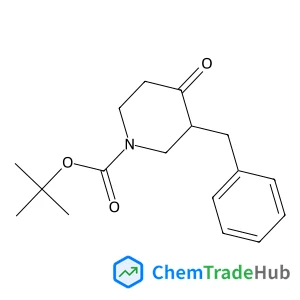
2-Methyl-2-propanyl 3-benzyl-4-oxo-1-piperidinecarboxylate
CAS Number:
193274-82-7
Molecular Formula:
C17H23NO3
Recommended Suppliers




Disclaimer
This page provides academic journal information for reference and research purposes only. We are not affiliated with any journal publishers and do not handle publication submissions. For publication-related inquiries, please contact the respective journal publishers directly.
If you notice any inaccuracies in the information displayed, please contact us at support@chemtradehub.com. We will promptly review and address your concerns.