












Visible-to-infrared quantum cutting by phonon-assisted energy transfer in YPO4:Tm3+, Yb3+ phosphors
Literature Information
Publication Date
2012-03-05
DOI
10.1039/C2CP24044K
Impact Factor
3.676
Authors
View Original
Abstract
Quantum cutting (QC) of one visible photon into two infrared ones has been reported for the lanthanide ion couple (Tm3+, Yb3+) in a variety of host lattices. The mechanism responsible for QC was assumed to be a cooperative energy transfer (ET) process from Tm3+ to two Yb3+ ions, however, no solid evidence was presented. Herein we report visible-to-infrared QC for (Tm3+, Yb3+) in YPO4 phosphors. The ET process from the excited 1G4 level of Tm3+ to Yb3+ was investigated in detail by means of optical spectroscopy. By monitoring the steady-state photoluminescence (PL) and PL decay of the intermediate 3F4 level of Tm3+ as a function of the Yb3+ concentration, we demonstrated the QC of one incident blue photon into one near-infrared emitting photon at 1004 nm from Yb3+ and simultaneously into one mid-infrared emitting photon at 1791 nm from Tm3+, rather than two emitting photons from Yb3+. It was revealed that such visible-to-infrared QC was induced by phonon-assisted ET instead of cooperative ET as previously reported. This kind of QC phosphors may have potential as solar spectral converters to enhance the external quantum efficiency in multi-junction solar cells based on narrow band-gap semiconductors such as Ge, PbS or In1−xGaxN.
Recommended Journals
Related Literature
An ECL sensor combined with a paper electrode for the determination of phenylalanine
Hilal Torul, Elif Çalık Kayiş, I. Hakki Boyaci, Ugur Tamer
2022-10-05
Paper
DOI: 10.1039/D2AN01340A
Sensitive and selective detection ofcysteine using gold nanoparticles as colorimetric probes
Li Li, Baoxin Li
2009-04-02
Paper
DOI: 10.1039/B819842J
Fast polymer fingerprinting using flowing afterglow atmospheric pressure glow discharge mass spectrometry
Matthias C. Jecklin, Gerardo Gamez, Renato Zenobi
2009-05-12
Paper
DOI: 10.1039/B819560A
A colorimetric aptasensor based on a hemin/EpCAM aptamer DNAzyme for sensitive exosome detection
Jingjing Kuang, Zhibo Fu, Xuezhi Sun, Chuhui Lin, Shenglong Yang, Jiayao Xu, Min Zhang, Hongyang Zhang, Fanghong Ning, Ping Hu
2022-10-05
Paper
DOI: 10.1039/D2AN01410F
Viral infection of cells in culture detected using infrared microscopy
Gary Hastings, Peter Krug, Ruili Wang, Jing Guo, Hari P. Lamichhane, Tian Tang, Yu-sheng Hsu, John Ward, David Katz, Julia Hilliard
2009-05-05
Paper
DOI: 10.1039/B902154J
Development of an azo functionalized oligomeric chitosan sensor for rapid visual, spectrophotometric and spectrofluorometric detection of KMnO4 up to micromolar concentrations
Madhvi Garg, Dhiraj Sud
2022-12-19
Paper
DOI: 10.1039/D2AN01873J
UV dosimeter based on dichloroindophenol and tin(IV) oxide
Andrew Mills, Pauline Grosshans
2009-02-27
Paper
DOI: 10.1039/B820288E
Correction of axial chromatic aberrations in confocal Raman microspectroscopic measurements of a single microbial spore
Peter Lasch, Antje Hermelink, Dieter Naumann
2009-03-23
Paper
DOI: 10.1039/B822553B
A colorimetric chemical tongue detects and distinguishes between multiple analytes
Francis Buan Hong Lim, Tingjun Lei, Gabriella Fernandez, Nicole Lopez, Andre-Lorenz Chu, Allan Valiente, Abhignyan Nagesetti, Andy Nelson, Kerstin Schmidt, Ta Chen Chang, Obdulio Piloto
2022-10-17
Paper
DOI: 10.1039/D2AN01615J
Detection ofdrug-induced cellular changes using confocal Raman spectroscopy on patterned single-cell biosensors
Ryan Buckmaster, Fareid Asphahani, Myo Thein, Jian Xu, Miqin Zhang
2009-04-30
Paper
DOI: 10.1039/B900420C
You might also like
Compound Q&A
What precautions should be taken when handling 4-(2-Furylmethyl)thiomorpholine 1,1-dioxide (CAS: 79206-94-3)?
When handling 4-(2-Furylmethyl)thiomorpholine 1,1-dioxide (CAS: 79206-94-3), it ...
79206-94-34-(2-Furylmethyl)thi...
Compound Q&A
What precautions should be taken when handling 4-Chloro-N-[2-(4-morpholinyl)ethyl]benzamide (CAS: 71320-77-9)?
When handling 4-Chloro-N-[2-(4-morpholinyl)ethyl]benzamide (CAS: 71320-77-9), it...
71320-77-94-Chloro-N-[2-(4-mor...
Compound Q&A
How should waste containing 2-[2-(2-Methoxyethoxy)ethoxy]ethyl 4-methylbenzenesulfonate (CAS: 62921-74-8) be handled?
Waste containing this compound (CAS: 62921-74-8) should be handled according to ...
62921-74-82-[2-(2-Methoxyethox...
Compound Q&A
How should waste containing (S)-Methyl 2-amino-3-cyclohexylpropanoate be handled?
Waste containing (S)-Methyl 2-amino-3-cyclohexylpropanoate should be collected i...
40056-18-6(S)-Methyl 2-amino-3...
Compound Q&A
How is 5-({4-[(2S,4R)-4-Hydroxy-2-methyltetrahydro-2H-pyran-4-yl]-2-thienyl}sulfanyl)-1-methyl-1,3-dihydro-2H-indol-2-one (CAS: 166882-70-8) typically synthesized?
This compound can be synthesized using a multi-step process involving the conjug...
166882-70-85-({4-[(2S,4R)-4-Hyd...
Compound Q&A
Are there alternatives to (2E)-3-(3,4-Dichlorophenyl)acrylic acid (CAS: 7312-27-8) in synthesis?
There are several alternatives to (2E)-3-(3,4-Dichlorophenyl)acrylic acid in syn...
7312-27-8(2E)-3-(3,4-Dichloro...
Compound Q&A
How should Ethyl 6-(2-nitrophenyl)imidazo[2,1-b][1,3]thiazole-3-carboxylate (CAS: 925437-84-9) be stored?
Ethyl 6-(2-nitrophenyl)imidazo[2,1-b][1,3]thiazole-3-carboxylate (CAS: 925437-84...
925437-84-9Ethyl 6-(2-nitrophen...
Compound Q&A
How should waste containing 2-(1,3-Thiazol-2-yl)ethanamine (CAS: 18453-07-1) be handled?
Waste containing 2-(1,3-Thiazol-2-yl)ethanamine (CAS: 18453-07-1) should be coll...
18453-07-12-(1,3-Thiazol-2-yl)...
Compound Q&A
How is Methyl 5-iodo-2-methylbenzoate (CAS: 103440-54-6) typically synthesized?
Methyl 5-iodo-2-methylbenzoate can be synthesized through the iodination of meth...
103440-54-6Methyl 5-iodo-2-meth...
Compound Q&A
How is 5-Chloro[1,2,4]triazolo[1,5-a]pyridine (CAS: 1427399-34-5) typically synthesized?
5-Chloro[1,2,4]triazolo[1,5-a]pyridine is commonly synthesized via the condensat...
1427399-34-55-Chloro[1,2,4]triaz...
Source Journal
Physical Chemistry Chemical Physics

CiteScore:
5.5
Self-citation Rate:
10.3%
Articles per Year:
3036
Physical Chemistry Chemical Physics (PCCP) is an international journal co-owned by 19 physical chemistry and physics societies from around the world. This journal publishes original, cutting-edge research in physical chemistry, chemical physics and biophysical chemistry. To be suitable for publication in PCCP, articles must include significant innovation and/or insight into physical chemistry; this is the most important criterion that reviewers and Editors will judge against when evaluating submissions. The journal has a broad scope and welcomes contributions spanning experiment, theory, computation and data science. Topical coverage includes spectroscopy, dynamics, kinetics, statistical mechanics, thermodynamics, electrochemistry, catalysis, surface science, quantum mechanics, quantum computing and machine learning. Interdisciplinary research areas such as polymers and soft matter, materials, nanoscience, energy, surfaces/interfaces, and biophysical chemistry are welcomed if they demonstrate significant innovation and/or insight into physical chemistry. Joined experimental/theoretical studies are particularly appreciated when complementary and based on up-to-date approaches.
Recommended Compounds
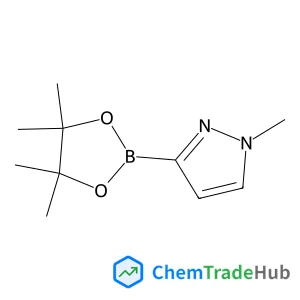
1-Methyl-3-(4,4,5,5-tetramethyl-1,3,2-dioxaborolan-2-yl)-1H-pyrazole
CAS Number:
1020174-04-2
Molecular Formula:
C10H17BN2O2
![[4-Amino-2-(methylsulfanyl)-5-pyrimidinyl]methanol structure](https://static.chemtradehub.com/structs/588/588-36-3-fc73.webp "[4-Amino-2-(methylsulfanyl)-5-pyrimidinyl]methanol structure")

3-(3-Ethyl-1-methyl-3-azepanyl)phenol hydrochloride (1:1)
CAS Number:
59263-76-2
Molecular Formula:
C15H24ClNO

Recommended Suppliers



Disclaimer
This page provides academic journal information for reference and research purposes only. We are not affiliated with any journal publishers and do not handle publication submissions. For publication-related inquiries, please contact the respective journal publishers directly.
If you notice any inaccuracies in the information displayed, please contact us at support@chemtradehub.com. We will promptly review and address your concerns.