












Infrared predissociation of ternary cluster cations: the solvent effects on the branching ratio
Literature Information
Publication Date
2012-01-23
DOI
10.1039/C2CP23924H
Impact Factor
3.676
Authors
Md. Alauddin, Jae Kyu Song, Joong Chul Choe, Seung Min Park
View Original
Abstract
Infrared (IR) predissociation of hydrogen-bonded ternary cluster ions such as aniline–water–ethanol (AWE+), aniline–water–isopropanol (AWP+), aniline–methanol–ethanol (AME+), aniline–water–pyrrole (AWPy+), and aniline–water–benzene (AWB+) was examined in the region of 2700–4000 cm−1 to explore the key factors which determine the branching ratios in the concurrent unimolecular dissociation. The smaller solvent molecule was predominantly ejected when the binding energies of the two were not too different. On the other hand, when they were far off, the binding energy also acted significantly on the branching ratio. Besides, mode-selective IR predissociation was observed, while the selectivity was not quite distinct. The IR predissociation of ternary cluster ions bound viahydrogen bonding is considered to occur on a time scale much faster than intramolecular vibrational energy redistribution, which was proved by a statistical transition state theory.
Recommended Journals
Related Literature
More stable and more efficient alternatives of Z-907: carbazole-based amphiphilic Ru(ii) sensitizers for dye-sensitized solar cells
Hammad Cheema, Ashraful Islam, Robert Younts, Bhoj Gautam, Idriss Bedja, Ravindra Kumar Gupta, Liyuan Han, Kenan Gundogdu, Ahmed El-Shafei
2014-10-31
Paper
DOI: 10.1039/C4CP04120H
Particle aggregation mechanisms in ionic liquids
Istvan Szilagyi, Tamas Szabo, Anthony Desert, Gregor Trefalt, Tamas Oncsik, Michal Borkovec
2014-04-07
Paper
DOI: 10.1039/C4CP00804A
Spectro-microscopic photoemission evidence of charge uncompensated areas in Pb(Zr,Ti)O3(001) layers
Dana Georgeta Popescu, Marius Adrian Huşanu, Lucian Trupinǎ, Luminiţa Hrib, Lucian Pintilie, Alexei Barinov, Silvano Lizzit, Paolo Lacovig, Cristian Mihail Teodorescu
2014-11-05
Paper
DOI: 10.1039/C4CP04546G
Self-powered ultraviolet photodetectors based on selectively grown ZnO nanowire arrays with thermal tuning performance
Zhiming Bai, Xiang Chen, Xiaoqin Yan, Xin Zheng, Zhuo Kang
2014-04-03
Paper
DOI: 10.1039/C4CP00892H
Structural and dynamical characteristics of trehalose and sucrose matrices at different hydration levels as probed by FTIR and high-field EPR
M. Malferrari, A. Nalepa, F. Francia, W. Lubitz, A. Savitsky
2013-11-28
Paper
DOI: 10.1039/C3CP54043J
Solid state effects on the electronic structure of H2OEP
G. Di Santo, M. Caputo, A. Goldoni, M. Kumar, M. Pedio
2014-11-03
Paper
DOI: 10.1039/C4CP03450C
Systematic experimental charge density analysis of anion receptor complexes
Isabelle L. Kirby, Mark Brightwell, Mateusz B. Pitak, Claire Wilson, Simon J. Coles
2014-04-28
Paper
DOI: 10.1039/C3CP54858A
Beyond the molecular orbital conception of electronically excited states through the quantum theory of atoms in molecules
David Ferro-Costas, Ángel Martín Pendás, Leticia González, Ricardo A. Mosquera
2014-03-17
Paper
DOI: 10.1039/C4CP00431K
Electronic structure investigation of the evanescent AtO+ ion
André Severo Pereira Gomes, Florent Réal, Nicolas Galland, Celestino Angeli, Renzo Cimiraglia, Valérie Vallet
2014-02-20
Paper
DOI: 10.1039/C3CP55294B
Timescales of water transport in viscous aerosol: measurements on sub-micron particles and dependence on conditioning history
Jessica W. Lu, Andrew M. J. Rickards, Jim S. Walker, Kerry J. Knox, Rachael E. H. Miles, Jonathan P. Reid
2013-11-29
Paper
DOI: 10.1039/C3CP54233E
You might also like
Compound Q&A
How should waste containing N-Methoxy-N-methyl-1,3-thiazole-5-carboxamide (CAS: 898825-89-3) be handled?
Waste containing N-Methoxy-N-methyl-1,3-thiazole-5-carboxamide (CAS: 898825-89-3...
898825-89-3N-Methoxy-N-methyl-1...
Compound Q&A
How should N-(4-Biphenylyl)dibenzo[b,d]furan-4-amine (CAS: 1318338-47-4) be stored?
N-(4-Biphenylyl)dibenzo[b,d]furan-4-amine should be stored in a tightly sealed c...
1318338-47-4N-(4-Biphenylyl)dibe...
Compound Q&A
What is the market or research trend for 3-Acetamido-5-amino-2,4,6-triiodobenzoic acid (CAS: 1713-07-1)?
The market for 3-Acetamido-5-amino-2,4,6-triiodobenzoic acid (CAS: 1713-07-1) is...
1713-07-13-Acetamido-5-amino-...
Compound Q&A
How should Benzyl 2-O-acetyl-3,4,6-tri-O-benzyl-beta-D-galactopyranoside (CAS: 61820-03-9) be stored?
Benzyl 2-O-acetyl-3,4,6-tri-O-benzyl-beta-D-galactopyranoside (CAS: 61820-03-9) ...
61820-03-9Benzyl 2-O-acetyl-3,...
Compound Q&A
What regulatory guidelines apply to 2-Ethylpiperazine dihydrochloride (CAS: 438050-52-3)?
2-Ethylpiperazine dihydrochloride (CAS: 438050-52-3) is regulated under the Glob...
438050-52-32-Ethylpiperazine di...
Compound Q&A
What regulatory guidelines apply to 1,1'-[1,3-Phenylenebis(methylene)]bis(3-methyl-1H-pyrrole-2,5-dione) (CAS: 119462-56-5)?
1,1'-[1,3-Phenylenebis(methylene)]bis(3-methyl-1H-pyrrole-2,5-dione) (CAS: 11946...
119462-56-51,1'-[1,3-Phenyleneb...
Compound Q&A
Are there alternatives to 5-Fluoro-2-(1-pyrrolidinyl)pyridine (CAS: 1287217-79-1) in synthesis?
Several alternatives can be used in the synthesis of 5-Fluoro-2-(1-pyrrolidinyl)...
1287217-79-15-Fluoro-2-(1-pyrrol...
Compound Q&A
What precautions should be taken when handling 1-((2R,3R,4R,5R)-5-((bis(4-methoxyphenyl)(phenyl)methoxy)methyl)-4-hydroxy-3-methoxytetrahydrofuran-2-yl)-5-methylpyrimidine-2,4(1H,3H)-dione (CAS: 153631-19-7)?
Proper personal protective equipment (PPE) must be worn when handling this compo...
153631-19-71-((2R,3R,4R,5R)-5-(...
Compound Q&A
What precautions should be taken when handling 6-Bromoimidazo[1,2-a]pyridin-8-amine (CAS: 676371-00-9)?
When handling 6-Bromoimidazo[1,2-a]pyridin-8-amine, it is important to wear appr...
676371-00-96-Bromoimidazo[1,2-a...
Compound Q&A
Are there alternatives to (2S,4R)-4-(4-Nitrobenzyl)pyrrolidine-2-carboxylic acid hydrochloride (CAS: 1049740-22-8) in synthesis?
Alternatives to (2S,4R)-4-(4-Nitrobenzyl)pyrrolidine-2-carboxylic acid hydrochlo...
1049740-22-8(2S,4R)-4-(4-Nitrobe...
Source Journal
Physical Chemistry Chemical Physics

CiteScore:
5.5
Self-citation Rate:
10.3%
Articles per Year:
3036
Physical Chemistry Chemical Physics (PCCP) is an international journal co-owned by 19 physical chemistry and physics societies from around the world. This journal publishes original, cutting-edge research in physical chemistry, chemical physics and biophysical chemistry. To be suitable for publication in PCCP, articles must include significant innovation and/or insight into physical chemistry; this is the most important criterion that reviewers and Editors will judge against when evaluating submissions. The journal has a broad scope and welcomes contributions spanning experiment, theory, computation and data science. Topical coverage includes spectroscopy, dynamics, kinetics, statistical mechanics, thermodynamics, electrochemistry, catalysis, surface science, quantum mechanics, quantum computing and machine learning. Interdisciplinary research areas such as polymers and soft matter, materials, nanoscience, energy, surfaces/interfaces, and biophysical chemistry are welcomed if they demonstrate significant innovation and/or insight into physical chemistry. Joined experimental/theoretical studies are particularly appreciated when complementary and based on up-to-date approaches.
Recommended Compounds
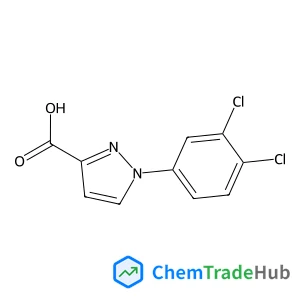
1-(3,4-Dichlorophenyl)-1H-pyrazole-3-carboxylic acid
CAS Number:
1152949-12-6
Molecular Formula:
C10H6Cl2N2O2
![2-(7,7-Difluorobicyclo[4.1.0]hept-1-yl)ethanamine structure](https://static.chemtradehub.com/structs/209/2098065-08-6-ff24.webp "2-(7,7-Difluorobicyclo[4.1.0]hept-1-yl)ethanamine structure")
2-(7,7-Difluorobicyclo[4.1.0]hept-1-yl)ethanamine
CAS Number:
2098065-08-6
Molecular Formula:
C9H15F2N
Recommended Suppliers





Disclaimer
This page provides academic journal information for reference and research purposes only. We are not affiliated with any journal publishers and do not handle publication submissions. For publication-related inquiries, please contact the respective journal publishers directly.
If you notice any inaccuracies in the information displayed, please contact us at support@chemtradehub.com. We will promptly review and address your concerns.