












Solid state effects on the electronic structure of H2OEP
Literature Information
Publication Date
2014-11-03
DOI
10.1039/C4CP03450C
Impact Factor
3.676
Authors
G. Di Santo, M. Caputo, A. Goldoni, M. Kumar, M. Pedio
View Original
Abstract
We present the results of a joint experimental and theoretical investigation concerning the effect of crystal packing on the electronic properties of the H2OEP molecule. Thin films, deposited in ultra high vacuum on metal surfaces, are investigated by combining valence band photoemission, inverse photoemission, and X-ray absorption spectroscopy. The spectra of the films are compared, when possible, with those measured in the gas phase. Once many-body effects are included in the calculations through the GW method, the electronic structure of H2OEP in the film and gas phase are accurately reproduced for both valence and conduction states. Upon going from an isolated molecule to the film phase, the electronic gap shrinks significantly and the lowest unoccupied molecular orbital (LUMO) and LUMO + 1 degeneracy is removed. The calculations show that the reduction of the transport gap in the film is entirely addressable to the enhancement of the electronic screening.
Related Literature
Tuning calcium biosensors with a single-site mutation: structural dynamics insights from femtosecond Raman spectroscopy
Sean R. Tachibana, Longteng Tang, Yanli Wang, Weimin Liu
2017-02-13
Paper
DOI: 10.1039/C6CP08821J
Microsolvation of the pyrrole cation (Py+) with nonpolar and polar ligands: infrared spectra of Py+–Ln with L = Ar, N2, and H2O (n ≤ 3)
Markus Schütz, Yoshiteru Matsumoto, Aude Bouchet, Murat Öztürk, Otto Dopfer
2017-01-05
Paper
DOI: 10.1039/C6CP07251H
Ordering kinetics of lamella-forming block copolymers under the guidance of various external fields studied by dynamic self-consistent field theory
Xiaomin Wan, Tong Gao, Liangshun Zhang, Jiaping Lin
2017-02-02
Paper
DOI: 10.1039/C6CP08726D
Metal ion mediated electron transfer at dye–semiconductor interfaces
Jamie C. Wang, Kyle Violette, Omotola O. Ogunsolu
2017-01-04
Communication
DOI: 10.1039/C6CP07939C
Complex rovibrational dynamics of the Ar·NO+ complex
Dóra Papp, János Sarka, Tamás Szidarovszky, Attila G. Császár, Edit Mátyus, Majdi Hochlaf, Thierry Stoecklin
2017-02-22
Paper
DOI: 10.1039/C6CP07731E
Thermodynamic stability of stoichiometric LaFeO3 and BiFeO3: a hybrid DFT study
Eugene Heifets, Joachim Maier
2016-12-20
Paper
DOI: 10.1039/C6CP07986E
Co2SnO4 nanoparticles as a high performance catalyst for oxidative degradation of rhodamine B dye and pentachlorophenol by activation of peroxymonosulfate
Alexandre Barras, Ahmed Addad, Brigitte Sieber, Mokhtar Férid, Sabine Szunerits, Rabah Boukherroub
2017-02-02
Paper
DOI: 10.1039/C6CP08576H
Successive lithiation of acetylene, ethylene and benzene: a comprehensive computational study of large static second hyperpolarizability
Avijit Mondal, Kaushik Hatua, Ria Sinha Roy, Prasanta K. Nandi
2017-01-16
Paper
DOI: 10.1039/C6CP07845A
Poly(vinyl alcohol) as a water protecting agent for silver nanoparticles: the role of polymer size and structure
Dmitry A. Pasko, Oleg N. Kalugin
2017-02-07
Paper
DOI: 10.1039/C6CP05562A
How persistent microbubbles shield nanoparticle productivity in laser synthesis of colloids – quantification of their volume, dwell dynamics, and gas composition
Niko Bärsch, René Streubel, Emine Gökce, Stephan Barcikowski, Bilal Gökce
2017-02-07
Paper
DOI: 10.1039/C6CP07011F
You might also like
Compound Q&A
What are the main uses of 1H-Indazole-6-carbonitrile (CAS: 141290-59-7)?
1H-Indazole-6-carbonitrile finds applications in pharmaceuticals, where it serve...
141290-59-71H-Indazole-6-carbon...
Compound Q&A
How should waste containing Dioctyl (2E)-2-butenedioate (CAS: 2997-85-5) be handled?
Waste containing Dioctyl (2E)-2-butenedioate (CAS: 2997-85-5) should be collecte...
2997-85-5Dioctyl (2E)-2-buten...
Compound Q&A
What industries use Sodium [(1,2-benzoxazol-3-ylmethyl)sulfonyl]azanide (CAS: 68291-98-5)?
Sodium [(1,2-benzoxazol-3-ylmethyl)sulfonyl]azanide is primarily used in pharmac...
68291-98-5Sodium [(1,2-benzoxa...
Compound Q&A
Are there alternatives to Dimethyl 4-(4,4,5,5-tetramethyl-1,3,2-dioxaborolan-2-yl)-2,6-pyridinedicarboxylate (CAS: 741709-66-0) in synthesis?
Dimethyl 4-(4,4,5,5-tetramethyl-1,3,2-dioxaborolan-2-yl)-2,6-pyridinedicarboxyla...
741709-66-0Dimethyl 4-(4,4,5,5-...
Compound Q&A
How should waste containing 2-Fluoro-6-hydrazinopyridine (CAS: 80714-39-2) be handled?
Waste containing 2-Fluoro-6-hydrazinopyridine (CAS: 80714-39-2) should be manage...
80714-39-22-Fluoro-6-hydrazino...
Compound Q&A
What is 6-Formyl-2-pyridinecarboxylic acid (CAS: 499214-11-8)?
6-Formyl-2-pyridinecarboxylic acid is an organic compound with the molecular for...
499214-11-86-Formyl-2-pyridinec...
Compound Q&A
What is the market or research trend for 3-(3,4-dimethoxyphenyl)-2,5-dimethyl-N-(2-morpholin-4-ylethyl)pyrazolo[1,5-a]pyrimidin-7-amine (CAS: 900874-91-1)?
Research trends for this compound indicate a focus on its potential applications...
900874-91-13-(3,4-dimethoxyphen...
Compound Q&A
How is 9H-Tribenzo[b,d,f]azepine (CAS: 29875-73-8) typically synthesized?
9H-Tribenzo[b,d,f]azepine is typically synthesized via a multi-step process invo...
29875-73-89H-Tribenzo[b,d,f]az...
Compound Q&A
How is 1-Cyclopropyl-7-ethoxy-6-fluoro-8-methoxy-4-oxo-1,4-dihydro-3-quinolinecarboxylic acid (CAS: 1797982-51-4) typically synthesized?
1-Cyclopropyl-7-ethoxy-6-fluoro-8-methoxy-4-oxo-1,4-dihydro-3-quinolinecarboxyli...
1797982-51-41-Cyclopropyl-7-etho...
Compound Q&A
How should waste containing Methyl 3-oxo-1,2,3,4-tetrahydro-6-quinoxalinecarboxylate (CAS: 671820-52-3) be handled?
Waste containing Methyl 3-oxo-1,2,3,4-tetrahydro-6-quinoxalinecarboxylate (CAS: ...
671820-52-3Methyl 3-oxo-1,2,3,4...
Source Journal
Physical Chemistry Chemical Physics

CiteScore:
5.5
Self-citation Rate:
10.3%
Articles per Year:
3036
Physical Chemistry Chemical Physics (PCCP) is an international journal co-owned by 19 physical chemistry and physics societies from around the world. This journal publishes original, cutting-edge research in physical chemistry, chemical physics and biophysical chemistry. To be suitable for publication in PCCP, articles must include significant innovation and/or insight into physical chemistry; this is the most important criterion that reviewers and Editors will judge against when evaluating submissions. The journal has a broad scope and welcomes contributions spanning experiment, theory, computation and data science. Topical coverage includes spectroscopy, dynamics, kinetics, statistical mechanics, thermodynamics, electrochemistry, catalysis, surface science, quantum mechanics, quantum computing and machine learning. Interdisciplinary research areas such as polymers and soft matter, materials, nanoscience, energy, surfaces/interfaces, and biophysical chemistry are welcomed if they demonstrate significant innovation and/or insight into physical chemistry. Joined experimental/theoretical studies are particularly appreciated when complementary and based on up-to-date approaches.
Recommended Compounds
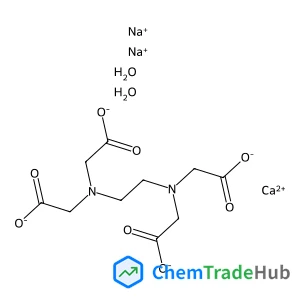
EthylenediaminetetraaceticacidcalciumDisodiumsalthydrate
CAS Number:
23411-34-9
Molecular Formula:
C10H16CaN2Na2O10
Recommended Suppliers






Disclaimer
This page provides academic journal information for reference and research purposes only. We are not affiliated with any journal publishers and do not handle publication submissions. For publication-related inquiries, please contact the respective journal publishers directly.
If you notice any inaccuracies in the information displayed, please contact us at support@chemtradehub.com. We will promptly review and address your concerns.