


Beyond the molecular orbital conception of electronically excited states through the quantum theory of atoms in molecules
Literature Information
Publication Date
2014-03-17
DOI
10.1039/C4CP00431K
Impact Factor
3.676
Authors
David Ferro-Costas, Ángel Martín Pendás, Leticia González, Ricardo A. Mosquera
View Original
Abstract
We show that the use of the quantum theory of atoms in molecules (QTAIM) in electronically excited states allows expanding the knowledge that the molecular orbital (MO) framework provides about electronic rearrangements. Despite that historical prejudice seemed to preclude the use of QTAIM beyond the electronic ground state, this paper evidences that QTAIM is versatile enough to deal with excited states. As an example, the paradigmatic n → π* electronic transition of formaldehyde is analyzed. Using QTAIM, an energy partition of excited state energies into atomic and diatomic energies is carried out for the first time. This partition shows that upon electronic excitation the atoms of the CO bond experience a stabilization in their net energies, accompanied by a destabilization in their interaction, a fact which is in accordance with the idea of populating an antibonding π* MO. The associated C–O bond elongation in the nπ* state does not involve a change in the π atomic populations – as one would expect from a π* orbital – but in the σ ones. Moreover, it is also found that the nπ* state is characterized by a weaker C–O interaction energy in comparison to that in the electronic ground state. In order to strengthen this interaction, the electron–electron repulsion between C and O is reduced via a symmetry-breaking of the electron density, causing the C pyramidalization. A topological analysis based on the Laplacian of the electron density and on the electron localization function (ELF) reveals that the n → π* transition can be visualized as a rotation of 90° of the oxygen lone pairs.
Recommended Journals

Bioorganic & Medicinal Chemistry Letters

Polycyclic Aromatic Compounds

Medicinal Chemistry Research

Topics in Catalysis

Herald of the Russian Academy of Sciences

Atomization and Sprays

Acta Metallurgica Sinica-English Letters

Electroanalysis

Journal of the Indian Institute of Science

Chinese Journal of Chemistry
Related Literature
Fluorescence based strategies for genetic analysis
Rohan T. Ranasinghe, Tom Brown
2005-09-30
Feature Article
DOI: 10.1039/B509522K
Assembled bright green fluorescent zinc coordination polymer
Ruibiao Fu, Shengchang Xiang, Shengmin Hu, Longsheng Wang, Yaming Li, Xihe Huang, Xintao Wu
2005-09-22
Communication
DOI: 10.1039/B509695B
Characterization of the H2 sensing mechanism of Pd-promoted SnO2 by XAS in operando conditions
Thomas Neisius, Bernard Chenevier, Aleksandre M. Gaskov, Michel Labeau
2005-09-19
Communication
DOI: 10.1039/B509826B
Highly diastereoselective amplification from a dynamic combinatorial library of macrocyclic oligoimines
Almudena González-Álvarez, Ignacio Alfonso, Vicente Gotor
2006-04-21
Communication
DOI: 10.1039/B603203F
Organic solventnanofiltration in asymmetric hydrogenation: enhancement of enantioselectivity and catalyst stability by ionic liquids
Hau-To Wong, Yoong Hsiang See-Toh, Frederico Castelo Ferreira, Robert Crook, Andrew G. Livingston
2006-04-11
Communication
DOI: 10.1039/B602184K
Ag/SiO2: a novel catalyst with high activity and selectivity for hydrogenation of chloronitrobenzenes
Yangying Chen, Chuang Wang, Hongyang Liu, Jieshan Qiu, Xinhe Bao
2005-09-23
Communication
DOI: 10.1039/B509595F
Synthesis of pyrroles: reaction of chromium N-alkylaminocarbene complexes with α,β-unsaturated aldehydes
Kohei Fuchibe, Daisuke Ono, Takahiko Akiyama
2006-04-26
Communication
DOI: 10.1039/B602924H
Sandwich-shaped silver(i) metallomacrocycles encapsulating a XF62− (X = Si, Ge and Sn) anion
Masahiko Maekawa, Susumu Kitagawa, Takayoshi Kuroda-Sowa, Megumu Munakata
2006-03-17
Communication
DOI: 10.1039/B518411H
Fatigue-resistant photochromic dithienylethenes by controlling the oxidation state
Yong-Chul Jeong, Dae Gyu Park, Eunkyoung Kim, Kwang-Hyun Ahn, Sung Ik Yang
2006-03-21
Communication
DOI: 10.1039/B600754F
You might also like
Compound Q&A
What are the main uses of 1H-Indazole-6-carbonitrile (CAS: 141290-59-7)?
1H-Indazole-6-carbonitrile finds applications in pharmaceuticals, where it serve...
141290-59-71H-Indazole-6-carbon...
Compound Q&A
How should waste containing Dioctyl (2E)-2-butenedioate (CAS: 2997-85-5) be handled?
Waste containing Dioctyl (2E)-2-butenedioate (CAS: 2997-85-5) should be collecte...
2997-85-5Dioctyl (2E)-2-buten...
Compound Q&A
What industries use Sodium [(1,2-benzoxazol-3-ylmethyl)sulfonyl]azanide (CAS: 68291-98-5)?
Sodium [(1,2-benzoxazol-3-ylmethyl)sulfonyl]azanide is primarily used in pharmac...
68291-98-5Sodium [(1,2-benzoxa...
Compound Q&A
Are there alternatives to Dimethyl 4-(4,4,5,5-tetramethyl-1,3,2-dioxaborolan-2-yl)-2,6-pyridinedicarboxylate (CAS: 741709-66-0) in synthesis?
Dimethyl 4-(4,4,5,5-tetramethyl-1,3,2-dioxaborolan-2-yl)-2,6-pyridinedicarboxyla...
741709-66-0Dimethyl 4-(4,4,5,5-...
Compound Q&A
How should waste containing 2-Fluoro-6-hydrazinopyridine (CAS: 80714-39-2) be handled?
Waste containing 2-Fluoro-6-hydrazinopyridine (CAS: 80714-39-2) should be manage...
80714-39-22-Fluoro-6-hydrazino...
Compound Q&A
What is 6-Formyl-2-pyridinecarboxylic acid (CAS: 499214-11-8)?
6-Formyl-2-pyridinecarboxylic acid is an organic compound with the molecular for...
499214-11-86-Formyl-2-pyridinec...
Compound Q&A
What is the market or research trend for 3-(3,4-dimethoxyphenyl)-2,5-dimethyl-N-(2-morpholin-4-ylethyl)pyrazolo[1,5-a]pyrimidin-7-amine (CAS: 900874-91-1)?
Research trends for this compound indicate a focus on its potential applications...
900874-91-13-(3,4-dimethoxyphen...
Compound Q&A
How is 9H-Tribenzo[b,d,f]azepine (CAS: 29875-73-8) typically synthesized?
9H-Tribenzo[b,d,f]azepine is typically synthesized via a multi-step process invo...
29875-73-89H-Tribenzo[b,d,f]az...
Compound Q&A
How is 1-Cyclopropyl-7-ethoxy-6-fluoro-8-methoxy-4-oxo-1,4-dihydro-3-quinolinecarboxylic acid (CAS: 1797982-51-4) typically synthesized?
1-Cyclopropyl-7-ethoxy-6-fluoro-8-methoxy-4-oxo-1,4-dihydro-3-quinolinecarboxyli...
1797982-51-41-Cyclopropyl-7-etho...
Compound Q&A
How should waste containing Methyl 3-oxo-1,2,3,4-tetrahydro-6-quinoxalinecarboxylate (CAS: 671820-52-3) be handled?
Waste containing Methyl 3-oxo-1,2,3,4-tetrahydro-6-quinoxalinecarboxylate (CAS: ...
671820-52-3Methyl 3-oxo-1,2,3,4...
Source Journal
Physical Chemistry Chemical Physics

CiteScore:
5.5
Self-citation Rate:
10.3%
Articles per Year:
3036
Physical Chemistry Chemical Physics (PCCP) is an international journal co-owned by 19 physical chemistry and physics societies from around the world. This journal publishes original, cutting-edge research in physical chemistry, chemical physics and biophysical chemistry. To be suitable for publication in PCCP, articles must include significant innovation and/or insight into physical chemistry; this is the most important criterion that reviewers and Editors will judge against when evaluating submissions. The journal has a broad scope and welcomes contributions spanning experiment, theory, computation and data science. Topical coverage includes spectroscopy, dynamics, kinetics, statistical mechanics, thermodynamics, electrochemistry, catalysis, surface science, quantum mechanics, quantum computing and machine learning. Interdisciplinary research areas such as polymers and soft matter, materials, nanoscience, energy, surfaces/interfaces, and biophysical chemistry are welcomed if they demonstrate significant innovation and/or insight into physical chemistry. Joined experimental/theoretical studies are particularly appreciated when complementary and based on up-to-date approaches.
Recommended Compounds
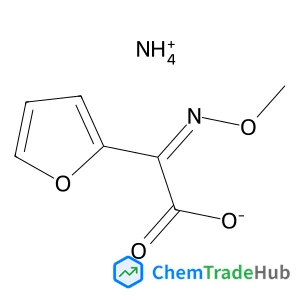
Ammonium (Z)-2-(furan-2-yl)-2-(methoxyimino)acetate
CAS Number:
97148-39-5
Molecular Formula:
C7H10N2O4
![N-[(9H-Fluoren-9-ylmethoxy)carbonyl]serine structure](https://static.chemtradehub.com/structs/737/73724-45-5-b0dc.webp "N-[(9H-Fluoren-9-ylmethoxy)carbonyl]serine structure")
![Sodium 3-[(E)-(4-anilinophenyl)diazenyl]benzenesulfonate structure](https://static.chemtradehub.com/structs/587/587-98-4-035f.webp "Sodium 3-[(E)-(4-anilinophenyl)diazenyl]benzenesulfonate structure")
Sodium 3-[(E)-(4-anilinophenyl)diazenyl]benzenesulfonate
CAS Number:
587-98-4
Molecular Formula:
C18H14N3NaO3S
Recommended Suppliers






Disclaimer
This page provides academic journal information for reference and research purposes only. We are not affiliated with any journal publishers and do not handle publication submissions. For publication-related inquiries, please contact the respective journal publishers directly.
If you notice any inaccuracies in the information displayed, please contact us at support@chemtradehub.com. We will promptly review and address your concerns.