


![N-[(9H-Fluoren-9-ylmethoxy)carbonyl]serine structure](https://static.chemtradehub.com/structs/737/73724-45-5-b0dc.webp "N-[(9H-Fluoren-9-ylmethoxy)carbonyl]serine structure")
Spectro-microscopic photoemission evidence of charge uncompensated areas in Pb(Zr,Ti)O3(001) layers
Literature Information
Publication Date
2014-11-05
DOI
10.1039/C4CP04546G
Impact Factor
3.676
Authors
Dana Georgeta Popescu, Marius Adrian Huşanu, Lucian Trupinǎ, Luminiţa Hrib, Lucian Pintilie, Alexei Barinov, Silvano Lizzit, Paolo Lacovig, Cristian Mihail Teodorescu
View Original
Abstract
Photoelectron spectroscopy studies of (001) oriented PbTi0.8Zr0.2O3 (PZT) single crystal layers with submicron resolution revealed areas with different Pb 5d binding energies, attributed to the different charge and polarization states of the film surface. Two novel effects are evidenced by using intense synchrotron radiation beam experiments: (i) the progressive increase of a low binding energy component for the Pb core levels (evidenced for both 5d and 4f, on two different measurement setups), which can be attributed to a partial decomposition of the PZT film at its surface and promoting the growth of metallic Pb during the photoemission process, with the eventuality of the progressive formation of areas with downwards ferroelectric polarization; (ii) for films annealed in oxygen under clean conditions (in an ultrahigh vacuum installation) a huge shift of the Pb 5d core levels (by 8–9 eV) towards higher binding energies is attributed to the formation of areas with depleted mobile charge carriers, whose surface density is insufficient to screen the depolarization field. This shift is attenuated progressively with time, as the sample is irradiated with high flux soft X-rays. The formation of these areas with strong internal electric field promotes these films as good candidates for photocatalysis and solar cells, since in the operation of these devices the ability to perform charge separation and to avoid electron–hole recombination is crucial.
Recommended Journals

Bioorganic & Medicinal Chemistry

Journal of the Indian Institute of Science

Journal of Chemical Sciences

Colloid Journal

Chinese Journal of Chemistry

Electroanalysis

Bioorganic & Medicinal Chemistry Letters

Journal of Asian Natural Products Research

NDT & E International

Acta Metallurgica Sinica-English Letters
Related Literature
Hydrogen bonded supramolecular assemblies based on neutral square-planar palladium(ii) complexes
Martin B. Smith, Sophie H. Dale, Simon J. Coles, Thomas Gelbrich, Michael B. Hursthouse, Mark E. Light, Peter N. Horton
2007-01-08
Paper
DOI: 10.1039/B616337H
A portable, disposable, and low-cost optode for sulphide and thiol detection
Giancarla Alberti, Valeria M. Nurchi, Lisa R. Magnaghi, Raffaela Biesuz
2019-08-07
Paper
DOI: 10.1039/C9AY01538H
Defect-rich boron doped carbon nanotubes as an electrocatalyst for hybrid Li–air batteries
Yuyang Wang, Mingfu Yu, Tianyu Zhang, Zhichao Xue, Ying Ma, Hong Sun
2021-11-19
Paper
DOI: 10.1039/D1CY01832A
Exploring the potential of high resolution inductively coupled plasma mass spectrometry towards non-destructive control and validation of electroless gold nanoparticles onto silicon nanowires hybrids
Marcus Koch, Petra Herbeck-Engel, Igor Iatsunskyi
2019-07-02
Paper
DOI: 10.1039/C9AY01182J
Quantitative visualization and detection of acetylcholinesterase activity and its inhibitor based on the oxidation character of ultrathin MnO2 nanosheets
Xian-Hua Meng, Dang Lan Huong, Won Keun Oh, Wei-Feng Wang, Jun-Li Yang
2019-09-10
Paper
DOI: 10.1039/C9AY01721F
Recent advances in the development of rotaxanes and pseudorotaxanes based on pillar[n]arenes: from construction to application
Kui Yang, Shuang Chao, Feiyu Zhang, Yuxin Pei, Zhichao Pei
2019-10-07
Feature Article
DOI: 10.1039/C9CC07373F
Colorimetric assay for cyanide and cyanogenic glycoside using polysorbate 40-stabilized gold nanoparticles
Cheng-Yu Liu
2011-01-10
Communication
DOI: 10.1039/C0CC04591H
The role of charge in 1,2,3-triazol(ium)-based halogen bonding activators
Alexander Dreger, Elric Engelage, Bert Mallick, Paul D. Beer, Stefan M. Huber
2018-04-04
Communication
DOI: 10.1039/C8CC00527C
A more universal and stable method for lactate dehydrogenase isoenzyme test
Peijuan Li, Nanhai Qiu, Li Zhang, Guishu Zhong, Fancai Zeng
2019-07-17
Paper
DOI: 10.1039/C9AY01327J
Evaluation of reverse osmosis drinking water treatment of riverbank filtrate using bioanalytical tools and non-target screening
Vittorio Albergamo, Emma L. Schymanski, Rick Helmus, Milou M. L. Dingemans, Michiel H. S. Kraak
2019-10-18
Paper
DOI: 10.1039/C9EW00741E
You might also like
Compound Q&A
What are the main uses of 1H-Indazole-6-carbonitrile (CAS: 141290-59-7)?
1H-Indazole-6-carbonitrile finds applications in pharmaceuticals, where it serve...
141290-59-71H-Indazole-6-carbon...
Compound Q&A
How should waste containing Dioctyl (2E)-2-butenedioate (CAS: 2997-85-5) be handled?
Waste containing Dioctyl (2E)-2-butenedioate (CAS: 2997-85-5) should be collecte...
2997-85-5Dioctyl (2E)-2-buten...
Compound Q&A
What industries use Sodium [(1,2-benzoxazol-3-ylmethyl)sulfonyl]azanide (CAS: 68291-98-5)?
Sodium [(1,2-benzoxazol-3-ylmethyl)sulfonyl]azanide is primarily used in pharmac...
68291-98-5Sodium [(1,2-benzoxa...
Compound Q&A
Are there alternatives to Dimethyl 4-(4,4,5,5-tetramethyl-1,3,2-dioxaborolan-2-yl)-2,6-pyridinedicarboxylate (CAS: 741709-66-0) in synthesis?
Dimethyl 4-(4,4,5,5-tetramethyl-1,3,2-dioxaborolan-2-yl)-2,6-pyridinedicarboxyla...
741709-66-0Dimethyl 4-(4,4,5,5-...
Compound Q&A
How should waste containing 2-Fluoro-6-hydrazinopyridine (CAS: 80714-39-2) be handled?
Waste containing 2-Fluoro-6-hydrazinopyridine (CAS: 80714-39-2) should be manage...
80714-39-22-Fluoro-6-hydrazino...
Compound Q&A
What is 6-Formyl-2-pyridinecarboxylic acid (CAS: 499214-11-8)?
6-Formyl-2-pyridinecarboxylic acid is an organic compound with the molecular for...
499214-11-86-Formyl-2-pyridinec...
Compound Q&A
What is the market or research trend for 3-(3,4-dimethoxyphenyl)-2,5-dimethyl-N-(2-morpholin-4-ylethyl)pyrazolo[1,5-a]pyrimidin-7-amine (CAS: 900874-91-1)?
Research trends for this compound indicate a focus on its potential applications...
900874-91-13-(3,4-dimethoxyphen...
Compound Q&A
How is 9H-Tribenzo[b,d,f]azepine (CAS: 29875-73-8) typically synthesized?
9H-Tribenzo[b,d,f]azepine is typically synthesized via a multi-step process invo...
29875-73-89H-Tribenzo[b,d,f]az...
Compound Q&A
How is 1-Cyclopropyl-7-ethoxy-6-fluoro-8-methoxy-4-oxo-1,4-dihydro-3-quinolinecarboxylic acid (CAS: 1797982-51-4) typically synthesized?
1-Cyclopropyl-7-ethoxy-6-fluoro-8-methoxy-4-oxo-1,4-dihydro-3-quinolinecarboxyli...
1797982-51-41-Cyclopropyl-7-etho...
Compound Q&A
How should waste containing Methyl 3-oxo-1,2,3,4-tetrahydro-6-quinoxalinecarboxylate (CAS: 671820-52-3) be handled?
Waste containing Methyl 3-oxo-1,2,3,4-tetrahydro-6-quinoxalinecarboxylate (CAS: ...
671820-52-3Methyl 3-oxo-1,2,3,4...
Source Journal
Physical Chemistry Chemical Physics

CiteScore:
5.5
Self-citation Rate:
10.3%
Articles per Year:
3036
Physical Chemistry Chemical Physics (PCCP) is an international journal co-owned by 19 physical chemistry and physics societies from around the world. This journal publishes original, cutting-edge research in physical chemistry, chemical physics and biophysical chemistry. To be suitable for publication in PCCP, articles must include significant innovation and/or insight into physical chemistry; this is the most important criterion that reviewers and Editors will judge against when evaluating submissions. The journal has a broad scope and welcomes contributions spanning experiment, theory, computation and data science. Topical coverage includes spectroscopy, dynamics, kinetics, statistical mechanics, thermodynamics, electrochemistry, catalysis, surface science, quantum mechanics, quantum computing and machine learning. Interdisciplinary research areas such as polymers and soft matter, materials, nanoscience, energy, surfaces/interfaces, and biophysical chemistry are welcomed if they demonstrate significant innovation and/or insight into physical chemistry. Joined experimental/theoretical studies are particularly appreciated when complementary and based on up-to-date approaches.
Recommended Compounds
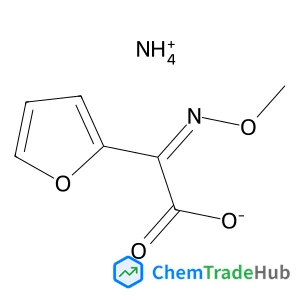
Ammonium (Z)-2-(furan-2-yl)-2-(methoxyimino)acetate
CAS Number:
97148-39-5
Molecular Formula:
C7H10N2O4
Recommended Suppliers






Disclaimer
This page provides academic journal information for reference and research purposes only. We are not affiliated with any journal publishers and do not handle publication submissions. For publication-related inquiries, please contact the respective journal publishers directly.
If you notice any inaccuracies in the information displayed, please contact us at support@chemtradehub.com. We will promptly review and address your concerns.