












Surface characterization of imidazolium-based ionic liquids with cyano-functionalized anions at the gas–liquid interface using sum frequency generation spectroscopy
Literature Information
Publication Date
2012-03-09
DOI
10.1039/C2CP23920E
Impact Factor
3.676
Authors
Chariz Y. Peñalber, Zlata Grenoble, Steven Baldelli
View Original
Abstract
Advancement in the field of ionic liquid technology requires a comprehensive understanding of their surface properties, as a wide range of chemical reactions occur mainly at interfaces. As essential media currently used in several technological applications, their accurate molecular level description at the gas–liquid interface is of utmost importance. Due to the high degree of chemical information provided in the vibrational spectrum, vibrational spectroscopy gives the most detailed model for molecular structure. The inherently surface-sensitive technique, sum frequency generation (SFG) spectroscopy, in combination with bulk-sensitive vibrational spectroscopic techniques such as FTIR and Raman, has been used in this report to characterize the surface of cyano-containing ionic liquids, such as [BMIM][SCN], [BMIM][DCA], [BMIM][TCM] and [EMIM][TCB] at the gas–liquid interface. By structural variation of the anion while keeping the cation constant, emphasis on the molecular arrangement of the anion at the gas–liquid interface is reported, and its subsequent role (if any) in determining the surface molecular orientation of the cation. Vibrational modes seen in the C–H stretching region revealed the presence of the cation at the gas–liquid interface. The cation orientation is independent of the type of cyano-containing anion, however, a similar arrangement at the surface as reported in previous studies was found, with the imidazolium ring lying flat at the surface, and the alkyl chains pointing towards the gas phase. SFG results show that all three anions of varying symmetry, namely, [DCA]− (C2v), [TCM]−(D3h) and [TCB]− (Td) in ionic liquids [BMIM]DCA], [BMIM][TCM] and [EMIM][TCB] are significantly tilted from the surface plane, while the linear [SCN]− in [BMIM][SCN] exhibited poor ordering, as seen in the absence of its C–N stretching mode in the SFG vibrational spectra.
Related Literature
Chemical and photochemical properties of chloroharmine derivatives in aqueous solutions
Federico A. O. Rasse-Suriani, M. Paula Denofrio, Juan G. Yañuk, M. Micaela Gonzalez, Ezequiel Wolcan, Marco Seifermann, Rosa Erra-Balsells, Franco M. Cabrerizo
2015-11-23
Paper
DOI: 10.1039/C5CP05866J
Correction: Quantifying transient interactions between amide groups and the guanidinium cation
V. Balos, M. Bonn, J. Hunger
2015-12-14
Correction
DOI: 10.1039/C5CP90226F
Cryogenic abnormal thermal expansion properties of carbon-doped La(Fe,Si)13 compounds
Rongjin Huang, Wei Wang, Laifeng Li
2015-10-26
Communication
DOI: 10.1039/C5CP03948G
Thermal phase behavior and ion hopping in a 1,2,4-triazolium perfluorobutanesulfonate protic organic ionic plastic crystal
Anirban Mondal, Anurag Prakash Sunda, Sundaram Balasubramanian
2015-12-09
Paper
DOI: 10.1039/C5CP05701A
Unraveling the interplay between hydrogen bonding and rotational energy barrier to fine-tune the properties of triazine molecular glasses
Audrey Laventure, Guillaume De Grandpré, Armand Soldera, Olivier Lebel, Christian Pellerin
2015-12-07
Paper
DOI: 10.1039/C5CP06630A
The effect of iron re-deposition on the corrosion of impurity-containing magnesium
Daniel Höche, Carsten Blawert, Sviatlana V. Lamaka, Nico Scharnagl, Chamini Mendis
2015-11-26
Paper
DOI: 10.1039/C5CP05577F
Spectroscopic evidence of ‘jumping and pecking’ of cholinium and H-bond enhanced cation–cation interaction in ionic liquids
Anne Knorr, Koichi Fumino, Anne-Marie Bonsa
2015-08-11
Communication
DOI: 10.1039/C5CP03412D
Surface modified multifunctional ZnFe2O4 nanoparticles for hydrophobic and hydrophilic anti-cancer drug molecule loading
Debabrata Maiti, Arindam Saha, Parukuttyamma Sujatha Devi
2015-10-19
Paper
DOI: 10.1039/C5CP05840F
Electrochemo-dynamical characterization of polypyrrole actuators coated on gold electrodes
T. F. Otero, E. W. H. Jager
2015-11-18
Paper
DOI: 10.1039/C5CP05841D
You might also like
Compound Q&A
What is 3-Fluoro-2-methylbenzylamine (CAS: 771573-36-5)?
3-Fluoro-2-methylbenzylamine is an organic compound with the CAS number 771573-3...
771573-36-53-Fluoro-2-methylben...
Compound Q&A
Is Tert-butyl 2-(oxetan-3-ylidene)acetate (CAS: 1207175-03-8) safe?
Tert-butyl 2-(oxetan-3-ylidene)acetate is considered safe for its intended uses ...
1207175-03-8Tert-butyl 2-(oxetan...
Compound Q&A
What precautions should be taken when handling 4-Acetyl-2-fluorobenzonitrile (CAS: 214760-18-6)?
Proper personal protective equipment (PPE) such as gloves, goggles, and a lab co...
214760-18-64-Acetyl-2-fluoroben...
Compound Q&A
How is 2-Ethyl-4-methyl-1,3-thiazole (CAS: 15679-12-6) typically synthesized?
2-Ethyl-4-methyl-1,3-thiazole is commonly synthesized via the reaction of thiour...
15679-12-62-Ethyl-4-methyl-1,3...
Compound Q&A
How should 5',5''-([2,2'-Bithiophene]-5,5'-diyl)bis(([1,1':3',1''-terphenyl]-4,4''-dicarboxylic acid)) (CAS: 1227780-71-3) be stored?
This compound should be stored in a cool, dry place away from direct sunlight an...
1227780-71-35',5''''-([2,2'-Bith...
Compound Q&A
What regulatory guidelines apply to L-Lysine Acetate Salt (CAS: 52315-92-1)?
L-Lysine Acetate Salt (CAS: 52315-92-1) is subject to various regulatory guideli...
52315-92-1L-LYSINE ACETATE SAL...
Compound Q&A
Is 6-Fluoro-3-hydroxy-2-pyrazinecarboxamide (CAS: 259793-96-9) safe?
6-Fluoro-3-hydroxy-2-pyrazinecarboxamide (CAS: 259793-96-9) is generally conside...
259793-96-96-Fluoro-3-hydroxy-2...
Compound Q&A
What are the physical and chemical properties of 1,1'-Sulfonylbis(1H-imidazole) (CAS: 7189-69-7)?
1,1'-Sulfonylbis(1H-imidazole) is a crystalline solid with a molecular weight of...
7189-69-71,1'-Sulfonylbis(1H-...
Compound Q&A
What industries use 4-methyl-7-nitro-1H-indole-3-carbonitrile (CAS: 289483-82-5)?
4-Methyl-7-nitro-1H-indole-3-carbonitrile (CAS: 289483-82-5) is primarily used i...
289483-82-54-methyl-7-nitro-1H-...
Compound Q&A
How should waste containing 5-Bromo-3-indolyl-beta-galactoside (CAS: 97753-82-7) be handled?
Waste containing 5-Bromo-3-indolyl-beta-galactoside (CAS: 97753-82-7) should be ...
97753-82-75-Bromo-3-indolyl-be...
Source Journal
Physical Chemistry Chemical Physics

CiteScore:
5.5
Self-citation Rate:
10.3%
Articles per Year:
3036
Physical Chemistry Chemical Physics (PCCP) is an international journal co-owned by 19 physical chemistry and physics societies from around the world. This journal publishes original, cutting-edge research in physical chemistry, chemical physics and biophysical chemistry. To be suitable for publication in PCCP, articles must include significant innovation and/or insight into physical chemistry; this is the most important criterion that reviewers and Editors will judge against when evaluating submissions. The journal has a broad scope and welcomes contributions spanning experiment, theory, computation and data science. Topical coverage includes spectroscopy, dynamics, kinetics, statistical mechanics, thermodynamics, electrochemistry, catalysis, surface science, quantum mechanics, quantum computing and machine learning. Interdisciplinary research areas such as polymers and soft matter, materials, nanoscience, energy, surfaces/interfaces, and biophysical chemistry are welcomed if they demonstrate significant innovation and/or insight into physical chemistry. Joined experimental/theoretical studies are particularly appreciated when complementary and based on up-to-date approaches.
Recommended Compounds
![Benzyl spiro[indole-3,4'-piperidine]-1(2H)-carboxylate hydrochloride (1:1) structure](https://static.chemtradehub.com/structs/159/159635-46-8-8de0.webp "Benzyl spiro[indole-3,4'-piperidine]-1(2H)-carboxylate hydrochloride (1:1) structure")
Benzyl spiro[indole-3,4'-piperidine]-1(2H)-carboxylate hydrochloride (1:1)
CAS Number:
159635-46-8
Molecular Formula:
C20H23ClN2O2
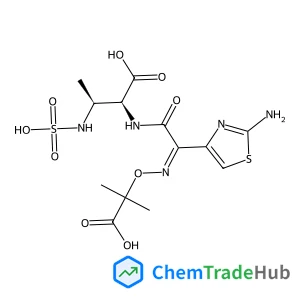
Aztreonam USP Related Compound A (Open-ring Aztreonam)
CAS Number:
87500-74-1
Molecular Formula:
C13H19N5O9S2
Recommended Suppliers





Disclaimer
This page provides academic journal information for reference and research purposes only. We are not affiliated with any journal publishers and do not handle publication submissions. For publication-related inquiries, please contact the respective journal publishers directly.
If you notice any inaccuracies in the information displayed, please contact us at support@chemtradehub.com. We will promptly review and address your concerns.