












Spectroscopic evidence of ‘jumping and pecking’ of cholinium and H-bond enhanced cation–cation interaction in ionic liquids
Literature Information
Publication Date
2015-08-11
DOI
10.1039/C5CP03412D
Impact Factor
3.676
Authors
Anne Knorr, Koichi Fumino, Anne-Marie Bonsa
View Original
Abstract
The subtle energy-balance between Coulomb-interaction, hydrogen bonding and dispersion forces governs the unique properties of ionic liquids. To measure weak interactions is still a challenge. This is in particular true in the condensed phase wherein a melange of different strong and directional types of interactions is present and cannot be detected separately. For the ionic liquids (2-hydroxyethyl)-trimethylammonium (cholinium) bis(trifluoro-methylsulfonyl)amide and N,N,N-trimethyl-N-propylammonium bis(trifluoromethylsulfonyl)amide which differ only in the 2-hydroxyethyl and the propyl groups of the cations, we could directly observe distinct vibrational signatures of hydrogen bonding between the cation and the anion indicated by ‘jumping and pecking’ motions of cholinium. The assignment could be confirmed by isotopic substitution H/D at the hydroxyl group of cholinium. For the first time we could also find direct spectroscopic evidence for H-bonding between like-charged ions. The repulsive Coulomb interaction between the cations is overcome by cooperative hydrogen bonding between the 2-hydroxyethyl functional groups of cholinium. This H-bond network is reflected in the properties of protic ionic liquids (PILs) such as viscosities and conductivities.
Related Literature
Photocatalytic water splitting on hydrated layered perovskite tantalate A2SrTa2O7·nH2O (A = H, K, and Rb)
Ken-ichi Shimizu, Yoshihiro Tsuji, Tsuyoshi Hatamachi, Kenji Toda, Tatsuya Kodama, Mineo Sato, Yoshie Kitayama
2004-02-04
Paper
DOI: 10.1039/B312620J
Reply to the ‘Comment on “A deuteron NMR study of the tetrahydrofuran clathrate hydrate. Part II: Coupling of rotational and translational dynamics of water”’ by M. Bach-Vergés, S. J. Kitchin, K. D. M. Harris, M. Zugic and C. A. Koh, Phys. Chem. Chem. Phys., 2004, 6, 871
Thomas M. Kirschgen, Manfred D. Zeidler, Burkhard Geil, Franz Fujara
2004-02-02
Comment
DOI: 10.1039/B314633M
Diameter and helicity effects on static properties of water molecules confined in carbon nanotubes
Jun Wang, Yu Zhu, Jian Zhou, Xiao-Hua Lu
2004-01-14
Paper
DOI: 10.1039/B313307A
Crack propagation and defect formation at polymer interfaces investigated by ultra-small angle X-ray scattering
P. Müller-Buschbaum, T. Ittner, B. Mahltig, S. Cunis, G. V. Krosigk, R. Gehrke, C. Creton, M. Stamm
2003-02-06
Paper
DOI: 10.1039/B210684A
Dynamic mobility of concentrated suspensions. Comparison between different calculations
F. J. Arroyo, F. Carrique, S. Ahualli, A. V. Delgado
2004-03-10
Paper
DOI: 10.1039/B312839C
Rate constants of reactions involving SiH4 as an association product from quantum Rice–Ramsperger–Kassel calculations
A. Dollet, S. de Persis, F. Teyssandier
2004-02-11
Paper
DOI: 10.1039/B313965D
A comparison of water adsorption on ordered and disordered silica substrates
Joël Puibasset, Roland J.-M. Pellenq
2004-02-09
Paper
DOI: 10.1039/B313001K
Supramolecular structures in nanocomposite multilayered films
Eduard A. Stefanescu, Avinash Dundigalla, Vincent Ferreiro, Lionel Porcar, Ioan Negulescu, Jayne Garno, Gudrun Schmidt
2006-02-28
Paper
DOI: 10.1039/B517880K
Triplet states in oligomeric materials: Electron energy loss spectroscopy of thiophene and bithiophene and extrapolation to the polymer
Helge Haberkern, Knut R. Asmis, Michael Allan, Petra Swiderek
2003-01-27
Paper
DOI: 10.1039/B210845C
You might also like
Compound Q&A
Is 6-(3-Fluorophenyl)picolinic acid (CAS: 887982-40-3) safe?
6-(3-Fluorophenyl)picolinic acid is generally considered safe for laboratory use...
887982-40-36-(3-Fluorophenyl)pi...
Compound Q&A
What industries use (3R)-3-Pyrrolidinol (CAS: 2799-21-5)?
(3R)-3-Pyrrolidinol is used in the pharmaceutical industry as a precursor for dr...
2799-21-5(3R)-3-Pyrrolidinol
Compound Q&A
What precautions should be taken when handling (4R,5R)-4,5-Diethoxycarbonyl-2,2-dimethyldioxolane (CAS: 59779-75-8)?
When handling (4R,5R)-4,5-Diethoxycarbonyl-2,2-dimethyldioxolane (CAS: 59779-75-...
59779-75-8(4R,5R)-4,5-Diethoxy...
Compound Q&A
How is 1-(6-Chloroimidazo[1,2-b]pyridazin-3-yl)ethanone (CAS: 90734-71-7) typically synthesized?
1-(6-Chloroimidazo[1,2-b]pyridazin-3-yl)ethanone is often synthesized via a mult...
90734-71-71-(6-Chloroimidazo[1...
Compound Q&A
What is the market or research trend for N-Ethyl-3,4-dimethylbenzylamine (CAS: 39180-83-1)?
The market for N-Ethyl-3,4-dimethylbenzylamine (CAS: 39180-83-1) remains steady,...
39180-83-1N-Ethyl-3,4-dimethyl...
Compound Q&A
What is Tert-butyl 3-(pyrrolidin-1-yl)azetidine-1-carboxylate (CAS: 1019008-21-9)?
Tert-butyl 3-(pyrrolidin-1-yl)azetidine-1-carboxylate is a chemical compound wit...
1019008-21-9Tert-butyl 3-(pyrrol...
Compound Q&A
What regulatory guidelines apply to 1-Bromo-3-chloro-2,4-dimethoxybenzene (CAS: 1228956-93-1)?
1-Bromo-3-chloro-2,4-dimethoxybenzene (CAS: 1228956-93-1) falls under the classi...
1228956-93-11-Bromo-3-chloro-2,4...
Compound Q&A
Is 8-Bromo-2-methyl-3,4-dihydroisoquinolin-1(2H)-one (CAS: 1368622-07-4) safe?
The safety of 8-Bromo-2-methyl-3,4-dihydroisoquinolin-1(2H)-one (CAS: 1368622-07...
1368622-07-48-Bromo-2-methyl-3,4...
Compound Q&A
Is Benzyl [(3S)-2,6-dioxo-3-piperidinyl]carbamate (CAS: 22785-43-9) safe?
Benzyl [(3S)-2,6-dioxo-3-piperidinyl]carbamate is generally safe when handled wi...
22785-43-9Benzyl [(3S)-2,6-dio...
Compound Q&A
How should 1-{[4-(4,4,5,5-Tetramethyl-1,3,2-dioxaborolan-2-yl)phenyl]sulfonyl}pyrrolidine (CAS: 928657-21-0) be stored?
1-{[4-(4,4,5,5-Tetramethyl-1,3,2-dioxaborolan-2-yl)phenyl]sulfonyl}pyrrolidine s...
928657-21-01-{[4-(4,4,5,5-Tetra...
Source Journal
Physical Chemistry Chemical Physics

CiteScore:
5.5
Self-citation Rate:
10.3%
Articles per Year:
3036
Physical Chemistry Chemical Physics (PCCP) is an international journal co-owned by 19 physical chemistry and physics societies from around the world. This journal publishes original, cutting-edge research in physical chemistry, chemical physics and biophysical chemistry. To be suitable for publication in PCCP, articles must include significant innovation and/or insight into physical chemistry; this is the most important criterion that reviewers and Editors will judge against when evaluating submissions. The journal has a broad scope and welcomes contributions spanning experiment, theory, computation and data science. Topical coverage includes spectroscopy, dynamics, kinetics, statistical mechanics, thermodynamics, electrochemistry, catalysis, surface science, quantum mechanics, quantum computing and machine learning. Interdisciplinary research areas such as polymers and soft matter, materials, nanoscience, energy, surfaces/interfaces, and biophysical chemistry are welcomed if they demonstrate significant innovation and/or insight into physical chemistry. Joined experimental/theoretical studies are particularly appreciated when complementary and based on up-to-date approaches.
Recommended Compounds
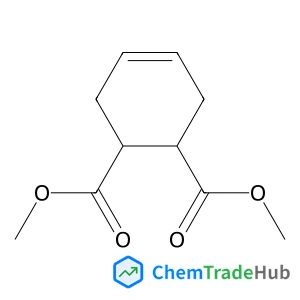
4-Cyclohexene-1,2-dicarboxylic acid, 1,2-dimethyl ester, (1R,2R)-rel-
CAS Number:
17673-68-6
Molecular Formula:
C10H14O4
Recommended Suppliers




Disclaimer
This page provides academic journal information for reference and research purposes only. We are not affiliated with any journal publishers and do not handle publication submissions. For publication-related inquiries, please contact the respective journal publishers directly.
If you notice any inaccuracies in the information displayed, please contact us at support@chemtradehub.com. We will promptly review and address your concerns.