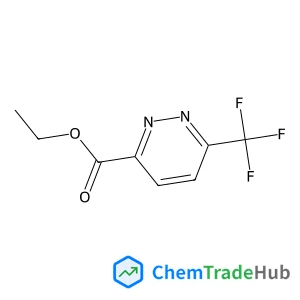
Ethyl 6-(trifluoromethyl)pyridazine-3-carboxylate
CAS Number:
1192155-06-8
Molecular Formula:
C8H7F3N2O2
Rajashree Y. Mahale, Arulraj Arulkashmir, Kingshuk Dutta, Kothandam Krishnamoorthy
The impact of electron transfer (ET) from a series of band edge modulated polymers to atmospheric oxygen is examined in connection with substrate oxidation prevention. Polymers with the highest occupied molecular orbital (HOMO) energy level below and above the oxygen energy level were tested and the former showed better efficiency. Furthermore, the oxidation prevention efficiency of a polymer with lower HOMO increased by two orders of magnitude, when the pores on the film were filled with spherical molecules, [6,6]-phenyl-C61-butyric acid methyl ester. We found that the polymer surface hydrophobicity has little or no influence on oxidation prevention. It is interesting to note that a polymer with a hole mobility of 8 × 10⁻¹⁰ cm2 V−1 s−1 showed a two-fold increase in oxidation prevention efficiency compared to a polymer with a hole mobility of 6 × 10⁻⁵ cm2 V−1 s−1. Over all, from the concerted approach, we conclude that a polymer devoid of pores with the HOMO energy level below oxygen and low charge carrier mobility is a suitable candidate for prevention of substrate oxidation/corrosion.

Bulletin of the Chemical Society of Japan

Australian Journal of Chemistry

Corrosion Science

Biopolymers

Journal of the Chinese Chemical Society

Canadian Metallurgical Quarterly

Chemistry of Natural Compounds

Anti-Corrosion Methods and Materials

Accounts of Chemical Research

Chemistry of Heterocyclic Compounds
Goverdhan Mehta, Kotapalli Pallavi, Jayant D. Umarye
DOI: 10.1039/B506931A
Hongwei Gu, Keming Xu, Zhimou Yang, Chi K. Chang
DOI: 10.1039/B507779F
Martin Albrecht, Helen Stoeckli-Evans
DOI: 10.1039/B508225K
Philip J. Bailey, Robert A. Coxall, Caroline M. Dick, Sylvie Fabre, Simon Parsons, Lesley J. Yellowlees
DOI: 10.1039/B505697G
Mohammad Reza Shadnam, A. Amirfazli
DOI: 10.1039/B507179H
Xiaofeng Wu, Daniele Vinci, Takao Ikariya, Jiangliang Xiao
DOI: 10.1039/B507276J
Philip D. Stevens, Guifeng Li, Jinda Fan, Max Yen, Yong Gao
DOI: 10.1039/B505424A
Mitsunobu Nakamura, Yukinori Ohtoshi, Kazushige Yamana
DOI: 10.1039/B507808C
Sunita Thyagarajan, Kenneth D. Karlin, Steven E. Rokita
DOI: 10.1039/B509690A
6-(3-Fluorophenyl)picolinic acid is generally considered safe for laboratory use...
(3R)-3-Pyrrolidinol is used in the pharmaceutical industry as a precursor for dr...
When handling (4R,5R)-4,5-Diethoxycarbonyl-2,2-dimethyldioxolane (CAS: 59779-75-...
1-(6-Chloroimidazo[1,2-b]pyridazin-3-yl)ethanone is often synthesized via a mult...
The market for N-Ethyl-3,4-dimethylbenzylamine (CAS: 39180-83-1) remains steady,...
Tert-butyl 3-(pyrrolidin-1-yl)azetidine-1-carboxylate is a chemical compound wit...
1-Bromo-3-chloro-2,4-dimethoxybenzene (CAS: 1228956-93-1) falls under the classi...
The safety of 8-Bromo-2-methyl-3,4-dihydroisoquinolin-1(2H)-one (CAS: 1368622-07...
Benzyl [(3S)-2,6-dioxo-3-piperidinyl]carbamate is generally safe when handled wi...
1-{[4-(4,4,5,5-Tetramethyl-1,3,2-dioxaborolan-2-yl)phenyl]sulfonyl}pyrrolidine s...

Physical Chemistry Chemical Physics (PCCP) is an international journal co-owned by 19 physical chemistry and physics societies from around the world. This journal publishes original, cutting-edge research in physical chemistry, chemical physics and biophysical chemistry. To be suitable for publication in PCCP, articles must include significant innovation and/or insight into physical chemistry; this is the most important criterion that reviewers and Editors will judge against when evaluating submissions. The journal has a broad scope and welcomes contributions spanning experiment, theory, computation and data science. Topical coverage includes spectroscopy, dynamics, kinetics, statistical mechanics, thermodynamics, electrochemistry, catalysis, surface science, quantum mechanics, quantum computing and machine learning. Interdisciplinary research areas such as polymers and soft matter, materials, nanoscience, energy, surfaces/interfaces, and biophysical chemistry are welcomed if they demonstrate significant innovation and/or insight into physical chemistry. Joined experimental/theoretical studies are particularly appreciated when complementary and based on up-to-date approaches.