


Do anions influence the polarity of protic ionic liquids?
Literature Information
Publication Date
2011-12-23
DOI
10.1039/C2CP23256A
Impact Factor
3.676
Authors
Shashi Kant Shukla, Nageshwar D. Khupse, Anil Kumar
View Original
Abstract
Polarity studies in two classes of imidazolium-based protic ionic liquids (PILs) possessing [HSO4]−, [HCOO]−, [CH3COO]− and [CH3CH2COO]− anions were carried out using a solvatochromic method from 298.15 to 353.15 K. For 1-methylimidazolium class of PILs, ET(30) was found to be independent over the entire range of temperature, while ET(30) was noted to decrease with a rise in temperature in the case of 1-butylimidazolium class of PILs containing [CH3COO]− and [CH3CH2COO]− anions. The ET(30) value decreases in both the classes upon varying the anions ([HSO4]−, [HCOO]−, [CH3COO]− and [CH3CH2COO]−). The ET(30) value is controlled by hydrogen bond acceptor basicity, β, and dipolarity/polarizability, π*. The ET(30) value for PILs varies inversely to the strength of the coulombic interaction between ions in PILs. Strong interactions between ions lead to lower ET(30) values. Unlike the poor thermal effect on ET(30), the Kamlet–Taft parameters i.e. α, β and π* have pronounced thermal effect in the imidazolium-based PILs. Variation in the Kamlet–Taft parameters is controlled by the stabilization of ions and the degree of proton transfer from Brønsted acid to Brønsted base.
Recommended Journals

Polycyclic Aromatic Compounds

Journal of the Indian Institute of Science

Biocatalysis and Biotransformation

Bioorganic & Medicinal Chemistry Letters

NDT & E International

Herald of the Russian Academy of Sciences

Journal of Chemical Sciences

Medicinal Chemistry Research

Bioorganic & Medicinal Chemistry

Journal of Asian Natural Products Research
Related Literature
Micelle assisted synthesis of bismuth oxide nanoparticles for improved chemocatalytic degradation of toxic Congo red into non-toxic products
Aleena Pious, Shreya Muthukumar, Dharshini Karnan Singaravelu, Periyappan Nantheeswaran, Mariappan Mariappan, Arvind Sivasubramanian, Fuad Ameen, Anbazhagan Veerappan
2023-11-17
Paper
DOI: 10.1039/D3NJ04494G
2023 Journal of Materials Chemistry Lectureship winner: Dr Jovana Milić, University of Fribourg, Switzerland
2023-11-14
Editorial
DOI: 10.1039/D3TB90200E
Role of defects and exposed graphene in carbon nanomaterial-based electrocatalysts
Charles C. Chusuei, Ram Chandra Nepal
2023-12-04
Paper
DOI: 10.1039/D3NJ04054B
Phosphate ions improve the performance of BiFeO3 piezoelectric photoelectrochemical water splitting
Jinzhe Li, Jianguo Zhou
2023-12-02
Paper
DOI: 10.1039/D3NJ02733C
A review of recent research and development on GLP-1 receptor agonists-sustained-release microspheres
2023-11-08
Review Article
DOI: 10.1039/D3TB02207B
Belinostat loaded lipid–polymer hybrid nanoparticulate delivery system for breast cancer: improved pharmacokinetics and biodistribution in a tumor model
Kommera Sai Pradyuth, Shubham A. Salunkhe, Arihant Kumar Singh, Deepak Chitkara, Anupama Mittal
2023-10-27
Paper
DOI: 10.1039/D3TB01317K
Three-dimensional N-doped carbon electrodes activate peroxymonosulfate for tetracycline degradation
2023-11-22
Paper
DOI: 10.1039/D3NJ04311H
Smart stimuli-responsive polysaccharide nanohydrogels for drug delivery: a review
Ahmed Fatimi, Rajender S. Varma, Mohammed Berrada
2023-11-01
Review Article
DOI: 10.1039/D3TB01712E
Aza-BODIPY with two efficacious fragments for NIR light-driven photothermal therapy by triggering cancer cell apoptosis
Chunyu Shao, Xiuyan Gong, Dongxiang Zhang, Xin-Dong Jiang, Jianjun Du, Guiling Wang
2023-10-23
Paper
DOI: 10.1039/D3TB02132G
On the mechanochemical synthesis of C-scorpionates with an oxime moiety and their application in the copper-catalyzed azide–alkyne cycloaddition (CuAAC) reaction
Carla Gomes, Mariana Costa, Susana M. M. Lopes, Bernardo Albuquerque Nogueira, José A. Paixão, Teresa M. V. D. Pinho e Melo, Luísa M. D. R. S. Martins, Marta Pineiro
2023-12-15
Paper
DOI: 10.1039/D3NJ05017C
You might also like
Compound Q&A
Is 6-(3-Fluorophenyl)picolinic acid (CAS: 887982-40-3) safe?
6-(3-Fluorophenyl)picolinic acid is generally considered safe for laboratory use...
887982-40-36-(3-Fluorophenyl)pi...
Compound Q&A
What industries use (3R)-3-Pyrrolidinol (CAS: 2799-21-5)?
(3R)-3-Pyrrolidinol is used in the pharmaceutical industry as a precursor for dr...
2799-21-5(3R)-3-Pyrrolidinol
Compound Q&A
What precautions should be taken when handling (4R,5R)-4,5-Diethoxycarbonyl-2,2-dimethyldioxolane (CAS: 59779-75-8)?
When handling (4R,5R)-4,5-Diethoxycarbonyl-2,2-dimethyldioxolane (CAS: 59779-75-...
59779-75-8(4R,5R)-4,5-Diethoxy...
Compound Q&A
How is 1-(6-Chloroimidazo[1,2-b]pyridazin-3-yl)ethanone (CAS: 90734-71-7) typically synthesized?
1-(6-Chloroimidazo[1,2-b]pyridazin-3-yl)ethanone is often synthesized via a mult...
90734-71-71-(6-Chloroimidazo[1...
Compound Q&A
What is the market or research trend for N-Ethyl-3,4-dimethylbenzylamine (CAS: 39180-83-1)?
The market for N-Ethyl-3,4-dimethylbenzylamine (CAS: 39180-83-1) remains steady,...
39180-83-1N-Ethyl-3,4-dimethyl...
Compound Q&A
What is Tert-butyl 3-(pyrrolidin-1-yl)azetidine-1-carboxylate (CAS: 1019008-21-9)?
Tert-butyl 3-(pyrrolidin-1-yl)azetidine-1-carboxylate is a chemical compound wit...
1019008-21-9Tert-butyl 3-(pyrrol...
Compound Q&A
What regulatory guidelines apply to 1-Bromo-3-chloro-2,4-dimethoxybenzene (CAS: 1228956-93-1)?
1-Bromo-3-chloro-2,4-dimethoxybenzene (CAS: 1228956-93-1) falls under the classi...
1228956-93-11-Bromo-3-chloro-2,4...
Compound Q&A
Is 8-Bromo-2-methyl-3,4-dihydroisoquinolin-1(2H)-one (CAS: 1368622-07-4) safe?
The safety of 8-Bromo-2-methyl-3,4-dihydroisoquinolin-1(2H)-one (CAS: 1368622-07...
1368622-07-48-Bromo-2-methyl-3,4...
Compound Q&A
Is Benzyl [(3S)-2,6-dioxo-3-piperidinyl]carbamate (CAS: 22785-43-9) safe?
Benzyl [(3S)-2,6-dioxo-3-piperidinyl]carbamate is generally safe when handled wi...
22785-43-9Benzyl [(3S)-2,6-dio...
Compound Q&A
How should 1-{[4-(4,4,5,5-Tetramethyl-1,3,2-dioxaborolan-2-yl)phenyl]sulfonyl}pyrrolidine (CAS: 928657-21-0) be stored?
1-{[4-(4,4,5,5-Tetramethyl-1,3,2-dioxaborolan-2-yl)phenyl]sulfonyl}pyrrolidine s...
928657-21-01-{[4-(4,4,5,5-Tetra...
Source Journal
Physical Chemistry Chemical Physics

CiteScore:
5.5
Self-citation Rate:
10.3%
Articles per Year:
3036
Physical Chemistry Chemical Physics (PCCP) is an international journal co-owned by 19 physical chemistry and physics societies from around the world. This journal publishes original, cutting-edge research in physical chemistry, chemical physics and biophysical chemistry. To be suitable for publication in PCCP, articles must include significant innovation and/or insight into physical chemistry; this is the most important criterion that reviewers and Editors will judge against when evaluating submissions. The journal has a broad scope and welcomes contributions spanning experiment, theory, computation and data science. Topical coverage includes spectroscopy, dynamics, kinetics, statistical mechanics, thermodynamics, electrochemistry, catalysis, surface science, quantum mechanics, quantum computing and machine learning. Interdisciplinary research areas such as polymers and soft matter, materials, nanoscience, energy, surfaces/interfaces, and biophysical chemistry are welcomed if they demonstrate significant innovation and/or insight into physical chemistry. Joined experimental/theoretical studies are particularly appreciated when complementary and based on up-to-date approaches.
Recommended Compounds
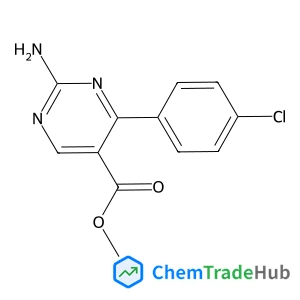
Methyl 2-amino-4-(4-chlorophenyl)-5-pyrimidinecarboxylate
CAS Number:
1133115-56-6
Molecular Formula:
C12H10ClN3O2
![(1R,6R)-6-({[(2-Methyl-2-propanyl)oxy]carbonyl}amino)-3-cyclohexene-1-carboxylic acid structure](https://static.chemtradehub.com/structs/865/865689-24-3-5fef.webp "(1R,6R)-6-({[(2-Methyl-2-propanyl)oxy]carbonyl}amino)-3-cyclohexene-1-carboxylic acid structure")
(1R,6R)-6-({[(2-Methyl-2-propanyl)oxy]carbonyl}amino)-3-cyclohexene-1-carboxylic acid
CAS Number:
865689-24-3
Molecular Formula:
C12H19NO4
Recommended Suppliers






Disclaimer
This page provides academic journal information for reference and research purposes only. We are not affiliated with any journal publishers and do not handle publication submissions. For publication-related inquiries, please contact the respective journal publishers directly.
If you notice any inaccuracies in the information displayed, please contact us at support@chemtradehub.com. We will promptly review and address your concerns.