


Improvement in the assessment of direct and facilitated ion transfers by electrochemically induced redox transformations of common molecular probes
Literature Information
Publication Date
2011-12-15
DOI
10.1039/C2CP23184K
Impact Factor
3.676
Authors
Min Zhou, Lijie Zhong, Xiandui Dong, Jens Ulstrup, Dongxue Han
View Original
Abstract
A new strategy based on a thick organic film modified electrode allowed us, for the first time, to explore the voltammetric processes for a series of hydrophilic ions by electrochemically induced redox transformations of common molecular probes. During the limited time available for voltammetry, this thick organic film ensured that the generated product of the molecular probe, which is within a limited diffusion layer, was kept far away from the aqueous–organic solvent interface; therefore, regardless of the degree of hydrophobicity, the generated product never participates in ion exchange across the interface and the charge neutrality of the organic film (containing an extremely hydrophobic electrolyte) can only be maintained by the injection of ions from the aqueous phase. Taking advantage of this fact, common redox probes, such as ferrocene (Fc) and 7,7,8,8-tetracyanoquinodimethane (TCNQ), which are almost useless for both three-phase electrode (TPE) and thin-layer cyclic voltammetry (TLCV) methods, can induce the transfer of numerous highly hydrophilic anions and cations. Consequently, the majority of their Gibbs transfer energies have been accurately determined for the first time to the best of our knowledge. With this in mind, using TCNQ as a redox probe to induce facilitated cation transfer, a stategy that is more advantageous than traditional methods has been developed. The main advantages are that: (i) voltammetric experiments performed on this system were free from the polarized potential window (ppw) in the aqueous phase and, as a result, this allowed the assessment of weakly assisted ion transfers, which appear at the terminal of the ppw at single polarized interfaces; (ii) without introducing the tetraphenylarsonium–tetraphenylborate (TPAs–TPB) thermodynamic assumption, one can conveniently evaluate both the association constant and the stoichiometric parameter between the ion and its ionophore by comparison of their direct and facilitated ion transfer voltammograms. These encouraging results illustrated the exciting innovation for assessing direct and facilitated ion transfers based on this new thick organic film modified electrode.
Recommended Journals

Bioorganic & Medicinal Chemistry Letters

Critical Reviews in Solid State and Materials Sciences

Journal of Asian Natural Products Research

Journal of the Indian Institute of Science

Atomization and Sprays

NDT & E International

Journal of Chemical Sciences

Herald of the Russian Academy of Sciences

Bioorganic & Medicinal Chemistry

Colloid Journal
Related Literature
Heterobimetallic iridiumIII–europiumIII complex: the role of donor energy on sensitising the EuIII ion
Marian Rosaly Davolos
2023-12-04
Paper
DOI: 10.1039/D3NJ03161F
Photoelectrochemical properties of p-type CuBi2O4 prepared by spray pyrolysis of carbon-free precursor aqueous solution combined with post-annealing treatment
Kaisei Wakishima, Tomohiro Higashi, Kenji Yoshino
2023-11-22
Paper
DOI: 10.1039/D3NJ04878K
Porphyrin–anthracene covalent organic frameworks for sustainable photosterilization
Jing-Xuan Guo, Tian-Yue Gu, Hao-Ze Li
2023-11-04
Paper
DOI: 10.1039/D3TB02017G
Micelle assisted synthesis of bismuth oxide nanoparticles for improved chemocatalytic degradation of toxic Congo red into non-toxic products
Aleena Pious, Shreya Muthukumar, Dharshini Karnan Singaravelu, Periyappan Nantheeswaran, Mariappan Mariappan, Arvind Sivasubramanian, Fuad Ameen, Anbazhagan Veerappan
2023-11-17
Paper
DOI: 10.1039/D3NJ04494G
Chitosan functionalized gold nanostars as a theranostic platform for intracellular microRNA detection and photothermal therapy
Xiaoxue Dong, Zongwei Zhu, Qian Sun, Hongqian Zhang, Chuanxu Yang
2023-11-02
Paper
DOI: 10.1039/D3TB02029K
Application of exosomes as nanocarriers in cancer therapy
Jiawei Hu, Junfei Zhu, Jingjing Chai, Yudie Zhao, Jiajie Luan, Yan Wang
2023-10-23
Review Article
DOI: 10.1039/D3TB01991H
The construction of hierarchical assemblies with in situ generation of chemotherapy drugs to enhance the efficacy of chemodynamic therapy for multi-modal anti-tumor treatments
Wei-Nan Zhao, Hongjuan Li, Shiguo Sun, Yongqian Xu
2023-10-25
Paper
DOI: 10.1039/D3TB01564E
A multifunctional hydrogel dressing with high tensile and adhesive strength for infected skin wound healing in joint regions
Chen Zhang, Kaiyue Liu, Yuanmeng He, Rong Chang, Fangxia Guan, Minghao Yao
2023-11-04
Paper
DOI: 10.1039/D3TB01384G
Preparation and characterisation of wheat starch-based aerogels for procyanidin encapsulation to enhance stability
Yu Gao, Hong-Ning Lv, Sheng-Hua Zha, Xiao-Li Sun
2023-11-21
Paper
DOI: 10.1039/D3NJ03311B
Eco-friendly, in-water, and catalyst-free assembly of acylethenylpyrroloimidazoindoles from 3H-indoles and acylpyrrolylacetylenes
Ludmila A. Oparina, Kseniya V. Belyaeva, Nikita A. Kolyvanov, Igor A. Ushakov, Denis N. Tomilin, Lyubov N. Sobenina, Anton V. Kuzmin, Boris A. Trofimov
2023-11-17
Paper
DOI: 10.1039/D3NJ05049A
You might also like
Compound Q&A
Is 6-(3-Fluorophenyl)picolinic acid (CAS: 887982-40-3) safe?
6-(3-Fluorophenyl)picolinic acid is generally considered safe for laboratory use...
887982-40-36-(3-Fluorophenyl)pi...
Compound Q&A
What industries use (3R)-3-Pyrrolidinol (CAS: 2799-21-5)?
(3R)-3-Pyrrolidinol is used in the pharmaceutical industry as a precursor for dr...
2799-21-5(3R)-3-Pyrrolidinol
Compound Q&A
What precautions should be taken when handling (4R,5R)-4,5-Diethoxycarbonyl-2,2-dimethyldioxolane (CAS: 59779-75-8)?
When handling (4R,5R)-4,5-Diethoxycarbonyl-2,2-dimethyldioxolane (CAS: 59779-75-...
59779-75-8(4R,5R)-4,5-Diethoxy...
Compound Q&A
How is 1-(6-Chloroimidazo[1,2-b]pyridazin-3-yl)ethanone (CAS: 90734-71-7) typically synthesized?
1-(6-Chloroimidazo[1,2-b]pyridazin-3-yl)ethanone is often synthesized via a mult...
90734-71-71-(6-Chloroimidazo[1...
Compound Q&A
What is the market or research trend for N-Ethyl-3,4-dimethylbenzylamine (CAS: 39180-83-1)?
The market for N-Ethyl-3,4-dimethylbenzylamine (CAS: 39180-83-1) remains steady,...
39180-83-1N-Ethyl-3,4-dimethyl...
Compound Q&A
What is Tert-butyl 3-(pyrrolidin-1-yl)azetidine-1-carboxylate (CAS: 1019008-21-9)?
Tert-butyl 3-(pyrrolidin-1-yl)azetidine-1-carboxylate is a chemical compound wit...
1019008-21-9Tert-butyl 3-(pyrrol...
Compound Q&A
What regulatory guidelines apply to 1-Bromo-3-chloro-2,4-dimethoxybenzene (CAS: 1228956-93-1)?
1-Bromo-3-chloro-2,4-dimethoxybenzene (CAS: 1228956-93-1) falls under the classi...
1228956-93-11-Bromo-3-chloro-2,4...
Compound Q&A
Is 8-Bromo-2-methyl-3,4-dihydroisoquinolin-1(2H)-one (CAS: 1368622-07-4) safe?
The safety of 8-Bromo-2-methyl-3,4-dihydroisoquinolin-1(2H)-one (CAS: 1368622-07...
1368622-07-48-Bromo-2-methyl-3,4...
Compound Q&A
Is Benzyl [(3S)-2,6-dioxo-3-piperidinyl]carbamate (CAS: 22785-43-9) safe?
Benzyl [(3S)-2,6-dioxo-3-piperidinyl]carbamate is generally safe when handled wi...
22785-43-9Benzyl [(3S)-2,6-dio...
Compound Q&A
How should 1-{[4-(4,4,5,5-Tetramethyl-1,3,2-dioxaborolan-2-yl)phenyl]sulfonyl}pyrrolidine (CAS: 928657-21-0) be stored?
1-{[4-(4,4,5,5-Tetramethyl-1,3,2-dioxaborolan-2-yl)phenyl]sulfonyl}pyrrolidine s...
928657-21-01-{[4-(4,4,5,5-Tetra...
Source Journal
Physical Chemistry Chemical Physics

CiteScore:
5.5
Self-citation Rate:
10.3%
Articles per Year:
3036
Physical Chemistry Chemical Physics (PCCP) is an international journal co-owned by 19 physical chemistry and physics societies from around the world. This journal publishes original, cutting-edge research in physical chemistry, chemical physics and biophysical chemistry. To be suitable for publication in PCCP, articles must include significant innovation and/or insight into physical chemistry; this is the most important criterion that reviewers and Editors will judge against when evaluating submissions. The journal has a broad scope and welcomes contributions spanning experiment, theory, computation and data science. Topical coverage includes spectroscopy, dynamics, kinetics, statistical mechanics, thermodynamics, electrochemistry, catalysis, surface science, quantum mechanics, quantum computing and machine learning. Interdisciplinary research areas such as polymers and soft matter, materials, nanoscience, energy, surfaces/interfaces, and biophysical chemistry are welcomed if they demonstrate significant innovation and/or insight into physical chemistry. Joined experimental/theoretical studies are particularly appreciated when complementary and based on up-to-date approaches.
Recommended Compounds
![3-[(3R,4R)-3-[(6-aminopyrimidin-4-yl)-methyl-amino]-4-methyl-1-piperidyl]-3-oxo-propanenitrile structure](https://static.chemtradehub.com/structs/164/1640971-60-3-83a4.webp "3-[(3R,4R)-3-[(6-aminopyrimidin-4-yl)-methyl-amino]-4-methyl-1-piperidyl]-3-oxo-propanenitrile structure")
3-[(3R,4R)-3-[(6-aminopyrimidin-4-yl)-methyl-amino]-4-methyl-1-piperidyl]-3-oxo-propanenitrile
CAS Number:
1640971-60-3
Molecular Formula:
C14H20N6O
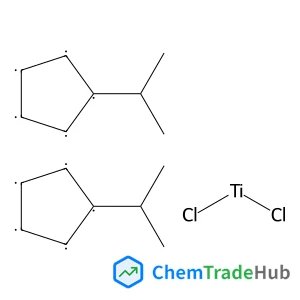
BIS(I-PROPYLCYCLOPENTADIENYL)TITANIUM DICHLORIDE
CAS Number:
12130-65-3
Molecular Formula:
C16H22Cl2Ti
![5-Bromo-3-isopropyl-1H-pyrrolo[2,3-b]pyridine structure](https://static.chemtradehub.com/structs/125/1256819-54-1-8620.webp "5-Bromo-3-isopropyl-1H-pyrrolo[2,3-b]pyridine structure")
Recommended Suppliers



Disclaimer
This page provides academic journal information for reference and research purposes only. We are not affiliated with any journal publishers and do not handle publication submissions. For publication-related inquiries, please contact the respective journal publishers directly.
If you notice any inaccuracies in the information displayed, please contact us at support@chemtradehub.com. We will promptly review and address your concerns.