












Design and synthesis of new anionic “polymeric ionic liquids” with high charge delocalization
Literature Information
Publication Date
2011-08-25
DOI
10.1039/C1PY00282A
Impact Factor
5.582
Authors
A. S. Shaplov, M. Armand, E. I. Lozinskaya, D. O. Ponkratov, I. A. Malyshkina, F. Vidal, O. V. Okatova, G. M. Pavlov, C. Wandrey, I. A. Godovikov, Y. S. Vygodskii
View Original
Abstract
Three novel ionic monomers having highly delocalized anions and electrochemically stable mobile cations, namely, 1-butyl-1-methylpyrrolidinium 1-[3-(methacryloyloxy)propylsulfonyl]-1-(trifluoromethane-sulfonyl)imide, 1-butyl-1-methylpyrrolidinium 1,1-dicyano-1-[(3-(methacryloyloxy)propylsulfonyl)]methanide and 1-butyl-1-methylpyrrolidinium 1-cyano-1-[(3-(methacryloyloxy)propylsulfonyl)]imide were synthesized and characterized. The structure of these monomers was designed to be a mimic of the most highly conductive bis(trifluoromethylsulfonyl)imide, tricyanomethanide and dicyanamide anions. By radical polymerization procedure a series of new anionic “polymeric ionic liquids” (PILs) were prepared. The solubility of these linear PILs, thermal stability, glass transition temperatures, molar masses and ionic conductivities were estimated. An advantage of the novel PILs was demonstrated by the comparison of their ionic conductivity at 25 °C (2.0 × 10⁻⁸ ÷ 1.6 × 10⁻⁷ S cm−1) with the unmodified poly(1-ethyl-1-methylpyrrolidinium 3-(methacryloyloxy)propane-1-sulfonate) analog. The increase in ionic conductivity is as high as three orders of magnitude and was found to depend on the size of the attached anion. The new ionic monomers were subsequently copolymerized with poly(ethylene glycol) dimethacrylate and poly(ethylene glycol) methyl ether methacrylate. The investigation of the copolymers properties revealed further improvement of the conductivity in approximately two orders of magnitude and the achievement of σ = 4.8 ÷ 6.8 × 10⁻⁶ S cm−1) at 40 °C.
Related Literature
Pure and almost pure NIR emission of Tm and Tm,Yb–CeO2 under UV, X-ray and NIR up-conversion excitation: key roles of level selective antenna sensitization and charge-compensation
Daniel Avram, Bogdan Cojocaru, Adriana Urda, Ion Tiseanu, Mihaela Florea, Carmen Tiseanu
2015-09-15
Communication
DOI: 10.1039/C5CP03458B
Enhancement of near-infrared luminescence of ytterbium in triple-stranded binuclear helicates
Bing Li, Hongfeng Li, Peng Chen, Wenbin Sun, Cheng Wang, Ting Gao, Pengfei Yan
2015-10-21
Paper
DOI: 10.1039/C5CP05888K
Vibrational control of electron-transfer reactions: a feasibility study for the fast coherent transfer regime
P. Antoniou, Z. Ma, P. Zhang
2015-04-02
Paper
DOI: 10.1039/C5CP00610D
Effective rate constant for nanostructured heterogeneous catalysts
Leila Rajabi, S. C. Hendy
2015-10-07
Paper
DOI: 10.1039/C5CP04448K
Prediction of spin–orbital coupling effects on the electronic structure of two dimensional van der Waals heterostructures
Baiqing You, Xiaocha Wang, Wenbo Mi
2015-10-28
Paper
DOI: 10.1039/C5CP05068E
Proton transport mechanism of imidazole, triazole and phosphoric acid mixtures from ab initio molecular dynamics simulations
Swagata Pahari, Sudip Roy
2015-10-22
Paper
DOI: 10.1039/C5CP05735C
The electrochemical oxidation of toluene catalysed by Co(ii) in N-butyl-N-methylpyrrolidinium bis(trifluoromethylsulfonyl)imide‡
S. Balaji, K. Kannan, I. S. Moon
2015-10-29
Communication
DOI: 10.1039/C5CP04151A
Physicochemical perspectives (aggregation, structure and dynamics) of interaction between pluronic (L31) and surfactant (SDS)
G. K. S. Prameela, B. V. N. Phani Kumar, A. Pan, V. K. Aswal, J. Subramanian, A. B. Mandal, S. P. Moulik
2015-10-13
Paper
DOI: 10.1039/C5CP04910E
Measurement and modelling of reactive transport in geological barriers for nuclear waste containment
Qingrong Xiong, Claudia Joseph, Katja Schmeide, Andrey P. Jivkov
2015-10-26
Paper
DOI: 10.1039/C5CP05243B
Alkali subhalides: high-pressure stability and interplay between metallic and ionic bonds
G. Saleh
2015-12-02
Paper
DOI: 10.1039/C5CP06026E
You might also like
Compound Q&A
What is 3-Fluoro-2-methylbenzylamine (CAS: 771573-36-5)?
3-Fluoro-2-methylbenzylamine is an organic compound with the CAS number 771573-3...
771573-36-53-Fluoro-2-methylben...
Compound Q&A
Is Tert-butyl 2-(oxetan-3-ylidene)acetate (CAS: 1207175-03-8) safe?
Tert-butyl 2-(oxetan-3-ylidene)acetate is considered safe for its intended uses ...
1207175-03-8Tert-butyl 2-(oxetan...
Compound Q&A
What precautions should be taken when handling 4-Acetyl-2-fluorobenzonitrile (CAS: 214760-18-6)?
Proper personal protective equipment (PPE) such as gloves, goggles, and a lab co...
214760-18-64-Acetyl-2-fluoroben...
Compound Q&A
How is 2-Ethyl-4-methyl-1,3-thiazole (CAS: 15679-12-6) typically synthesized?
2-Ethyl-4-methyl-1,3-thiazole is commonly synthesized via the reaction of thiour...
15679-12-62-Ethyl-4-methyl-1,3...
Compound Q&A
How should 5',5''-([2,2'-Bithiophene]-5,5'-diyl)bis(([1,1':3',1''-terphenyl]-4,4''-dicarboxylic acid)) (CAS: 1227780-71-3) be stored?
This compound should be stored in a cool, dry place away from direct sunlight an...
1227780-71-35',5''''-([2,2'-Bith...
Compound Q&A
What regulatory guidelines apply to L-Lysine Acetate Salt (CAS: 52315-92-1)?
L-Lysine Acetate Salt (CAS: 52315-92-1) is subject to various regulatory guideli...
52315-92-1L-LYSINE ACETATE SAL...
Compound Q&A
Is 6-Fluoro-3-hydroxy-2-pyrazinecarboxamide (CAS: 259793-96-9) safe?
6-Fluoro-3-hydroxy-2-pyrazinecarboxamide (CAS: 259793-96-9) is generally conside...
259793-96-96-Fluoro-3-hydroxy-2...
Compound Q&A
What are the physical and chemical properties of 1,1'-Sulfonylbis(1H-imidazole) (CAS: 7189-69-7)?
1,1'-Sulfonylbis(1H-imidazole) is a crystalline solid with a molecular weight of...
7189-69-71,1'-Sulfonylbis(1H-...
Compound Q&A
What industries use 4-methyl-7-nitro-1H-indole-3-carbonitrile (CAS: 289483-82-5)?
4-Methyl-7-nitro-1H-indole-3-carbonitrile (CAS: 289483-82-5) is primarily used i...
289483-82-54-methyl-7-nitro-1H-...
Compound Q&A
How should waste containing 5-Bromo-3-indolyl-beta-galactoside (CAS: 97753-82-7) be handled?
Waste containing 5-Bromo-3-indolyl-beta-galactoside (CAS: 97753-82-7) should be ...
97753-82-75-Bromo-3-indolyl-be...
Source Journal
Polymer Chemistry

CiteScore:
8.6
Self-citation Rate:
7.3%
Articles per Year:
457
Polymer Chemistry welcomes submissions in all areas of polymer science that have a strong focus on macromolecular chemistry. Manuscripts may cover a broad range of fields, yet no direct application focus is required.
Recommended Compounds
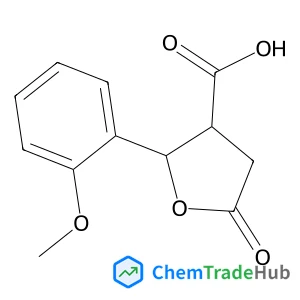
trans-2-(2-Methoxyphenyl)-5-oxotetrahydrofuran-3-carboxylic acid
CAS Number:
99226-02-5
Molecular Formula:
C12H12O5
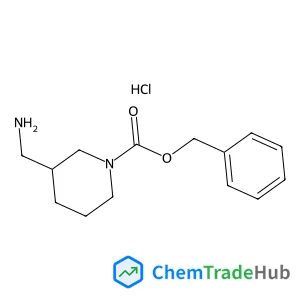
Benzyl 3-(aminomethyl)piperidine-1-carboxylate hydrochloride
CAS Number:
1186663-23-9
Molecular Formula:
C14H21ClN2O2
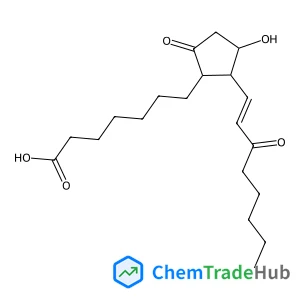
(11alpha,13E)-11-Hydroxy-9,15-dioxoprost-13-en-1-oic acid
CAS Number:
22973-19-9
Molecular Formula:
C20H32O5
Recommended Suppliers





Disclaimer
This page provides academic journal information for reference and research purposes only. We are not affiliated with any journal publishers and do not handle publication submissions. For publication-related inquiries, please contact the respective journal publishers directly.
If you notice any inaccuracies in the information displayed, please contact us at support@chemtradehub.com. We will promptly review and address your concerns.