












Pure and almost pure NIR emission of Tm and Tm,Yb–CeO2 under UV, X-ray and NIR up-conversion excitation: key roles of level selective antenna sensitization and charge-compensation
Literature Information
Publication Date
2015-09-15
DOI
10.1039/C5CP03458B
Impact Factor
3.676
Authors
Daniel Avram, Bogdan Cojocaru, Adriana Urda, Ion Tiseanu, Mihaela Florea, Carmen Tiseanu
View Original
Abstract
Herein, we report on the pure and almost pure near-infrared (NIR) emission at around 807 nm observed for Tm(Yb) (co)-doped CeO2 nanoparticles (NPs) under UV, X-ray and NIR up-conversion excitation. The optical responses are attributed to the low-lying charge-transfer of CeO2 that acts as a selective antenna sensitizer of the Tm 3H4 emission and Yb doping that lowers the local symmetry at Tm sites and introduces additional phonon modes. Selective antenna sensitization is also observed for Er/Ho (Yb) (co)-doped CeO2 NPs. To the best of our knowledge, this is a first study which correlates the down- and up-conversion emission properties of lanthanide(s)-(co) dopants with the CeO2 structure highlighting also the outstanding potential of these NPs in high-penetration tissue imaging and therapy.
Recommended Journals
Related Literature
Photocatalytic water splitting on hydrated layered perovskite tantalate A2SrTa2O7·nH2O (A = H, K, and Rb)
Ken-ichi Shimizu, Yoshihiro Tsuji, Tsuyoshi Hatamachi, Kenji Toda, Tatsuya Kodama, Mineo Sato, Yoshie Kitayama
2004-02-04
Paper
DOI: 10.1039/B312620J
Investigation of interparticle interactions of larger (4.63 nm) monolayer protected gold clusters during quantized double layer charging
Nirmalya Kumar Chaki, Bhalchandra Kakade, Kunjukrishna Pillai Vijayamohanan, Poonam Singh, C. V. Dharmadhikari
2006-03-07
Paper
DOI: 10.1039/B516650K
Studies on apparent molar volumes and heat capacities of several pluronics (triblock copolymers) in aqueous solutions of sodium dodecyl sulfate at 298.15 and 318.15 K
Stéphanie Senkov, Alain H. Roux, Geneviève Roux-Desgranges
2004-01-23
Paper
DOI: 10.1039/B313717A
Comment on “A deuteron NMR study of the tetrahydrofuran clathrate hydrate. Part II: Coupling of rotational and translational dynamics of water” by T. M. Kirschgen, M. D. Zeidler, B. Geil and F. Fujara, Phys. Chem. Chem. Phys., 2003, 5, 5247
Marta Bach-Vergés, Simon J. Kitchin, Kenneth D. M. Harris, Minjas Zugic, Carolyn A. Koh
2004-02-02
Comment
DOI: 10.1039/B307944A
Hydrogen storage by physisorption on nanostructured graphite platelets
2004-02-04
Paper
DOI: 10.1039/B316209E
Reaction route control by microperoxidase-9/CTAB micelle ratios
Tatiana Prieto, Rodrigo O. Marcon, Fernanda M. Prado, Antonio C. F. Caires, Paolo Di Mascio, Sergio Brochsztain, Otaciro R. Nascimento, Iseli L. Nantes
2006-03-14
Paper
DOI: 10.1039/B601671E
Shape resonances in molecular clusters: the 2t2g shape resonances in S 2p-excited sulfur hexafluoride clusters
A. A. Pavlychev, X. O. Brykalova, R. Flesch, E. Rühl
2006-03-24
Paper
DOI: 10.1039/B517967J
Pressure perturbation calorimetic studies of the solvation properties and the thermal unfolding of staphylococcal nuclease
Revanur Ravindra, Catherine Royer, Roland Winter
2004-01-23
Paper
DOI: 10.1039/B314172A
Heterogeneous reaction of ozone with hydrocarbon flame soot
Stéphane Lelièvre, Yuri Bedjanian, Nicolas Pouvesle, Jean-Louis Delfau, Christian Vovelle, Georges Le Bras
2004-02-13
Paper
DOI: 10.1039/B316895F
You might also like
Compound Q&A
Is 6-(3-Fluorophenyl)picolinic acid (CAS: 887982-40-3) safe?
6-(3-Fluorophenyl)picolinic acid is generally considered safe for laboratory use...
887982-40-36-(3-Fluorophenyl)pi...
Compound Q&A
What industries use (3R)-3-Pyrrolidinol (CAS: 2799-21-5)?
(3R)-3-Pyrrolidinol is used in the pharmaceutical industry as a precursor for dr...
2799-21-5(3R)-3-Pyrrolidinol
Compound Q&A
What precautions should be taken when handling (4R,5R)-4,5-Diethoxycarbonyl-2,2-dimethyldioxolane (CAS: 59779-75-8)?
When handling (4R,5R)-4,5-Diethoxycarbonyl-2,2-dimethyldioxolane (CAS: 59779-75-...
59779-75-8(4R,5R)-4,5-Diethoxy...
Compound Q&A
How is 1-(6-Chloroimidazo[1,2-b]pyridazin-3-yl)ethanone (CAS: 90734-71-7) typically synthesized?
1-(6-Chloroimidazo[1,2-b]pyridazin-3-yl)ethanone is often synthesized via a mult...
90734-71-71-(6-Chloroimidazo[1...
Compound Q&A
What is the market or research trend for N-Ethyl-3,4-dimethylbenzylamine (CAS: 39180-83-1)?
The market for N-Ethyl-3,4-dimethylbenzylamine (CAS: 39180-83-1) remains steady,...
39180-83-1N-Ethyl-3,4-dimethyl...
Compound Q&A
What is Tert-butyl 3-(pyrrolidin-1-yl)azetidine-1-carboxylate (CAS: 1019008-21-9)?
Tert-butyl 3-(pyrrolidin-1-yl)azetidine-1-carboxylate is a chemical compound wit...
1019008-21-9Tert-butyl 3-(pyrrol...
Compound Q&A
What regulatory guidelines apply to 1-Bromo-3-chloro-2,4-dimethoxybenzene (CAS: 1228956-93-1)?
1-Bromo-3-chloro-2,4-dimethoxybenzene (CAS: 1228956-93-1) falls under the classi...
1228956-93-11-Bromo-3-chloro-2,4...
Compound Q&A
Is 8-Bromo-2-methyl-3,4-dihydroisoquinolin-1(2H)-one (CAS: 1368622-07-4) safe?
The safety of 8-Bromo-2-methyl-3,4-dihydroisoquinolin-1(2H)-one (CAS: 1368622-07...
1368622-07-48-Bromo-2-methyl-3,4...
Compound Q&A
Is Benzyl [(3S)-2,6-dioxo-3-piperidinyl]carbamate (CAS: 22785-43-9) safe?
Benzyl [(3S)-2,6-dioxo-3-piperidinyl]carbamate is generally safe when handled wi...
22785-43-9Benzyl [(3S)-2,6-dio...
Compound Q&A
How should 1-{[4-(4,4,5,5-Tetramethyl-1,3,2-dioxaborolan-2-yl)phenyl]sulfonyl}pyrrolidine (CAS: 928657-21-0) be stored?
1-{[4-(4,4,5,5-Tetramethyl-1,3,2-dioxaborolan-2-yl)phenyl]sulfonyl}pyrrolidine s...
928657-21-01-{[4-(4,4,5,5-Tetra...
Source Journal
Physical Chemistry Chemical Physics

CiteScore:
5.5
Self-citation Rate:
10.3%
Articles per Year:
3036
Physical Chemistry Chemical Physics (PCCP) is an international journal co-owned by 19 physical chemistry and physics societies from around the world. This journal publishes original, cutting-edge research in physical chemistry, chemical physics and biophysical chemistry. To be suitable for publication in PCCP, articles must include significant innovation and/or insight into physical chemistry; this is the most important criterion that reviewers and Editors will judge against when evaluating submissions. The journal has a broad scope and welcomes contributions spanning experiment, theory, computation and data science. Topical coverage includes spectroscopy, dynamics, kinetics, statistical mechanics, thermodynamics, electrochemistry, catalysis, surface science, quantum mechanics, quantum computing and machine learning. Interdisciplinary research areas such as polymers and soft matter, materials, nanoscience, energy, surfaces/interfaces, and biophysical chemistry are welcomed if they demonstrate significant innovation and/or insight into physical chemistry. Joined experimental/theoretical studies are particularly appreciated when complementary and based on up-to-date approaches.
Recommended Compounds
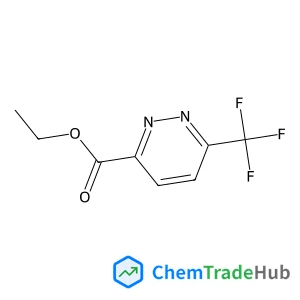
Ethyl 6-(trifluoromethyl)pyridazine-3-carboxylate
CAS Number:
1192155-06-8
Molecular Formula:
C8H7F3N2O2
Recommended Suppliers





Disclaimer
This page provides academic journal information for reference and research purposes only. We are not affiliated with any journal publishers and do not handle publication submissions. For publication-related inquiries, please contact the respective journal publishers directly.
If you notice any inaccuracies in the information displayed, please contact us at support@chemtradehub.com. We will promptly review and address your concerns.