












Effective rate constant for nanostructured heterogeneous catalysts
Literature Information
Publication Date
2015-10-07
DOI
10.1039/C5CP04448K
Impact Factor
3.676
Authors
Leila Rajabi, S. C. Hendy
View Original
Abstract
There is a great deal of interest in the use of nanostructured heterogeneous catalysts, particularly those based on expensive precious metals, in order to maximise the surface to volume ratio of the catalyst, potentially reducing the cost without sacrificing performance. When there is an abundance of reactants available, the effective reactivity will depend on the surface density of the catalytically active sites. However, under diffusion-limited conditions, catalytically active sites may compete for reactants, potentially leading to diminishing returns from the use of nanostructures. In this paper we apply a mathematical homogenization approach to investigate the effect of scale and patterning on the effective activity of catalytic sites on a heterogeneous catalyst operating under diffusion-limited conditions. We test these theoretical results numerically using Monte Carlo simulations, and show that in the continuum limit the theory works well. In particular, in the limit where the mean free path is much less than the scale of patterning of catalytically active sites, the effective rate constant is found to be equal to the area-weighted harmonic mean of the rate constants on the surface. However, as the length scale of the patterns becomes comparable to the mean free path length, the simulations show that the effective activity of the system can exceed the theoretical limit suggested by the continuum theory.
Related Literature
1,2-Chlorine atom migration in 3-chloro-2-butyl radicals: a computational study
Bernd Neumann, Hendrik Zipse
2002-11-26
Paper
DOI: 10.1039/B209981K
Cross coupling reactions of organozinc iodides with solid-supported electrophiles: synthesis of 4-substituted benzoic and 3-substituted (E)- and (Z)-propenoic acids and amides
Leslie J. Oates, Richard F. W. Jackson, Michael H. Block
2002-11-29
Paper
DOI: 10.1039/B208632H
Copper-catalyzed oxidative multicomponent reaction: synthesis of imidazo fused heterocycles with molecular oxygen
Xianwei Li, Tianzhang Wang, Yu-Jing Lu, Shaomin Ji, Yanping Huo, Bifu Liu
2018-08-02
Paper
DOI: 10.1039/C8OB01532E
Diastereoselective synthesis and profiling of bicyclic imidazolidinone derivatives bearing a difluoromethylated catechol unit as potent phosphodiesterase 4 inhibitors
Ivan S. Golovanov, Vladimir A. Tartakovsky, Alexey Yu. Sukhorukov, Sema L. Ioffe
2018-07-10
Paper
DOI: 10.1039/C8OB01039K
Radical addition to oximeethers for asymmetric synthesis of β-amino acid derivatives
Hideto Miyabe, Kayoko Fujii, Takeaki Naito
2002-12-16
Paper
DOI: 10.1039/B208823A
Natural products as modulators of the cyclic-AMP pathway: evaluation and synthesis of lead compounds
Saumitra Sengupta, Goverdhan Mehta
2018-08-24
Review Article
DOI: 10.1039/C8OB01388H
Metal-free synthesis of N-sulfonylformamidines via skeletal reconstruction of sulfonyl oximonitriles
Feng Li, Ziyan Wu, Jingjing Wang, Siyuan Zhang, Jiaxin Yu, Zhen Yuan, Jingya Liu, Renzeng Shen, Yao Zhou
2021-12-02
Research Article
DOI: 10.1039/D1QO01665B
Functionalization of diazotetronic acid and application in a stereoselective modular synthesis of pulvinone, aspulvinones A–E, G, Q and their analogues
Amarender Manchoju, Ritesh A. Annadate, Lise Desquien, Sunil V. Pansare
2018-08-10
Paper
DOI: 10.1039/C8OB01511B
Fe-Catalyzed tandem cyclization for the synthesis of 3-nitrofurans from homopropargylic alcohols and Al(NO3)3·9H2O
Ting Wang, Yong Jiang, Yanyan Wang, Rulong Yan
2018-07-02
Communication
DOI: 10.1039/C8OB01184B
You might also like
Compound Q&A
Is 6-(3-Fluorophenyl)picolinic acid (CAS: 887982-40-3) safe?
6-(3-Fluorophenyl)picolinic acid is generally considered safe for laboratory use...
887982-40-36-(3-Fluorophenyl)pi...
Compound Q&A
What industries use (3R)-3-Pyrrolidinol (CAS: 2799-21-5)?
(3R)-3-Pyrrolidinol is used in the pharmaceutical industry as a precursor for dr...
2799-21-5(3R)-3-Pyrrolidinol
Compound Q&A
What precautions should be taken when handling (4R,5R)-4,5-Diethoxycarbonyl-2,2-dimethyldioxolane (CAS: 59779-75-8)?
When handling (4R,5R)-4,5-Diethoxycarbonyl-2,2-dimethyldioxolane (CAS: 59779-75-...
59779-75-8(4R,5R)-4,5-Diethoxy...
Compound Q&A
How is 1-(6-Chloroimidazo[1,2-b]pyridazin-3-yl)ethanone (CAS: 90734-71-7) typically synthesized?
1-(6-Chloroimidazo[1,2-b]pyridazin-3-yl)ethanone is often synthesized via a mult...
90734-71-71-(6-Chloroimidazo[1...
Compound Q&A
What is the market or research trend for N-Ethyl-3,4-dimethylbenzylamine (CAS: 39180-83-1)?
The market for N-Ethyl-3,4-dimethylbenzylamine (CAS: 39180-83-1) remains steady,...
39180-83-1N-Ethyl-3,4-dimethyl...
Compound Q&A
What is Tert-butyl 3-(pyrrolidin-1-yl)azetidine-1-carboxylate (CAS: 1019008-21-9)?
Tert-butyl 3-(pyrrolidin-1-yl)azetidine-1-carboxylate is a chemical compound wit...
1019008-21-9Tert-butyl 3-(pyrrol...
Compound Q&A
What regulatory guidelines apply to 1-Bromo-3-chloro-2,4-dimethoxybenzene (CAS: 1228956-93-1)?
1-Bromo-3-chloro-2,4-dimethoxybenzene (CAS: 1228956-93-1) falls under the classi...
1228956-93-11-Bromo-3-chloro-2,4...
Compound Q&A
Is 8-Bromo-2-methyl-3,4-dihydroisoquinolin-1(2H)-one (CAS: 1368622-07-4) safe?
The safety of 8-Bromo-2-methyl-3,4-dihydroisoquinolin-1(2H)-one (CAS: 1368622-07...
1368622-07-48-Bromo-2-methyl-3,4...
Compound Q&A
Is Benzyl [(3S)-2,6-dioxo-3-piperidinyl]carbamate (CAS: 22785-43-9) safe?
Benzyl [(3S)-2,6-dioxo-3-piperidinyl]carbamate is generally safe when handled wi...
22785-43-9Benzyl [(3S)-2,6-dio...
Compound Q&A
How should 1-{[4-(4,4,5,5-Tetramethyl-1,3,2-dioxaborolan-2-yl)phenyl]sulfonyl}pyrrolidine (CAS: 928657-21-0) be stored?
1-{[4-(4,4,5,5-Tetramethyl-1,3,2-dioxaborolan-2-yl)phenyl]sulfonyl}pyrrolidine s...
928657-21-01-{[4-(4,4,5,5-Tetra...
Source Journal
Physical Chemistry Chemical Physics

CiteScore:
5.5
Self-citation Rate:
10.3%
Articles per Year:
3036
Physical Chemistry Chemical Physics (PCCP) is an international journal co-owned by 19 physical chemistry and physics societies from around the world. This journal publishes original, cutting-edge research in physical chemistry, chemical physics and biophysical chemistry. To be suitable for publication in PCCP, articles must include significant innovation and/or insight into physical chemistry; this is the most important criterion that reviewers and Editors will judge against when evaluating submissions. The journal has a broad scope and welcomes contributions spanning experiment, theory, computation and data science. Topical coverage includes spectroscopy, dynamics, kinetics, statistical mechanics, thermodynamics, electrochemistry, catalysis, surface science, quantum mechanics, quantum computing and machine learning. Interdisciplinary research areas such as polymers and soft matter, materials, nanoscience, energy, surfaces/interfaces, and biophysical chemistry are welcomed if they demonstrate significant innovation and/or insight into physical chemistry. Joined experimental/theoretical studies are particularly appreciated when complementary and based on up-to-date approaches.
Recommended Compounds
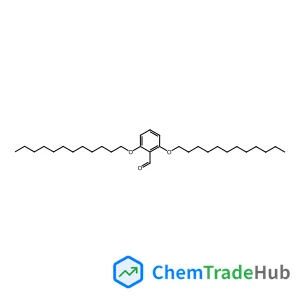

(11alpha,13E)-11-Hydroxy-9,15-dioxoprost-13-en-1-oic acid
CAS Number:
22973-19-9
Molecular Formula:
C20H32O5
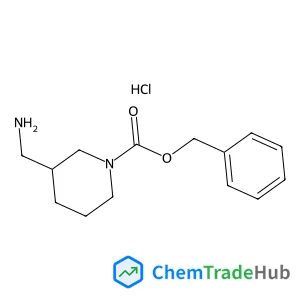
Benzyl 3-(aminomethyl)piperidine-1-carboxylate hydrochloride
CAS Number:
1186663-23-9
Molecular Formula:
C14H21ClN2O2
Recommended Suppliers





Disclaimer
This page provides academic journal information for reference and research purposes only. We are not affiliated with any journal publishers and do not handle publication submissions. For publication-related inquiries, please contact the respective journal publishers directly.
If you notice any inaccuracies in the information displayed, please contact us at support@chemtradehub.com. We will promptly review and address your concerns.