












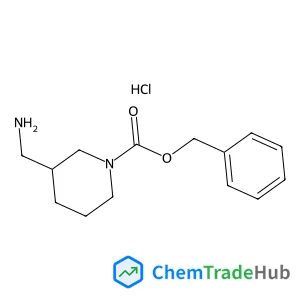
Benzyl 3-(aminomethyl)piperidine-1-carboxylate hydrochloride
CAS Number:
1186663-23-9
Molecular Formula:
C14H21ClN2O2
G. Saleh
The application of high pressure (hundreds of gigapascals) to materials, besides modifying their properties, changes dramatically their reactivity. Consequently, new compounds are formed, which violate the chemical paradigms known to date. In fact, it was recently discovered (Zhang et al., Science, 2013) that sodium subchlorides (NaxCl, x > 1) become stable at high pressure. In this work, we carry out a thorough study of these compounds as well as of other alkali subhalides by means of evolutionary crystal structure prediction calculations combined with an in-depth analysis of their crystal and electronic structures. The results of our investigation are threefold. We present an updated phase diagram of NaxCl, including one new compound (Na4Cl3) and two previously undiscovered phases of Na3Cl. We demonstrate the appearance of remarkable features in the electronic structure of sodium subchlorides, such as chlorine atoms acquiring a −2 oxidation state. Most importantly, we derive a model which enables one to rationalize the stability of alkali subhalides at high pressure. The predictive ability of our model was validated by the results of crystal structure prediction calculations we carried out on alkali subhalides A3Y (A = Li, Na, K; Y = F, Cl, Br). Moreover, we show how the stability of recently reported high-pressure compounds can be rationalized on the basis of the insights gained in the present study.
Jenny K. Ekegren, Peter Roth, Klas Källström, Tibor Tarnai, Pher G. Andersson
DOI: 10.1039/B208907F
Ting Wang, Yong Jiang, Yanyan Wang, Rulong Yan
DOI: 10.1039/C8OB01184B
Xiaochen Tian, Yongxing Zhang
DOI: 10.1039/D1QO01605A
Masayuki Fujinaga, Katsushi Kumata, Yiding Zhang, Akiko Hatori, Tomoteru Yamasaki, Wakana Mori, Lin Xie, Ming-Rong Zhang
DOI: 10.1039/C8OB01700J
Derek Johnston, Emmanuel Couché, David J. Edmonds, Kenneth W. Muir, David J. Procter
DOI: 10.1039/B209066J
Hien The Ho, Alexandre Bénard, Gwenaël Forcher, Maël Le Bohec, Véronique Montembault, Sagrario Pascual, Laurent Fontaine
DOI: 10.1039/C8OB01807C
Cong Lin, Sai Chen, Yihua Wang, Fei Gao, Liang Shen
DOI: 10.1039/D1QO01579F
Carsten Bolm, Li Xiao, Martin Kesselgruber
DOI: 10.1039/B208345K
6-(3-Fluorophenyl)picolinic acid is generally considered safe for laboratory use...
(3R)-3-Pyrrolidinol is used in the pharmaceutical industry as a precursor for dr...
When handling (4R,5R)-4,5-Diethoxycarbonyl-2,2-dimethyldioxolane (CAS: 59779-75-...
1-(6-Chloroimidazo[1,2-b]pyridazin-3-yl)ethanone is often synthesized via a mult...
The market for N-Ethyl-3,4-dimethylbenzylamine (CAS: 39180-83-1) remains steady,...
Tert-butyl 3-(pyrrolidin-1-yl)azetidine-1-carboxylate is a chemical compound wit...
1-Bromo-3-chloro-2,4-dimethoxybenzene (CAS: 1228956-93-1) falls under the classi...
The safety of 8-Bromo-2-methyl-3,4-dihydroisoquinolin-1(2H)-one (CAS: 1368622-07...
Benzyl [(3S)-2,6-dioxo-3-piperidinyl]carbamate is generally safe when handled wi...
1-{[4-(4,4,5,5-Tetramethyl-1,3,2-dioxaborolan-2-yl)phenyl]sulfonyl}pyrrolidine s...

Physical Chemistry Chemical Physics (PCCP) is an international journal co-owned by 19 physical chemistry and physics societies from around the world. This journal publishes original, cutting-edge research in physical chemistry, chemical physics and biophysical chemistry. To be suitable for publication in PCCP, articles must include significant innovation and/or insight into physical chemistry; this is the most important criterion that reviewers and Editors will judge against when evaluating submissions. The journal has a broad scope and welcomes contributions spanning experiment, theory, computation and data science. Topical coverage includes spectroscopy, dynamics, kinetics, statistical mechanics, thermodynamics, electrochemistry, catalysis, surface science, quantum mechanics, quantum computing and machine learning. Interdisciplinary research areas such as polymers and soft matter, materials, nanoscience, energy, surfaces/interfaces, and biophysical chemistry are welcomed if they demonstrate significant innovation and/or insight into physical chemistry. Joined experimental/theoretical studies are particularly appreciated when complementary and based on up-to-date approaches.
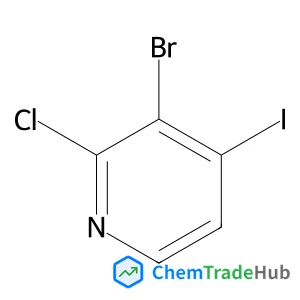
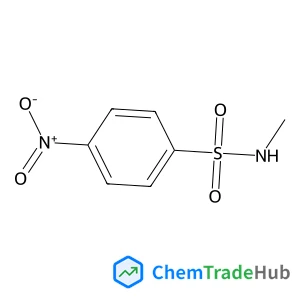
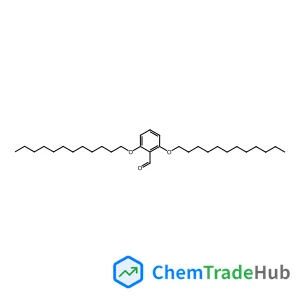
![(2E)-4-[(1R,2S,8R,19S,21R)-14-Hydroxy-11-isopropenyl-8,23,23-trimethyl-5-(3-methyl-2-buten-1-yl)-16,20-dioxo-3,7,22-trioxaheptacyclo[17.4.1.1~8,12~.0~2,17~.0~2,21~.0~4,15~.0~6,13~]pentacosa-4(15),5,13
,17-tetraen-21-yl]-2-methyl-2-butenoic acid structure](https://static.chemtradehub.com/structs/173/173867-04-4-d2d3.webp "(2E)-4-[(1R,2S,8R,19S,21R)-14-Hydroxy-11-isopropenyl-8,23,23-trimethyl-5-(3-methyl-2-buten-1-yl)-16,20-dioxo-3,7,22-trioxaheptacyclo[17.4.1.1~8,12~.0~2,17~.0~2,21~.0~4,15~.0~6,13~]pentacosa-4(15),5,13
,17-tetraen-21-yl]-2-methyl-2-butenoic acid structure")





