












Conformer interconversion in a switchable porous organic cage
Literature Information
Publication Date
2011-10-14
DOI
10.1039/C1CP22527H
Impact Factor
3.676
Authors
Kim E. Jelfs, Florian Schiffmann, James T. A. Jones, Ben Slater, Furio Cora, Andrew I. Cooper
View Original
Abstract
Porous organic cage crystals can show unique properties, such as switching from being porous to non-porous in the solid state. Conformer interconversion plays a crucial role in this for the imine cage molecule, CC1. The barriers to interconversion were calculated and found to match experimentally determined values. Calculations suggest that solvent interactions reduce these activation barriers.
Recommended Journals
Related Literature
Iridium-catalyzed arylation of sulfoxonium ylides and arylboronic acids: a straightforward preparation of α-aryl ketones
Zi-Xuan Shen, Tong Che, Mei Zhong, Jia-Lin Song, Hua-Jie Kang, Hui Xie
2020-05-27
Research Article
DOI: 10.1039/D0QO00543F
Direct synthesis of 2,4,5-trisubstituted imidazoles from primary alcohols by diruthenium(ii) catalysts under aerobic conditions
Saranya Sundar, Ramesh Rengan
2019-01-09
Paper
DOI: 10.1039/C8OB02785D
A metal-free aromatic cascade for the synthesis of diverse heterocycles
Steven C. Schlitzer, Dhanarajan Arunprasath, Katelyn G. Stevens, Indrajeet Sharma
2020-01-02
Research Article
DOI: 10.1039/C9QO01336A
Radical SAM-dependent adenosylation catalyzed by l-tyrosine lyases
Yujie Wu, Runze Wu, Dhanaraju Mandalapu, Xinjian Ji, Tuo Chen, Wei Ding, Qi Zhang
2018-12-06
Communication
DOI: 10.1039/C8OB02906G
Copper-catalyzed trifluoromethylthiolation-peroxidation of alkenes and allenes
Yuanjin Chen, Yangyang Ma, Liangkui Li, Mingshuo Cui, Zhiping Li
2020-06-02
Research Article
DOI: 10.1039/D0QO00533A
Synthesis and biological activity of dehydrophos derivatives
M. Mercedes Jiménez-Andreu, Francisco J. Sayago, Carlos Cativiela
2019-01-02
Paper
DOI: 10.1039/C8OB03079K
Efficiently diastereoselective synthesis of functionalized hydro-carbazoles by base-mediated tandem annulation of 1-(2-amino-aryl)prop-2-en-1-ones and sulfur ylide
Chengyuan Wang, Jiong Zhang, Zheyuan Wang, Xin-Ping Hui
2020-05-11
Research Article
DOI: 10.1039/D0QO00423E
Expeditious access of chromone analogues via a Michael addition-driven multicomponent reaction
Liu-Jun He, Ya-Fei Luo, Dian-Yong Tang, Wei Yan, Hui-Kuan Lin, Hong-yu Li, Zhong-Zhu Chen, Zhi-Gang Xu
2020-03-06
Research Article
DOI: 10.1039/D0QO00145G
Recent developments in palladium-catalyzed C–S bond formation
Jianxiao Li, Shaorong Yang, Wanqing Wu, Huanfeng Jiang
2020-04-22
Review Article
DOI: 10.1039/D0QO00377H
You might also like
Compound Q&A
What industries use (1R,3S)-1,3-Cyclopentanediol (CAS: 16326-97-9)?
(1R,3S)-1,3-Cyclopentanediol finds applications in various industries. In the ph...
16326-97-9(1R,3S)-1,3-Cyclopen...
Compound Q&A
What precautions should be taken when handling N'-[4-(Dimethylamino)phenyl]-N,N-dimethyl-1,4-benzenediamine (CAS: 637-31-0)?
When handling N'-[4-(Dimethylamino)phenyl]-N,N-dimethyl-1,4-benzenediamine, it i...
637-31-0N'-[4-(Dimethylamino...
Compound Q&A
Are there alternatives to 5-(2,4-Difluorophenyl)-2-methoxypyrimidine (CAS: 1352318-16-1) in synthesis?
There are several alternatives to 5-(2,4-Difluorophenyl)-2-methoxypyrimidine in ...
1352318-16-15-(2,4-Difluoropheny...
Compound Q&A
What regulatory guidelines apply to 1-(3-Methoxyphenoxy)propan-2-ol (CAS: 382141-68-6)?
1-(3-Methoxyphenoxy)propan-2-ol (CAS: 382141-68-6) must comply with the Globally...
382141-68-61-(3-Methoxyphenoxy)...
Compound Q&A
Is Tetrodotoxin Citrate (CAS: 18660-81-6) safe?
Tetrodotoxin Citrate is extremely dangerous and should be handled with extreme c...
18660-81-6Tetrodotoxin Citrate
Compound Q&A
What are the main uses of 2-Methyl-2-propanyl [(1R,3S)-3-hydroxycyclopentyl]carbamate (CAS: 225641-84-9)?
2-Methyl-2-propanyl [(1R,3S)-3-hydroxycyclopentyl]carbamate (CAS: 225641-84-9) i...
225641-84-92-Methyl-2-propanyl ...
Compound Q&A
How should waste containing 4-(2-Hydroxyhexafluoroisopropyl)Benzoic Acid (CAS: 16261-80-6) be handled?
Waste containing 4-(2-Hydroxyhexafluoroisopropyl)Benzoic Acid (CAS: 16261-80-6) ...
16261-80-64-(2-Hydroxyhexafluo...
Compound Q&A
How is 2-Methyl-2-proanyl {(2S)-1-[(benzyloxy)amino]-3-hydroxy-3-methyl-1-oxo-2-butanyl}carbamate (CAS: 102507-19-7) typically synthesized?
2-Methyl-2-proanyl {(2S)-1-[(benzyloxy)amino]-3-hydroxy-3-methyl-1-oxo-2-butanyl...
102507-19-72-Methyl-2-propanyl ...
Compound Q&A
What is Benzeneethanamine, α-ethyl-, hydrochloride (1:1) (CAS: 20735-15-3)?
Benzeneethanamine, α-ethyl-, hydrochloride (1:1) is an organic compound with the...
20735-15-3Benzeneethanamine, α...
Compound Q&A
Are there alternatives to 3-{(E)-[4-(Dimethylamino)phenyl]diazenyl}benzoic acid (CAS: 20691-84-3) in synthesis?
In the synthesis of compounds similar to 3-{(E)-[4-(Dimethylamino)phenyl]diazeny...
20691-84-33-{(E)-[4-(Dimethyla...
Source Journal
Physical Chemistry Chemical Physics

CiteScore:
5.5
Self-citation Rate:
10.3%
Articles per Year:
3036
Physical Chemistry Chemical Physics (PCCP) is an international journal co-owned by 19 physical chemistry and physics societies from around the world. This journal publishes original, cutting-edge research in physical chemistry, chemical physics and biophysical chemistry. To be suitable for publication in PCCP, articles must include significant innovation and/or insight into physical chemistry; this is the most important criterion that reviewers and Editors will judge against when evaluating submissions. The journal has a broad scope and welcomes contributions spanning experiment, theory, computation and data science. Topical coverage includes spectroscopy, dynamics, kinetics, statistical mechanics, thermodynamics, electrochemistry, catalysis, surface science, quantum mechanics, quantum computing and machine learning. Interdisciplinary research areas such as polymers and soft matter, materials, nanoscience, energy, surfaces/interfaces, and biophysical chemistry are welcomed if they demonstrate significant innovation and/or insight into physical chemistry. Joined experimental/theoretical studies are particularly appreciated when complementary and based on up-to-date approaches.
Recommended Compounds
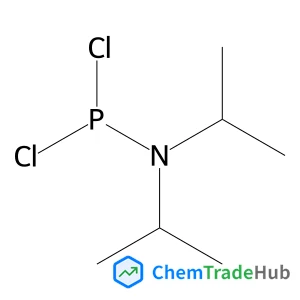
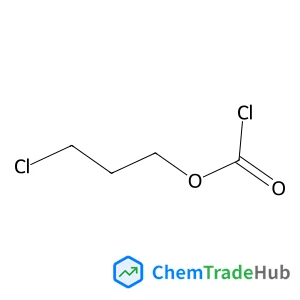

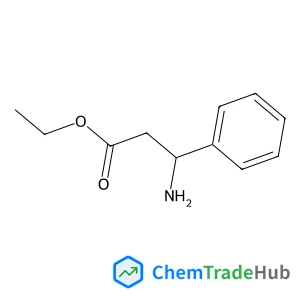
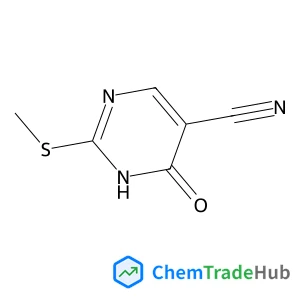
Recommended Suppliers





Disclaimer
This page provides academic journal information for reference and research purposes only. We are not affiliated with any journal publishers and do not handle publication submissions. For publication-related inquiries, please contact the respective journal publishers directly.
If you notice any inaccuracies in the information displayed, please contact us at support@chemtradehub.com. We will promptly review and address your concerns.