












Acroleinhydrogenation on Pt(211) and Au(211) surfaces: a density functional theory study
Literature Information
Publication Date
2011-10-31
DOI
10.1039/C1CP22512J
Impact Factor
3.676
Authors
Bo Yang, Dong Wang, Xue-Qing Gong
View Original
Abstract
Partial hydrogenation of acrolein, the simplest α,β-unsaturated aldehyde, is not only a model system to understand the selectivity in heterogeneous catalysis, but also technologically an important reaction. In this work, the reaction on Pt(211) and Au(211) surfaces is thoroughly investigated using density functional theory calculations. The formation routes of three partial hydrogenation products, namely propenol, propanal and enol, on both metals are studied. It is found that the pathway to produce enol is kinetically favoured on Pt while on Au the route of forming propenol is preferred. Our calculations also show that the propanal formation follows an indirect pathway on Pt(211). An energy decomposition method to analyze the barrier is utilized to understand the selectivities at Pt(211) and Au(211), which reveals that the interaction energies between the reactants involved in the transition states play a key role in determining the selectivity difference.
Recommended Journals
Related Literature
Regioselective synthesis and biological evaluation of N-substituted 2-aminoquinazolin-4-ones
Zhen-Yuan Liao, Wen-Hsiung Yeh, Pen-Yuan Liao, Yu-Ting Liu, Ying-Cheng Chen, Yi-Hung Chen, Tsung-Han Hsieh, Chia-Chi Lin, Ming-Hsuan Lu, Yi-Song Chen, Ming-Chih Hsu, Tsai-Kun Li, Tun-Cheng Chien
2018-04-27
Paper
DOI: 10.1039/C8OB00624E
Figure-eight arylene ethynylene macrocycles: facile synthesis and specific binding behavior toward Hg2+
Hui Nie, Qian-Hui Li, Siqi Zhang, Chuan-Ming Wang, Wen-Hui Lin, Ke Deng, Li-Jin Shu, Qing-Dao Zeng, Jun-Hua Wan
2021-09-29
Research Article
DOI: 10.1039/D1QO00812A
Regioselective ortho-functionalization of bromofluorenecarbaldehydes using TMPMgCl·LiCl
Dominik Göbel, Nils Clamor, Boris J. Nachtsheim
2018-05-15
Communication
DOI: 10.1039/C8OB01072B
Cascade double isocyanide insertion and C–N coupling of 2-iodo-2′-isocyano-1,1′-biphenyls
2018-05-02
Communication
DOI: 10.1039/C8OB00956B
O-Phenylenediamine: a privileged pharmacophore of ferrostatins for radical-trapping reactivity in blocking ferroptosis
Xie-Huang Sheng, Cheng-Cheng Cui, Chao Shan, Yu-Zhen Li, Duo-Hong Sheng, Bin Sun, De-Zhan Chen
2018-05-03
Paper
DOI: 10.1039/C8OB00546J
Preparation of π-extended fullerene derivatives through addition of phenylenediamine to open-cage fullerene derivatives
Zeyu Liu, Zhen Liu, Rui Gao, Jie Su, Yi Qiu, Liangbing Gan
2021-11-18
Research Article
DOI: 10.1039/D1QO01593A
A transition-metal-free, base-promoted annulation/ring-cleavage/ring-reconstruction cascade reaction: a facile access to N-protection free indole-indenones
Na Luo, Zhen-Wei Sun, Xing-Xin Xu, Xiao-Qiang Hu, Feng-Cheng Jia
2021-10-05
Research Article
DOI: 10.1039/D1QO01280K
Facile synthesis of 2,3-benzodiazepines using one-pot two-step phosphate-assisted acylation–hydrazine cyclization reactions
Akinari Sumita, Yuko Otani, Tomohiko Ohwada
2018-05-09
Paper
DOI: 10.1039/C8OB00708J
Caged cyclopropenes for controlling bioorthogonal reactivity
Pratik Kumar, Ting Jiang, Sining Li, Omar Zainul, Scott T. Laughlin
2018-05-16
Communication
DOI: 10.1039/C8OB01076E
You might also like
Compound Q&A
What industries use (1R,3S)-1,3-Cyclopentanediol (CAS: 16326-97-9)?
(1R,3S)-1,3-Cyclopentanediol finds applications in various industries. In the ph...
16326-97-9(1R,3S)-1,3-Cyclopen...
Compound Q&A
What precautions should be taken when handling N'-[4-(Dimethylamino)phenyl]-N,N-dimethyl-1,4-benzenediamine (CAS: 637-31-0)?
When handling N'-[4-(Dimethylamino)phenyl]-N,N-dimethyl-1,4-benzenediamine, it i...
637-31-0N'-[4-(Dimethylamino...
Compound Q&A
Are there alternatives to 5-(2,4-Difluorophenyl)-2-methoxypyrimidine (CAS: 1352318-16-1) in synthesis?
There are several alternatives to 5-(2,4-Difluorophenyl)-2-methoxypyrimidine in ...
1352318-16-15-(2,4-Difluoropheny...
Compound Q&A
What regulatory guidelines apply to 1-(3-Methoxyphenoxy)propan-2-ol (CAS: 382141-68-6)?
1-(3-Methoxyphenoxy)propan-2-ol (CAS: 382141-68-6) must comply with the Globally...
382141-68-61-(3-Methoxyphenoxy)...
Compound Q&A
Is Tetrodotoxin Citrate (CAS: 18660-81-6) safe?
Tetrodotoxin Citrate is extremely dangerous and should be handled with extreme c...
18660-81-6Tetrodotoxin Citrate
Compound Q&A
What are the main uses of 2-Methyl-2-propanyl [(1R,3S)-3-hydroxycyclopentyl]carbamate (CAS: 225641-84-9)?
2-Methyl-2-propanyl [(1R,3S)-3-hydroxycyclopentyl]carbamate (CAS: 225641-84-9) i...
225641-84-92-Methyl-2-propanyl ...
Compound Q&A
How should waste containing 4-(2-Hydroxyhexafluoroisopropyl)Benzoic Acid (CAS: 16261-80-6) be handled?
Waste containing 4-(2-Hydroxyhexafluoroisopropyl)Benzoic Acid (CAS: 16261-80-6) ...
16261-80-64-(2-Hydroxyhexafluo...
Compound Q&A
How is 2-Methyl-2-proanyl {(2S)-1-[(benzyloxy)amino]-3-hydroxy-3-methyl-1-oxo-2-butanyl}carbamate (CAS: 102507-19-7) typically synthesized?
2-Methyl-2-proanyl {(2S)-1-[(benzyloxy)amino]-3-hydroxy-3-methyl-1-oxo-2-butanyl...
102507-19-72-Methyl-2-propanyl ...
Compound Q&A
What is Benzeneethanamine, α-ethyl-, hydrochloride (1:1) (CAS: 20735-15-3)?
Benzeneethanamine, α-ethyl-, hydrochloride (1:1) is an organic compound with the...
20735-15-3Benzeneethanamine, α...
Compound Q&A
Are there alternatives to 3-{(E)-[4-(Dimethylamino)phenyl]diazenyl}benzoic acid (CAS: 20691-84-3) in synthesis?
In the synthesis of compounds similar to 3-{(E)-[4-(Dimethylamino)phenyl]diazeny...
20691-84-33-{(E)-[4-(Dimethyla...
Source Journal
Physical Chemistry Chemical Physics

CiteScore:
5.5
Self-citation Rate:
10.3%
Articles per Year:
3036
Physical Chemistry Chemical Physics (PCCP) is an international journal co-owned by 19 physical chemistry and physics societies from around the world. This journal publishes original, cutting-edge research in physical chemistry, chemical physics and biophysical chemistry. To be suitable for publication in PCCP, articles must include significant innovation and/or insight into physical chemistry; this is the most important criterion that reviewers and Editors will judge against when evaluating submissions. The journal has a broad scope and welcomes contributions spanning experiment, theory, computation and data science. Topical coverage includes spectroscopy, dynamics, kinetics, statistical mechanics, thermodynamics, electrochemistry, catalysis, surface science, quantum mechanics, quantum computing and machine learning. Interdisciplinary research areas such as polymers and soft matter, materials, nanoscience, energy, surfaces/interfaces, and biophysical chemistry are welcomed if they demonstrate significant innovation and/or insight into physical chemistry. Joined experimental/theoretical studies are particularly appreciated when complementary and based on up-to-date approaches.
Recommended Compounds
![N,N'-1,2-Ethanediylbis[2-(vinylsulfonyl)acetamide] structure](https://static.chemtradehub.com/structs/667/66710-66-5-b556.webp "N,N'-1,2-Ethanediylbis[2-(vinylsulfonyl)acetamide] structure")
N,N'-1,2-Ethanediylbis[2-(vinylsulfonyl)acetamide]
CAS Number:
66710-66-5
Molecular Formula:
C10H16N2O6S2
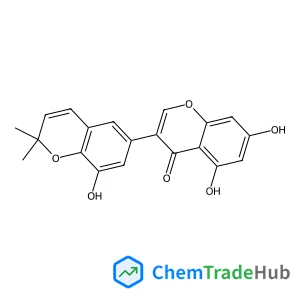
5,7,8'-Trihydroxy-2',2'-dimethyl-2'H,4H-3,6'-bichromen-4-one
CAS Number:
129280-33-7
Molecular Formula:
C20H16O6

Recommended Suppliers




Disclaimer
This page provides academic journal information for reference and research purposes only. We are not affiliated with any journal publishers and do not handle publication submissions. For publication-related inquiries, please contact the respective journal publishers directly.
If you notice any inaccuracies in the information displayed, please contact us at support@chemtradehub.com. We will promptly review and address your concerns.