


Caged cyclopropenes for controlling bioorthogonal reactivity
Literature Information
Publication Date
2018-05-16
DOI
10.1039/C8OB01076E
Impact Factor
3.876
Authors
Pratik Kumar, Ting Jiang, Sining Li, Omar Zainul, Scott T. Laughlin
View Original
Abstract
Bioorthogonal ligations have been designed and optimized to provide new experimental avenues for understanding biological systems. Generally, these optimizations have focused on improving reaction rates and orthogonality to both biology and other members of the bioorthogonal reaction repertoire. Less well explored are reactions that permit control of bioorthogonal reactivity in space and time. Here we describe a strategy that enables modular control of the cyclopropene-tetrazine ligation. We developed 3-N-substituted spirocyclopropenes that are designed to be unreactive towards 1,2,4,5-tetrazines when bulky N-protecting groups sterically prohibit the tetrazine's approach, and reactive once the groups are removed. We describe the synthesis of 3-N spirocyclopropenes with an appended electron withdrawing group to promote stability. Modification of the cyclopropene 3-N with a bulky, light-cleavable caging group was effective at stifling its reaction with tetrazine, and the caged cyclopropene was resistant to reaction with biological nucleophiles. As expected, upon removal of the light-labile group, the 3-N cyclopropene reacted with tetrazine to form the expected ligation product both in solution and on a tetrazine-modified protein. This reactivity caging strategy leverages the popular carbamate protecting group linkage, enabling the use of diverse caging groups to tailor the reaction's activation modality for specific applications.
Recommended Journals

Cellulose

Atomization and Sprays

Bioorganic & Medicinal Chemistry Letters

Journal of Asian Natural Products Research

Medicinal Chemistry Research

Acta Metallurgica Sinica-English Letters

Biocatalysis and Biotransformation

Chinese Journal of Chemistry

Journal of the Indian Institute of Science

Topics in Catalysis
Related Literature
Discovery of new polycyclic polyprenylated acylphloroglucinols with diverse architectures as potent cyclooxygenase-2 inhibitors
Shuangshuang Xie, Changxing Qi, Yulin Duan, Qianqian Xu, Yaping Liu, Yingying Huang, Xu Yin, Weiguang Sun, Yuan Zhou, Yonghui Zhang
2020-04-16
Research Article
DOI: 10.1039/D0QO00259C
A metal-free visible-light-promoted phosphorylation/cyclization reaction in water towards 3-phosphorylated benzothiophenes
Xiao-Ya Yuan, Fan-Lin Zeng, Hu-Lin Zhu, Qi-Yan Lv, Xiao-Lan Chen, Lifen Peng, Bing Yu
2020-06-17
Research Article
DOI: 10.1039/D0QO00222D
Rapid construction of the ABD tricyclic skeleton in meliacarpinin B from carvone enabled by an INOC strategy
Changming Dong, Tianjiao Qiao, Yi Xie, Xiao Zhang, Junli Ao, Guangxin Liang
2020-06-17
Research Article
DOI: 10.1039/D0QO00576B
A fluorogenic C4N4 probe for azide-based labelling
Hidetoshi Noda, Yasuko Asada, Masakatsu Shibasaki, Naoya Kumagai
2018-12-11
Communication
DOI: 10.1039/C8OB02695E
Recent developments in palladium-catalyzed C–S bond formation
Jianxiao Li, Shaorong Yang, Wanqing Wu, Huanfeng Jiang
2020-04-22
Review Article
DOI: 10.1039/D0QO00377H
Synthesis of naphtho[1′,2′:4,5]imidazo[1,2-a]pyridines via Rh(iii)-catalyzed C–H functionalization of 2-arylimidazo[1,2-a]pyridines with cyclic 2-diazo-1,3-diketones featuring with a ring opening and reannulation
Bin Li, Nana Shen, Yujie Yang, Xinying Zhang, Xuesen Fan
2020-02-26
Research Article
DOI: 10.1039/D0QO00073F
Direct synthesis of 2,4,5-trisubstituted imidazoles from primary alcohols by diruthenium(ii) catalysts under aerobic conditions
Saranya Sundar, Ramesh Rengan
2019-01-09
Paper
DOI: 10.1039/C8OB02785D
Oxidative N-heterocyclic carbene-catalyzed [3 + 3] annulation reaction of enals with benzofuran-3-ones: efficient access to benzofuran-fused δ-lactones
Zhan-Yong Wang, Ting Yang, Kai-Kai Wang, Rongxiang Chen, Menghan Liu
2020-03-17
Research Article
DOI: 10.1039/D0QO00161A
Hydroaminoalkylation of sterically hindered alkenes with N,N-dimethyl anilines using a scandium catalyst
Jianhong Su, Yiqun Zhou, Xin Xu
2018-12-10
Paper
DOI: 10.1039/C8OB02657B
Tandem synthesis of 4-aminoxanthones is controlled by a water-assisted tautomerization: a general straightforward reaction
Ana Bornadiego, Jesús Díaz, Carlos F. Marcos
2019-01-17
Paper
DOI: 10.1039/C8OB02527D
You might also like
Compound Q&A
What industries use (1R,3S)-1,3-Cyclopentanediol (CAS: 16326-97-9)?
(1R,3S)-1,3-Cyclopentanediol finds applications in various industries. In the ph...
16326-97-9(1R,3S)-1,3-Cyclopen...
Compound Q&A
What precautions should be taken when handling N'-[4-(Dimethylamino)phenyl]-N,N-dimethyl-1,4-benzenediamine (CAS: 637-31-0)?
When handling N'-[4-(Dimethylamino)phenyl]-N,N-dimethyl-1,4-benzenediamine, it i...
637-31-0N'-[4-(Dimethylamino...
Compound Q&A
Are there alternatives to 5-(2,4-Difluorophenyl)-2-methoxypyrimidine (CAS: 1352318-16-1) in synthesis?
There are several alternatives to 5-(2,4-Difluorophenyl)-2-methoxypyrimidine in ...
1352318-16-15-(2,4-Difluoropheny...
Compound Q&A
What regulatory guidelines apply to 1-(3-Methoxyphenoxy)propan-2-ol (CAS: 382141-68-6)?
1-(3-Methoxyphenoxy)propan-2-ol (CAS: 382141-68-6) must comply with the Globally...
382141-68-61-(3-Methoxyphenoxy)...
Compound Q&A
Is Tetrodotoxin Citrate (CAS: 18660-81-6) safe?
Tetrodotoxin Citrate is extremely dangerous and should be handled with extreme c...
18660-81-6Tetrodotoxin Citrate
Compound Q&A
What are the main uses of 2-Methyl-2-propanyl [(1R,3S)-3-hydroxycyclopentyl]carbamate (CAS: 225641-84-9)?
2-Methyl-2-propanyl [(1R,3S)-3-hydroxycyclopentyl]carbamate (CAS: 225641-84-9) i...
225641-84-92-Methyl-2-propanyl ...
Compound Q&A
How should waste containing 4-(2-Hydroxyhexafluoroisopropyl)Benzoic Acid (CAS: 16261-80-6) be handled?
Waste containing 4-(2-Hydroxyhexafluoroisopropyl)Benzoic Acid (CAS: 16261-80-6) ...
16261-80-64-(2-Hydroxyhexafluo...
Compound Q&A
How is 2-Methyl-2-proanyl {(2S)-1-[(benzyloxy)amino]-3-hydroxy-3-methyl-1-oxo-2-butanyl}carbamate (CAS: 102507-19-7) typically synthesized?
2-Methyl-2-proanyl {(2S)-1-[(benzyloxy)amino]-3-hydroxy-3-methyl-1-oxo-2-butanyl...
102507-19-72-Methyl-2-propanyl ...
Compound Q&A
What is Benzeneethanamine, α-ethyl-, hydrochloride (1:1) (CAS: 20735-15-3)?
Benzeneethanamine, α-ethyl-, hydrochloride (1:1) is an organic compound with the...
20735-15-3Benzeneethanamine, α...
Compound Q&A
Are there alternatives to 3-{(E)-[4-(Dimethylamino)phenyl]diazenyl}benzoic acid (CAS: 20691-84-3) in synthesis?
In the synthesis of compounds similar to 3-{(E)-[4-(Dimethylamino)phenyl]diazeny...
20691-84-33-{(E)-[4-(Dimethyla...
Source Journal
Organic & Biomolecular Chemistry

CiteScore:
3.4
Self-citation Rate:
10.3%
Articles per Year:
1041
Organic & Biomolecular Chemistry (OBC) publishes original and high impact research and reviews in organic chemistry. We welcome research that shows new or significantly improved protocols or methodologies in total synthesis, synthetic methodology or physical and theoretical organic chemistry as well as research that shows a significant advance in the organic chemistry or molecular design aspects of chemical biology, catalysis, supramolecular and macromolecular chemistry, theoretical chemistry, mechanism-oriented physical organic chemistry, medicinal chemistry or natural products. Articles published in the journal should report new work which makes a highly-significant impact in the field. Routine and incremental work is generally not suitable for publication in the journal. More details about key areas of our scope are below. In all cases authors should include in their article clear rationale for why their research has been carried out.
Recommended Compounds
![Ethyl 3-((6-(4,5-dihydro-1H-benzo[d]azepin-3(2H)-yl)-2-(pyridin-2-yl)pyrimidin-4-yl)amino)propanoate structure](https://static.chemtradehub.com/structs/137/1373423-53-0-496a.webp "Ethyl 3-((6-(4,5-dihydro-1H-benzo[d]azepin-3(2H)-yl)-2-(pyridin-2-yl)pyrimidin-4-yl)amino)propanoate structure")
Ethyl 3-((6-(4,5-dihydro-1H-benzo[d]azepin-3(2H)-yl)-2-(pyridin-2-yl)pyrimidin-4-yl)amino)propanoate
CAS Number:
1373423-53-0
Molecular Formula:
C24H27N5O2
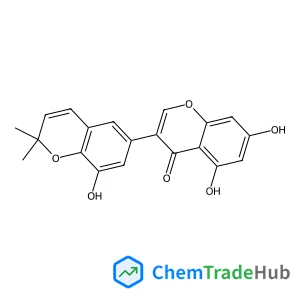
5,7,8'-Trihydroxy-2',2'-dimethyl-2'H,4H-3,6'-bichromen-4-one
CAS Number:
129280-33-7
Molecular Formula:
C20H16O6
Recommended Suppliers





Disclaimer
This page provides academic journal information for reference and research purposes only. We are not affiliated with any journal publishers and do not handle publication submissions. For publication-related inquiries, please contact the respective journal publishers directly.
If you notice any inaccuracies in the information displayed, please contact us at support@chemtradehub.com. We will promptly review and address your concerns.