













Aromaticity in all-metal annular systems: the counter-ion effect
Literature Information
Publication Date
2011-07-26
DOI
10.1039/C1CP21430F
Impact Factor
3.676
Authors
Arindam Chakraborty, Santanab Giri, Soma Duley, Anakuthil Anoop, Patrick Bultinck, Pratim K. Chattaraj
View Original
Abstract
The effect of counterions on the bonding, stability and aromaticity of trigonal dianion metal clusters has been analyzed through the behavior of various conceptual density functional theory based reactivity descriptors and the nucleus independent chemical shift calculated at different levels of theory, comprising one-determinant approaches and beyond (QCISD, CASSCF(8,8) and NEVPT2), for a proper benchmarking. Although several important insights into the counter-ion effects are obtained, much needs to be done in order to have a transparent idea therein.
Recommended Journals
Related Literature
Small molecule-mediated induction of endoplasmic reticulum stress in cancer cells
Virender Kumar Sharma, Ankur Biswas, Mayurika Lahiri, Sudipta Basu
2021-07-15
Research Article
DOI: 10.1039/D1MD00095K
Recent developments towards portable point-of-care diagnostic devices for pathogen detection
Shimaa Eissa, Mohammadali Safavieh, Sanaa G. Alattas, Minhaz Uddin Ahmed
2021-10-29
Critical Review
DOI: 10.1039/D1SD00017A
Synthetic hyperacetylation of nucleosomal histones
Hidetoshi Kajino, Tomomi Nagatani, Miku Oi, Atsuya Nishiyama, Makoto Nakanishi, Kenzo Yamatsugu, Shigehiro A. Kawashima, Motomu Kanai
2020-05-19
Communication
DOI: 10.1039/D0CB00029A
Antiproliferative activities of tricyclic amides derived from β-caryophyllene via the Ritter reaction against MDA-MB-231 breast cancer cells
XiXi Xu, Ariane Roseblade, Tristan Rawling, Alison T. Ung
2019-12-18
Research Article
DOI: 10.1039/C9MD00237E
Functionalized resorcinarenes effectively disrupt the aggregation of αA66-80 crystallin peptide related to cataracts
Kwaku Twum, Avik Bhattacharjee, Erving T. Laryea, Josephine Esposto, George Omolloh, Shaelyn Mortensen, Maya Jaradi, Naomi L. Stock, Bianca Elias, Elan Pszenica, Theresa M. McCormick, Ngong Kodiah Beyeh
2021-11-01
Research Article
DOI: 10.1039/D1MD00294E
ItaCORMs: conjugation with a CO-releasing unit greatly enhances the anti-inflammatory activity of itaconates
Bernhard M. Krause, Britta Bauer, Jörg-Martin Neudörfl, Hans-Günther Schmalz
2021-10-15
Research Article
DOI: 10.1039/D1MD00163A
Insights into the modular design of kinase inhibitors and application to Abl and Axl
Sameer Phadke, Lluis Lopez-Barcons, Nathalie Vandecan, Zhifen Wu, Taylor K. Johnson, Eric J. Lachacz, Sofia D. Merajver, Matthew B. Soellner
2021-11-05
Research Article
DOI: 10.1039/D1MD00296A
4-Nitrophenyl activated esters are superior synthons for indirect radiofluorination of biomolecules
Peter D. Roselt
2020-07-07
Research Article
DOI: 10.1039/D0MD00140F
Computer-aided discovery of phenylpyrazole based amides as potent S6K1 inhibitors
Yan Yin, Yuxing Sun, Lianhua Zhao, Jinpeng Pan
2020-04-30
Research Article
DOI: 10.1039/C9MD00537D
Exploring the chemical space of 1,2,3-triazolyl triclosan analogs for discovery of new antileishmanial chemotherapeutic agents
Julia Fernández de Luco, Alejandro I. Recio-Balsells, Diego G. Ghiano, Ana Bortolotti, Juán Manuel Belardinelli, Nina Liu, Pascal Hoffmann, Christian Lherbet, Peter J. Tonge, Babu Tekwani
2020-11-05
Research Article
DOI: 10.1039/D0MD00291G
You might also like
Compound Q&A
What are the main uses of 1-(3-Aminophenyl)-3-[(3R)-1-(3,3-dimethyl-2-oxobutyl)-2-oxo-5-(2-pyridinyl)-2,3-dihydro-1H-1,4-benzodiazepin-3-yl]urea (CAS: 155412-88-7)?
This compound is mainly used as an intermediate in the synthesis of antipsychoti...
155412-88-71-(3-Aminophenyl)-3-...
Compound Q&A
How should waste containing 1-(D-Ribofuranosyl)-1,4-dihydro-3-pyridinecarboxamide (CAS: 19132-12-8) be handled?
Waste containing 1-(D-Ribofuranosyl)-1,4-dihydro-3-pyridinecarboxamide (CAS: 191...
19132-12-81-(D-Ribofuranosyl)-...
Compound Q&A
What regulatory guidelines apply to 2-Methyl-2-propanyl 3-bromo-3-(hydroxymethyl)-1-azetidinecarboxylate (CAS: 2007919-81-3)?
2-Methyl-2-propanyl 3-bromo-3-(hydroxymethyl)-1-azetidinecarboxylate (CAS: 20079...
2007919-81-32-Methyl-2-propanyl ...
Compound Q&A
What is N-(4-Chloro-2-pyridinyl)acetamide (CAS: 245056-66-0)?
N-(4-Chloro-2-pyridinyl)acetamide (CAS: 245056-66-0) is a chemical compound with...
245056-66-0N-(4-Chloro-2-pyridi...
Compound Q&A
What is 5-Chloro-2-hydroxybenzoic acid (CAS: 321-14-2)?
5-Chloro-2-hydroxybenzoic acid, also known as 5-chlorosalicylic acid, is an arom...
321-14-25-Chloro-2-hydroxybe...
Compound Q&A
What precautions should be taken when handling 1,1-Dichloro-1-fluoroethane (CAS: 1717-00-6)?
When handling 1,1-Dichloro-1-fluoroethane (CAS: 1717-00-6), it is important to u...
1717-00-61,1-Dichloro-1-fluor...
Compound Q&A
What are the physical and chemical properties of Fmoc-(2S,3R)-3-phenylpyrrolidine-2-carboxylic acid (CAS: 281655-32-1)?
Fmoc-(2S,3R)-3-phenylpyrrolidine-2-carboxylic acid is a white crystalline solid ...
281655-32-1Fmoc-(2S,3R)-3-pheny...
Compound Q&A
What are the main uses of 4-Amino-5-bromo-2-pyridinecarboxylic acid (CAS: 1363381-01-4)?
4-Amino-5-bromo-2-pyridinecarboxylic acid is primarily used as a precursor in th...
1363381-01-44-Amino-5-bromo-2-py...
Compound Q&A
What precautions should be taken when handling (S)-tert-butyl 2-((2-(4-bromophenyl)-2-oxoethyl)carbamoyl)pyrrolidine-1-carboxylate (CAS: 1007881-98-2)?
Handling this compound should be done with personal protective equipment (PPE) i...
1007881-98-2(S)-tert-butyl 2-((2...
Compound Q&A
What precautions should be taken when handling 8-bromo-2,2-dimethyl-3,4-dihydro-2H-1,4-benzoxazin-3-one (CAS: 688363-73-7)?
When handling 8-bromo-2,2-dimethyl-3,4-dihydro-2H-1,4-benzoxazin-3-one, use prop...
688363-73-78-bromo-2,2-dimethyl...
Source Journal
Physical Chemistry Chemical Physics

CiteScore:
5.5
Self-citation Rate:
10.3%
Articles per Year:
3036
Physical Chemistry Chemical Physics (PCCP) is an international journal co-owned by 19 physical chemistry and physics societies from around the world. This journal publishes original, cutting-edge research in physical chemistry, chemical physics and biophysical chemistry. To be suitable for publication in PCCP, articles must include significant innovation and/or insight into physical chemistry; this is the most important criterion that reviewers and Editors will judge against when evaluating submissions. The journal has a broad scope and welcomes contributions spanning experiment, theory, computation and data science. Topical coverage includes spectroscopy, dynamics, kinetics, statistical mechanics, thermodynamics, electrochemistry, catalysis, surface science, quantum mechanics, quantum computing and machine learning. Interdisciplinary research areas such as polymers and soft matter, materials, nanoscience, energy, surfaces/interfaces, and biophysical chemistry are welcomed if they demonstrate significant innovation and/or insight into physical chemistry. Joined experimental/theoretical studies are particularly appreciated when complementary and based on up-to-date approaches.
Recommended Compounds
![tert-Butyl N-[(2-chloropyridin-4-yl)methyl]carbamate structure](https://static.chemtradehub.com/structs/916/916210-27-0-9f95.webp "tert-Butyl N-[(2-chloropyridin-4-yl)methyl]carbamate structure")
tert-Butyl N-[(2-chloropyridin-4-yl)methyl]carbamate
CAS Number:
916210-27-0
Molecular Formula:
C11H15ClN2O2
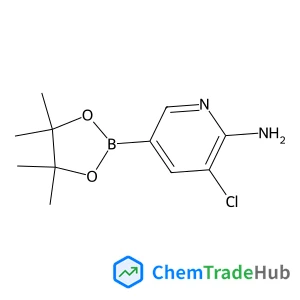
3-Chloro-5-(4,4,5,5-tetramethyl-1,3,2-dioxaborolan-2-yl)-2-pyridinamine
CAS Number:
1032758-99-8
Molecular Formula:
C11H16BClN2O2
![Pyrazolo[1,5-a]pyridine-3-carbothioamide structure](https://static.chemtradehub.com/structs/885/885275-44-5-aae0.webp "Pyrazolo[1,5-a]pyridine-3-carbothioamide structure")
Recommended Suppliers



Disclaimer
This page provides academic journal information for reference and research purposes only. We are not affiliated with any journal publishers and do not handle publication submissions. For publication-related inquiries, please contact the respective journal publishers directly.
If you notice any inaccuracies in the information displayed, please contact us at support@chemtradehub.com. We will promptly review and address your concerns.