












![2,6-Di(thiophen-2-yl)dithieno[3,2-b:2',3'-d]thiophene structure](https://static.chemtradehub.com/structs/910/910788-24-8-5b70.webp "2,6-Di(thiophen-2-yl)dithieno[3,2-b:2',3'-d]thiophene structure")
2,6-Di(thiophen-2-yl)dithieno[3,2-b:2',3'-d]thiophene
CAS Number:
910788-24-8
Molecular Formula:
C16H8S5
Julia Fernández de Luco, Alejandro I. Recio-Balsells, Diego G. Ghiano, Ana Bortolotti, Juán Manuel Belardinelli, Nina Liu, Pascal Hoffmann, Christian Lherbet, Peter J. Tonge, Babu Tekwani
Triclosan and isoniazid are known antitubercular compounds that have proven to be also active against Leishmania parasites. On these grounds, a collection of 37 diverse 1,2,3-triazoles based on the antitubercular molecules triclosan and 5-octyl-2-phenoxyphenol (8PP) were designed in search of novel structures with leishmanicidal activity and prepared using different alkynes and azides. The 37 compounds were assayed against Leishmania donovani, the etiological agent of leishmaniasis, yielding some analogs with activity at micromolar concentrations and against M. tuberculosis H37Rv resulting in scarce active compounds with an MIC of 20 μM. To study the mechanism of action of these catechols, we analyzed the inhibition activity of the library on the M. tuberculosis enoyl-ACP reductase (ENR) InhA, obtaining poor inhibition of the enzyme. The cytotoxicity against Vero cells was also tested, resulting in none of the compounds being cytotoxic at concentrations of up to 20 μM. Derivative 5f could be considered a valuable starting point for future antileishmanial drug development. The validation of a putative leishmanial InhA orthologue as a therapeutic target needs to be further investigated.
Hongxing Hao, Qing Xie, Jingwen Ai, Yuan Wang, Hongtao Bian
DOI: 10.1039/D0CP00974A
Bo Kong, Xin-You An, Ti-Xian Zeng, Jihua Zhang
DOI: 10.1039/C9CP06094D
Marina Rumyantseva, Abulkosim Nasriddinov, Alexander Gaskov, Anna Moiseeva, Yuri Fedorov, Gediminas Jonusauskas
DOI: 10.1039/C9CP07016H
Yanan Tang, Weiguang Chen, Yi Li, Renyi Li, Yaqiang Ma, Xianqi Dai
DOI: 10.1039/D0CP00722F
Yuanyuan Ji, Hongxi Luo, Geoffrey M. Geise
DOI: 10.1039/D0CP00018C
Mariagrazia Fortino, Elisabetta Collini, Alfonso Pedone, Julien Bloino
DOI: 10.1039/D0CP00034E
Pratap Bahadur, Debes Ray, V. K. Aswal
DOI: 10.1039/C9CP06842B
Liu Hong
DOI: 10.1039/C9CP06083A
Angelo Giussani, Mercedes Rubio, Daniel Roca-Sanjuán
DOI: 10.1039/D0CP04571C
This compound is mainly used as an intermediate in the synthesis of antipsychoti...
Waste containing 1-(D-Ribofuranosyl)-1,4-dihydro-3-pyridinecarboxamide (CAS: 191...
2-Methyl-2-propanyl 3-bromo-3-(hydroxymethyl)-1-azetidinecarboxylate (CAS: 20079...
N-(4-Chloro-2-pyridinyl)acetamide (CAS: 245056-66-0) is a chemical compound with...
5-Chloro-2-hydroxybenzoic acid, also known as 5-chlorosalicylic acid, is an arom...
When handling 1,1-Dichloro-1-fluoroethane (CAS: 1717-00-6), it is important to u...
Fmoc-(2S,3R)-3-phenylpyrrolidine-2-carboxylic acid is a white crystalline solid ...
4-Amino-5-bromo-2-pyridinecarboxylic acid is primarily used as a precursor in th...
Handling this compound should be done with personal protective equipment (PPE) i...
When handling 8-bromo-2,2-dimethyl-3,4-dihydro-2H-1,4-benzoxazin-3-one, use prop...
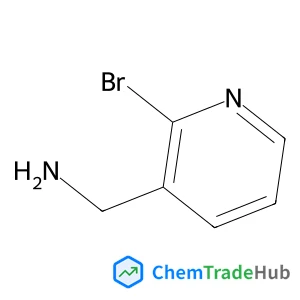
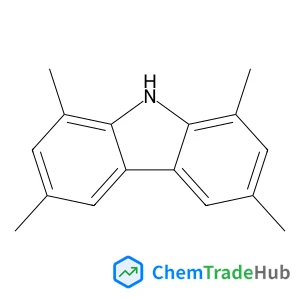
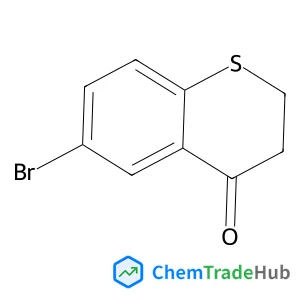
![4-Chloro-3-(trifluoromethyl)-1H-pyrrolo[2,3-b]pyridine structure](https://static.chemtradehub.com/structs/869/869335-75-1-a9d0.webp "4-Chloro-3-(trifluoromethyl)-1H-pyrrolo[2,3-b]pyridine structure")




