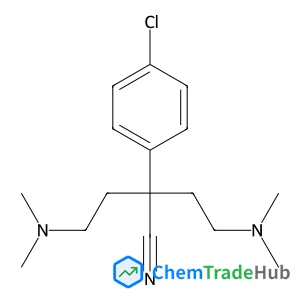
2-(4-Chlorophenyl)-4-(dimethylamino)-2-(2-(dimethylamino)ethyl)butanenitrile
CAS Number:
1246816-57-8
Molecular Formula:
C16H24ClN3
ChiYung Yam, Lingyi Meng, GuanHua Chen, Quan Chen, Ngai Wong
The continuous downsizing of modern electronic devices implies the increasing importance of quantum phenomena. As the feature sizes of transistors inch towards 10 nanometer, simulations including quantum effects and atomistic details are inevitable. Here we report a novel hybrid quantum mechanics and electromagnetics (QM/EM) method to model individual electronic components at the nanoscale. QM and EM models are solved in different regions of the system in a self-consistent manner. As a demostration, we study a carbon nanotube based electronic device embedded in a silicon block. Good agreement is obtained between simulation by QM/EM method and full QM treatment of the entire system.
Alexandria M. Chan
DOI: 10.1039/D0MD00286K
Ekaterina S. Sazanova, Iuliia A. Gracheva, Diane Allegro, Pascale Barbier, Elena V. Svirshchevskaya, Alexey Yu Fedorov
DOI: 10.1039/D0MD00060D
Peter D. Roselt
DOI: 10.1039/D0MD00140F
Doris A. Schuetz, Lars Richter, Riccardo Martini, Gerhard F. Ecker
DOI: 10.1039/D0MD00178C
Rajkumar Lalji Sahani, Thamina Akther, Maria E. Cilento, Andres Emanuelli Castaner, Huanchun Zhang, Jiashu Xie, Zhengqiang Wang
DOI: 10.1039/D1MD00292A
Shuai Tan, Mark N. Prichard, Raj Kalkeri, Roger Ptak, Piet Herdewijn
DOI: 10.1039/D1MD00086A
Thao N. T. Ho, Han Siean Lee, Shilpa Swaminathan, Lewis Goodwin, Nishant Rai, Brianna Ushay, Richard J. Lewis, K. Johan Rosengren, Anne C. Conibear
DOI: 10.1039/D1MD00182E
Vinicius Bonatto, Pedro Henrique Jatai Batista, Lorenzo Cianni, Daniela De Vita, Daniel G. Silva, Rodrigo Cedron, Sérgio de Albuquerque, Carolina Borsoi Moraes, Caio Haddad Franco, Andrei Leitão, Carlos A. Montanari
DOI: 10.1039/D0MD00097C
Sang-Yong Lee, Vigneshwaran Namasivayam, Arianna Perotti, Salahuddin Mirza, Silvia Bua, Claudiu T. Supuran, Christa E. Müller
DOI: 10.1039/D1MD00117E
This compound is mainly used as an intermediate in the synthesis of antipsychoti...
Waste containing 1-(D-Ribofuranosyl)-1,4-dihydro-3-pyridinecarboxamide (CAS: 191...
2-Methyl-2-propanyl 3-bromo-3-(hydroxymethyl)-1-azetidinecarboxylate (CAS: 20079...
N-(4-Chloro-2-pyridinyl)acetamide (CAS: 245056-66-0) is a chemical compound with...
5-Chloro-2-hydroxybenzoic acid, also known as 5-chlorosalicylic acid, is an arom...
When handling 1,1-Dichloro-1-fluoroethane (CAS: 1717-00-6), it is important to u...
Fmoc-(2S,3R)-3-phenylpyrrolidine-2-carboxylic acid is a white crystalline solid ...
4-Amino-5-bromo-2-pyridinecarboxylic acid is primarily used as a precursor in th...
Handling this compound should be done with personal protective equipment (PPE) i...
When handling 8-bromo-2,2-dimethyl-3,4-dihydro-2H-1,4-benzoxazin-3-one, use prop...

Physical Chemistry Chemical Physics (PCCP) is an international journal co-owned by 19 physical chemistry and physics societies from around the world. This journal publishes original, cutting-edge research in physical chemistry, chemical physics and biophysical chemistry. To be suitable for publication in PCCP, articles must include significant innovation and/or insight into physical chemistry; this is the most important criterion that reviewers and Editors will judge against when evaluating submissions. The journal has a broad scope and welcomes contributions spanning experiment, theory, computation and data science. Topical coverage includes spectroscopy, dynamics, kinetics, statistical mechanics, thermodynamics, electrochemistry, catalysis, surface science, quantum mechanics, quantum computing and machine learning. Interdisciplinary research areas such as polymers and soft matter, materials, nanoscience, energy, surfaces/interfaces, and biophysical chemistry are welcomed if they demonstrate significant innovation and/or insight into physical chemistry. Joined experimental/theoretical studies are particularly appreciated when complementary and based on up-to-date approaches.