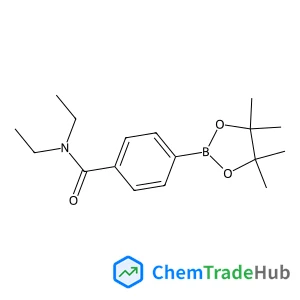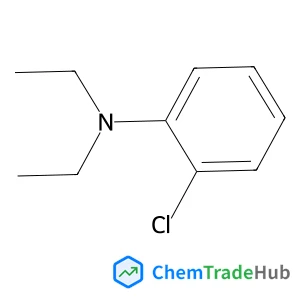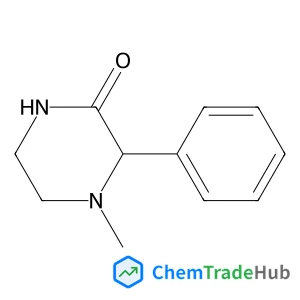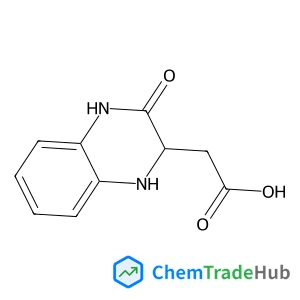
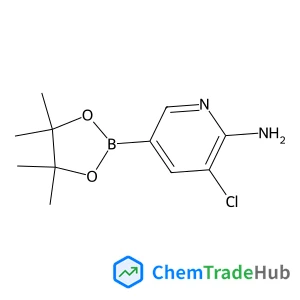
3-Chloro-5-(4,4,5,5-tetramethyl-1,3,2-dioxaborolan-2-yl)-2-pyridinamine
CAS Number:
1032758-99-8
Molecular Formula:
C11H16BClN2O2
Doris A. Schuetz, Lars Richter, Riccardo Martini, Gerhard F. Ecker
The lifetime of a binary drug–target complex is increasingly acknowledged as an important parameter for drug efficacy and safety. With a better understanding of binding kinetics and better knowledge about kinetic parameter optimization, intentionally induced prolongation of the drug–target residence time through structural changes of the ligand could become feasible. In this study we assembled datasets from 21 publications and the K4DD (Kinetic for Drug Discovery) database to conduct large scale data analysis. This resulted in 3812 small molecules annotated to 78 different targets from five protein classes (GPCRs: 273, kinases: 3238, other enzymes: 240, HSPs: 160, ion channels: 45). Performing matched molecular pair (MMP) analysis to further investigate the structure–kinetic relationship (SKR) in this data collection allowed us to identify a fundamental contribution of a ligand's polarity to its association rate, and in selected cases, also to its dissociation rate. However, we furthermore observed that the destabilization of the transition state introduced by increased polarity is often accompanied by simultaneous destabilization of the ground state resulting in an unaffected or even worsened residence time. Supported by a set of case studies, we provide concepts on how to alter ligands in ways to trigger on-rates, off-rates, or both.
Martin Neukom, Dorothea Scheunemann, Emre Erdem, Stefan Weber, Holger Borchert
DOI: 10.1039/C4CP01566E
Sangbaek Park, Chan Woo Lee, Sanghyeon Kim, Hae Jin Kim, Ji Eon Kwon, Soo Young Park, Kug Sun Hong, Ki Tae Nam
DOI: 10.1039/C4CP01267D
Jaroslaw Kalinowski, Markku Räsänen
DOI: 10.1039/C4CP01355G
Jonathan C. Newland, Patrick R. Unwin, Julie V. Macpherson
DOI: 10.1039/C4CP00231H
Peng Zhang, Chang Yu, Xiaoming Fan, Xiuna Wang, Zheng Ling, Zonghua Wang, Jieshan Qiu
DOI: 10.1039/C4CP03978E
Yi Wang, Dapeng Wu, Li-Min Fu, Xi-Cheng Ai, Dongsheng Xu, Jian-Ping Zhang
DOI: 10.1039/C4CP00779D
Mark A. Bissett, Masaharu Tsuji, Hiroki Ago
DOI: 10.1039/C3CP55443K
Stefania Ferrari, Doretta Capsoni, Simone Casino, Matteo Destro, Claudio Gerbaldi, Marcella Bini
DOI: 10.1039/C4CP00511B
Zhipeng Ci, Qisheng Sun, Shengchun Qin, Mengxing Sun, Xiaojing Jiang, Xudong Zhang, Yuhua Wang
DOI: 10.1039/C4CP00357H
This compound is mainly used as an intermediate in the synthesis of antipsychoti...
Waste containing 1-(D-Ribofuranosyl)-1,4-dihydro-3-pyridinecarboxamide (CAS: 191...
2-Methyl-2-propanyl 3-bromo-3-(hydroxymethyl)-1-azetidinecarboxylate (CAS: 20079...
N-(4-Chloro-2-pyridinyl)acetamide (CAS: 245056-66-0) is a chemical compound with...
5-Chloro-2-hydroxybenzoic acid, also known as 5-chlorosalicylic acid, is an arom...
When handling 1,1-Dichloro-1-fluoroethane (CAS: 1717-00-6), it is important to u...
Fmoc-(2S,3R)-3-phenylpyrrolidine-2-carboxylic acid is a white crystalline solid ...
4-Amino-5-bromo-2-pyridinecarboxylic acid is primarily used as a precursor in th...
Handling this compound should be done with personal protective equipment (PPE) i...
When handling 8-bromo-2,2-dimethyl-3,4-dihydro-2H-1,4-benzoxazin-3-one, use prop...