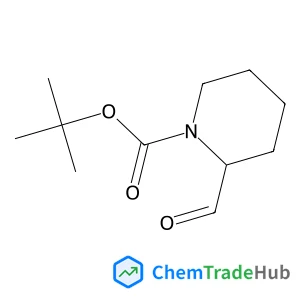
2-Methyl-2-propanyl (2R)-2-formyl-1-piperidinecarboxylate
CAS Number:
134526-69-5
Molecular Formula:
C11H19NO3
C. Dispenza, M. Ricca, C. LoPresti, G. Battaglia, M. La Valle, D. Giacomazza, D. Bulone
Gelled microemulsions are the subject of considerable scientific and commercial interest. Many efforts are currently devoted to improving their toxicological profile and functioning as biocompatible diffusion barrier for the controlled delivery of hydrophobic compounds. In the present investigation, a non-ionic polymeric surfactant was chosen to generate an oil-in-water microemulsion of a model fragrance in the presence of poly(N-vinyl-2-pyrrolidone) (PVP). The microemulsion was then subjected to either electron-beam or UV-irradiation to induce free-radical crosslinking of PVP at low temperature and in the absence of crosslinking agents, catalysts and initiators. Irradiation conditions with the two irradiation sources have been purposely selected to generate PVP hydrogels with similar appearances and mechanical spectra. Despite the macroscopic analogies, specific features are imparted to the two families of hydrogels by the two different irradiation methodologies. A description of the microstructure of both pure PVP and microemulsion-laden hydrogels is given starting from the dynamic light scattering (DLS) characterization of the liquid (unirradiated) formulations, followed by the study the hydrogels' dynamic mechanical, solubility and swelling properties, FTIR analysis of the water insoluble fractions, DLS measurements and cytotoxicity studies.

Drug Discovery Today

Russian Journal of General Chemistry

Chemistry Education Research and Practice

Organic Process Research & Development

Russian Journal of Bioorganic Chemistry

Crystallography Reports

Journal of Natural Medicines

Nature Medicine

Russian Journal of Organic Chemistry

New Journal of Chemistry
Pu Xiao, Frédéric Dumur, Jing Zhang, Didier Gigmes, Jean Pierre Fouassier, Jacques Lalevée
DOI: 10.1039/C4PY00925H
Priyapratim Patra, Arun Prabhu Rameshbabu, Dipankar Das, Santanu Dhara, Asit Baran Panda, Sagar Pal
DOI: 10.1039/C6PY01128D
V. Charlot, A. Ibrahim, X. Allonas, C. Croutxé-Barghorn, C. Delaite
DOI: 10.1039/C4PY00550C
Xunfan Liao, Feiyan Wu, Lifu Zhang
DOI: 10.1039/C5PY01051A
Xinjian Geng, Liming Ding
DOI: 10.1039/C6PY00883F
Ying-Yun Long, Yong-Xia Wang, Bai-Xiang Li, Yan-Guo Li
DOI: 10.1039/C4PY00813H
Zheng Zhao, Zhongli Wang, Congwu Ge, Xu Zhang, Xiaodi Yang, Xike Gao
DOI: 10.1039/C5PY01709B
M. Williams, N. J. W. Penfold, S. P. Armes
DOI: 10.1039/C5PY01577D
M. Retailleau, A. Ibrahim, X. Allonas
DOI: 10.1039/C4PY00548A
6-(3-Fluorophenyl)picolinic acid is generally considered safe for laboratory use...
(3R)-3-Pyrrolidinol is used in the pharmaceutical industry as a precursor for dr...
When handling (4R,5R)-4,5-Diethoxycarbonyl-2,2-dimethyldioxolane (CAS: 59779-75-...
1-(6-Chloroimidazo[1,2-b]pyridazin-3-yl)ethanone is often synthesized via a mult...
The market for N-Ethyl-3,4-dimethylbenzylamine (CAS: 39180-83-1) remains steady,...
Tert-butyl 3-(pyrrolidin-1-yl)azetidine-1-carboxylate is a chemical compound wit...
1-Bromo-3-chloro-2,4-dimethoxybenzene (CAS: 1228956-93-1) falls under the classi...
The safety of 8-Bromo-2-methyl-3,4-dihydroisoquinolin-1(2H)-one (CAS: 1368622-07...
Benzyl [(3S)-2,6-dioxo-3-piperidinyl]carbamate is generally safe when handled wi...
1-{[4-(4,4,5,5-Tetramethyl-1,3,2-dioxaborolan-2-yl)phenyl]sulfonyl}pyrrolidine s...

Polymer Chemistry welcomes submissions in all areas of polymer science that have a strong focus on macromolecular chemistry. Manuscripts may cover a broad range of fields, yet no direct application focus is required.