












Living syndiospecific polymerization of propylene with sterically encumbered titanium complexes activated by MMAO
Literature Information
Publication Date
2014-07-22
DOI
10.1039/C4PY00813H
Impact Factor
5.582
Authors
Ying-Yun Long, Yong-Xia Wang, Bai-Xiang Li, Yan-Guo Li
View Original
Abstract
A series of sterically encumbered (salicylaldiminato)(β-enaminoketonato)titanium complexes [3-tBu-2-OC6H3CHN(C6F5)][RNC(CF3)CHC(tBu)O]TiCl2 [1a: R = Ph, 1b: R = C6H4F(p), 1c: R = C6H4Cl(p), 1d: R = C6H4Br(p), 1e: R = C6H4Br(o)] were synthesized and tested to be efficient catalysts for syndiospecific polymerization of propylene in the presence of modified methylaluminoxane at room temperature. The introduction of a bulky bromine atom ortho to the imine nitrogen of the β-enaminoketonato ligand not only successfully improved the pentad syndiotacticity (rrrr) of the resulting polypropylenes from 88.5% to 97.2%, but also provided better protection of the active site from attack of free AlR3 or monomers and thus contributed to the living polymerization nature, while keeping high catalytic activity. More importantly, compared with the famous pentafluorinated FI-Ti/MAO catalyst system, the sterically congested complex 1e with the bromine atom ortho to a N-aryl group displayed almost two times higher catalytic activity (14.5 vs. 28.0 kg mol−1 h−1), producing polypropylenes with even higher pentad syndiotacticity (rrrr = 97.2% vs. 96.0%) and similar narrow molecular weight distributions (Mw/Mn = 1.12–1.26). In addition, the polymerization proceeded with a different monomer insertion mode of 1,2-insertion and a similar chain-end control mechanism. Quantitative 13C NMR spectra revealed that polymers with various stereo structures ranging from highly syndiotactic and regioregular to atactic and regio-irregular polymers at different reaction temperatures were achieved, and the probable formation routes were proposed. The percentage of regio-irregularities of the monomer sequence arising from 2,1-insertion and 3,1-enchainment increased with the rise of reaction temperature.
Related Literature
Fermi energy level tuning for high performance dye sensitized solar cells using sp2 selective nitrogen-doped carbon nanotube channels
Ga In Lee, Narayan Chandra Deb Nath, Subrata Sarker, Weon Ho Shin, A. J. Saleh Ahammad, Jeung Ku Kang
2012-02-23
Communication
DOI: 10.1039/C2CP40279C
Thermoelectric properties of nanocomposite thin films prepared with poly(3,4-ethylenedioxythiophene) poly(styrenesulfonate) and graphene
Gil Ho Kim, Deok Hyun Hwang, Seong Ihl Woo
2011-12-19
Paper
DOI: 10.1039/C2CP23517J
Traveling interface modulations in the NH3 + O2 reaction on a Rh(110) surface
M. Rafti, H. Uecker, F. Lovis, V. Krupennikova, R. Imbihl
2012-02-15
Paper
DOI: 10.1039/C2CP23970A
Effects of Cr2O3 modification on the performance of SnO2 electrodes in DSSCs
Seo-Yeong Choi, Min-Hye Kim, Young-Uk Kwon
2012-01-16
Paper
DOI: 10.1039/C2CP23545E
A comparative study on Na2MnPO4F and Li2MnPO4F for rechargeable battery cathodes
Dong-Hwa Seo, Hyungsub Kim, Kyu-Young Park
2012-01-18
Communication
DOI: 10.1039/C2CP40082K
Recent developments in the study of ionic liquid interfaces using X-ray photoelectron spectroscopy and potential future directions
Hans-Peter Steinrück
2012-03-05
Perspective
DOI: 10.1039/C2CP24087D
On similarity of hydrogen-bonded networks in liquid formamide and water as revealed in the static dielectric studies
Jan Jadżyn, Jolanta Świergiel
2012-01-11
Paper
DOI: 10.1039/C2CP23960D
The effect of concentration on Li diffusivity and conductivity in rutile TiO2
Handan Yildirim, Jeffrey P. Greeley, Subramanian K. R. S. Sankaranarayanan
2012-02-22
Paper
DOI: 10.1039/C2CP22731B
Hydrated-ion ordering in electrical double layers
Tanja Drobek, Tobias Balmer
2012-03-22
Paper
DOI: 10.1039/C2CP40255F
A theoretic insight into the catalytic activity promotion of CeO2 surfaces by Mn doping
Wanglai Cen, Yue Liu, Zhongbiao Wu, Haiqiang Wang, Xiaole Weng
2012-03-01
Paper
DOI: 10.1039/C2CP00061J
You might also like
Compound Q&A
What is 3-Fluoro-2-methylbenzylamine (CAS: 771573-36-5)?
3-Fluoro-2-methylbenzylamine is an organic compound with the CAS number 771573-3...
771573-36-53-Fluoro-2-methylben...
Compound Q&A
Is Tert-butyl 2-(oxetan-3-ylidene)acetate (CAS: 1207175-03-8) safe?
Tert-butyl 2-(oxetan-3-ylidene)acetate is considered safe for its intended uses ...
1207175-03-8Tert-butyl 2-(oxetan...
Compound Q&A
What precautions should be taken when handling 4-Acetyl-2-fluorobenzonitrile (CAS: 214760-18-6)?
Proper personal protective equipment (PPE) such as gloves, goggles, and a lab co...
214760-18-64-Acetyl-2-fluoroben...
Compound Q&A
How is 2-Ethyl-4-methyl-1,3-thiazole (CAS: 15679-12-6) typically synthesized?
2-Ethyl-4-methyl-1,3-thiazole is commonly synthesized via the reaction of thiour...
15679-12-62-Ethyl-4-methyl-1,3...
Compound Q&A
How should 5',5''-([2,2'-Bithiophene]-5,5'-diyl)bis(([1,1':3',1''-terphenyl]-4,4''-dicarboxylic acid)) (CAS: 1227780-71-3) be stored?
This compound should be stored in a cool, dry place away from direct sunlight an...
1227780-71-35',5''''-([2,2'-Bith...
Compound Q&A
What regulatory guidelines apply to L-Lysine Acetate Salt (CAS: 52315-92-1)?
L-Lysine Acetate Salt (CAS: 52315-92-1) is subject to various regulatory guideli...
52315-92-1L-LYSINE ACETATE SAL...
Compound Q&A
Is 6-Fluoro-3-hydroxy-2-pyrazinecarboxamide (CAS: 259793-96-9) safe?
6-Fluoro-3-hydroxy-2-pyrazinecarboxamide (CAS: 259793-96-9) is generally conside...
259793-96-96-Fluoro-3-hydroxy-2...
Compound Q&A
What are the physical and chemical properties of 1,1'-Sulfonylbis(1H-imidazole) (CAS: 7189-69-7)?
1,1'-Sulfonylbis(1H-imidazole) is a crystalline solid with a molecular weight of...
7189-69-71,1'-Sulfonylbis(1H-...
Compound Q&A
What industries use 4-methyl-7-nitro-1H-indole-3-carbonitrile (CAS: 289483-82-5)?
4-Methyl-7-nitro-1H-indole-3-carbonitrile (CAS: 289483-82-5) is primarily used i...
289483-82-54-methyl-7-nitro-1H-...
Compound Q&A
How should waste containing 5-Bromo-3-indolyl-beta-galactoside (CAS: 97753-82-7) be handled?
Waste containing 5-Bromo-3-indolyl-beta-galactoside (CAS: 97753-82-7) should be ...
97753-82-75-Bromo-3-indolyl-be...
Source Journal
Polymer Chemistry

CiteScore:
8.6
Self-citation Rate:
7.3%
Articles per Year:
457
Polymer Chemistry welcomes submissions in all areas of polymer science that have a strong focus on macromolecular chemistry. Manuscripts may cover a broad range of fields, yet no direct application focus is required.
Recommended Compounds
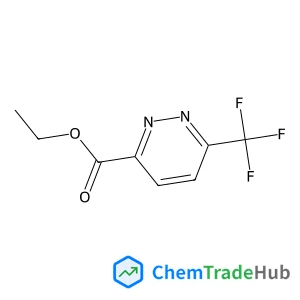
Ethyl 6-(trifluoromethyl)pyridazine-3-carboxylate
CAS Number:
1192155-06-8
Molecular Formula:
C8H7F3N2O2
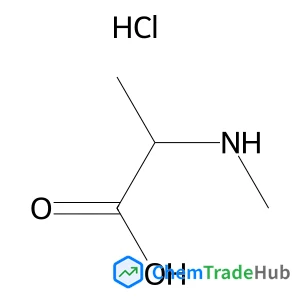
(R)-2-(Methylamino)propanoic acid hydrochloride
CAS Number:
1155878-14-0
Molecular Formula:
C4H10ClNO2
Recommended Suppliers







Disclaimer
This page provides academic journal information for reference and research purposes only. We are not affiliated with any journal publishers and do not handle publication submissions. For publication-related inquiries, please contact the respective journal publishers directly.
If you notice any inaccuracies in the information displayed, please contact us at support@chemtradehub.com. We will promptly review and address your concerns.